

10 Brilliant Tips to Childproof Your Electrical Outlets and Keep Your Kids Safe
10 Brilliant Tips to Childproof Your Electrical Outlets and Keep Your Kids Safe. As a parent, you know children are curious by nature. They explore the world with wide-eyed wonder—and often with their hands. While this curiosity is a wonderful part of growing up, it can also put them at risk, especially when it comes to electrical outlets.
In Australia, household electricity runs at 230 volts, which is far more dangerous than many realise. For a small child, even a tiny electric shock can cause serious injury. That’s why childproofing your outlets isn’t just an extra precaution—it’s a must-have for any home with young kids.
Here are 10 brilliant tips to childproof your electrical outlets and keep your kids safe to make your home safer for your little ones.
1. Install Outlet Covers
The simplest, most budget-friendly solution is to use plug-in outlet covers. These plastic caps fit snugly into unused power points, blocking curious fingers from making contact with live electrical components.
Choose covers that are tight-fitting and hard for small hands to remove. While they’re inexpensive and widely available, remember that they need to be removed whenever you want to use the outlet—so you’ll want to keep them somewhere safe when not in use.
2. Upgrade to Tamper-Resistant Outlets
Tamper-resistant (TR) outlets have built-in shutters that only open when equal pressure is applied to both slots simultaneously—just like when you plug in a cord. This makes it nearly impossible for children to insert objects like keys, hairpins, or toys.
While they cost more than standard outlets, they’re a long-term safety investment, especially if you’re renovating or building a new home.
3. Use Sliding Plate Covers
Sliding outlet covers automatically snap shut when an appliance plug is removed. These are great because they don’t rely on you remembering to put a cap back in place.
They’re especially useful in living rooms, bedrooms, and play areas where outlets are more likely to be left unused for long periods.
4. Rearrange Furniture Strategically
Sometimes the best solution is the simplest—just block access. Position heavy furniture such as couches, bookshelves, or storage units in front of outlets that you rarely use.
This won’t work for every outlet, but it’s a free and instant fix for those you don’t need daily.
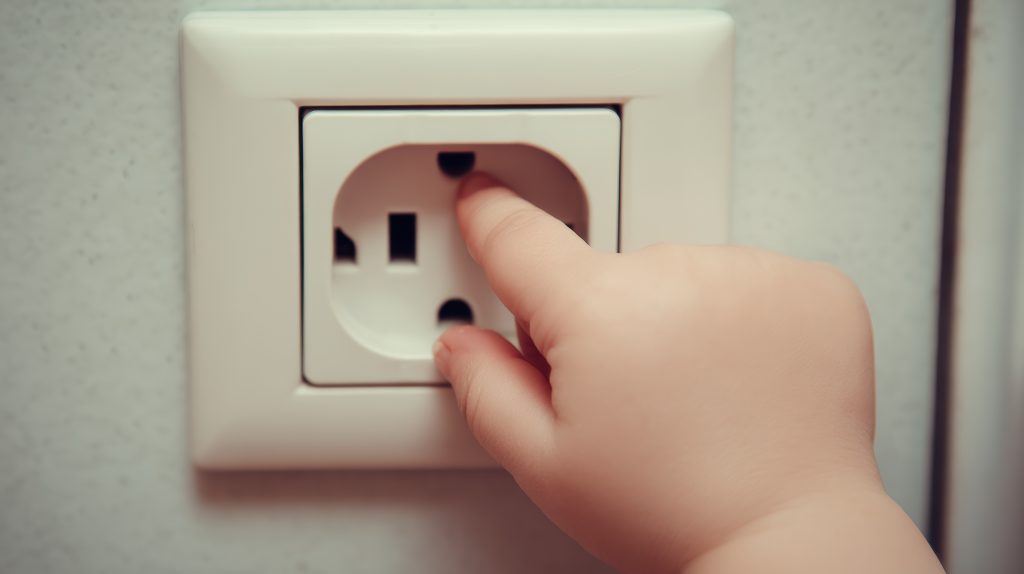
5. Install Power Board Covers
Power boards are an everyday necessity in most households, but they’re also prime targets for little hands. A power board cover encloses the entire strip, allowing cords to run through a small opening while keeping outlets and plugs out of reach.
Some covers even lock, giving you extra peace of mind.
6. Teach Electrical Safety Early
While physical barriers are essential, education is just as important. As soon as your child can understand basic safety, explain (in age-appropriate terms) that outlets are dangerous and must never be touched.
Use simple phrases like “Electricity can hurt you” or “We don’t touch the power points” and reinforce them regularly.
7. Use Cord Shorteners and Organisers
Loose cords can be just as dangerous as open outlets. Babies and toddlers can pull on cords, which could lead to electrical shocks or heavy appliances falling.
Cord shorteners and organisers keep cords tidy and out of reach, making your home look neater and safer at the same time.
8. Cover Unused Power Points on Power Boards
If you have a power board with unused outlets, don’t leave them exposed. You can buy individual safety caps that fit into each socket, preventing access while still allowing you to use other devices plugged into the same board.
9. Consider Smart Outlets with Remote Control
Smart outlets allow you to turn off power remotely via an app or voice command. This means you can cut electricity to certain outlets when not in use—perfect for areas where your child plays often.
Some smart outlets also include energy monitoring features, helping you save on electricity bills while keeping your home safe.
10. Book a Professional Electrical Safety Inspection
No amount of DIY outlet covers will help if your home’s wiring is outdated or unsafe. Hiring a licensed electrician to inspect your home ensures that:
- All outlets are securely installed.
- No loose wiring or exposed conductors are present.
- Your electrical system meets current safety standards.
For families with young children, an electrician can also recommend the best childproofing solutions tailored to your home.
Bonus Tip: Combine Multiple Methods
The most effective approach is to layer your safety measures. For example:
- Use tamper-resistant outlets in high-traffic areas.
- Add sliding covers for everyday outlets.
- Block off rarely used ones with furniture.
This way, even if one precaution fails, another is there as backup.
Why Childproofing Outlets is Non-Negotiable
According to Australian safety data, hundreds of children each year are treated for electric shock injuries—many from incidents involving household power points. The risk is highest for children under five, who are naturally curious and love exploring.
Childproofing is about peace of mind. It’s not just protecting against worst-case scenarios—it’s making sure your child can play, learn, and grow in a safe environment.
Final Thoughts
Electricity powers our homes, but it can be dangerous in the wrong hands—especially little ones. By taking these 10 brilliant steps to childproof your outlets, you’re giving your children a safe place to explore their world without unnecessary risks.
If you’re unsure where to start or want expert advice tailored to your home, Spectra Electrical can help. We’ve been serving Sydney for over 20 years, providing trusted, high-quality electrical solutions to keep families safe.
✅ Book a safety inspection today and let’s make your home as child-friendly as it is family-friendly.