
8 Smart Ideas to Keep Your Kitchen Energy Efficient
The kitchen is the heart of every home — it’s where meals are made, stories are shared, and energy bills quietly climb. Between ovens, fridges, dishwashers, and endless appliances, the kitchen is one of the biggest consumers of electricity in any Australian household. The good news? You can cook smarter, save energy, and reduce your power bills without sacrificing comfort or convenience. With a few clever upgrades and mindful habits, your kitchen can become one of the most energy-efficient rooms in your home. Here are 8 smart Ideas to keep your kitchen energy efficient all year round.
1. Upgrade to Energy-Efficient Appliances
If your kitchen still relies on older appliances, they could be chewing through far more power than necessary. Appliances account for around 30% of an average Aussie household’s energy use, and inefficient ones make a big dent in your wallet over time.
When upgrading, look for the Energy Rating Label — the more stars, the better. A new fridge, dishwasher, or oven with high energy efficiency can save hundreds of dollars a year in running costs.
Also, size matters. Bigger isn’t always better — choose appliances that suit your household’s needs. A family of two doesn’t need a double-door fridge running 24/7.
Pro tip: Modern inverter fridges and induction cooktops are some of the best energy-saving investments you can make in your kitchen.
2. Optimise Fridge and Freezer Performance
Your refrigerator runs constantly, making it one of the most energy-hungry appliances in your home. But with a few small tweaks, you can help it work smarter, not harder.
- Clean the coils: Dust and grime on the back or underneath your fridge can reduce cooling efficiency. A quick clean every few months helps it stay cool with less effort.
- Set the right temperature: Your fridge should be around 3–4°C, and your freezer around -18°C. Any colder, and you’re wasting power without keeping food fresher.
- Keep it stocked (but not overloaded): A full fridge retains cold better, but overpacking blocks airflow. Find a good balance.
- Avoid placing it near heat sources: Don’t position your fridge next to your oven or in direct sunlight — it’ll have to work much harder to stay cool.
Small adjustments like these can extend your fridge’s lifespan and cut its energy use by up to 20%.
3. Cook Smarter with Efficient Methods
How you cook can dramatically affect your energy consumption. Electric ovens, in particular, use a lot of power. Whenever possible, switch to more efficient cooking appliances like microwaves, air fryers, induction cooktops, or slow cookers.
Here are some easy cooking habits that save energy:
- Use lids on pots and pans to trap heat and reduce cooking time.
- Preheat only when necessary. Many recipes don’t actually require it.
- Cook multiple dishes at once if using the oven.
- Turn off the heat early — residual heat will finish the job.
Not only will these habits save you money, but they’ll also make your kitchen run cooler — a bonus during Aussie summers.
4. Make the Most of Natural Light and LED Upgrades
Lighting plays a huge role in both the look and energy use of your kitchen. Many older kitchens rely on fluorescent or halogen lights, which use significantly more electricity and generate unnecessary heat.
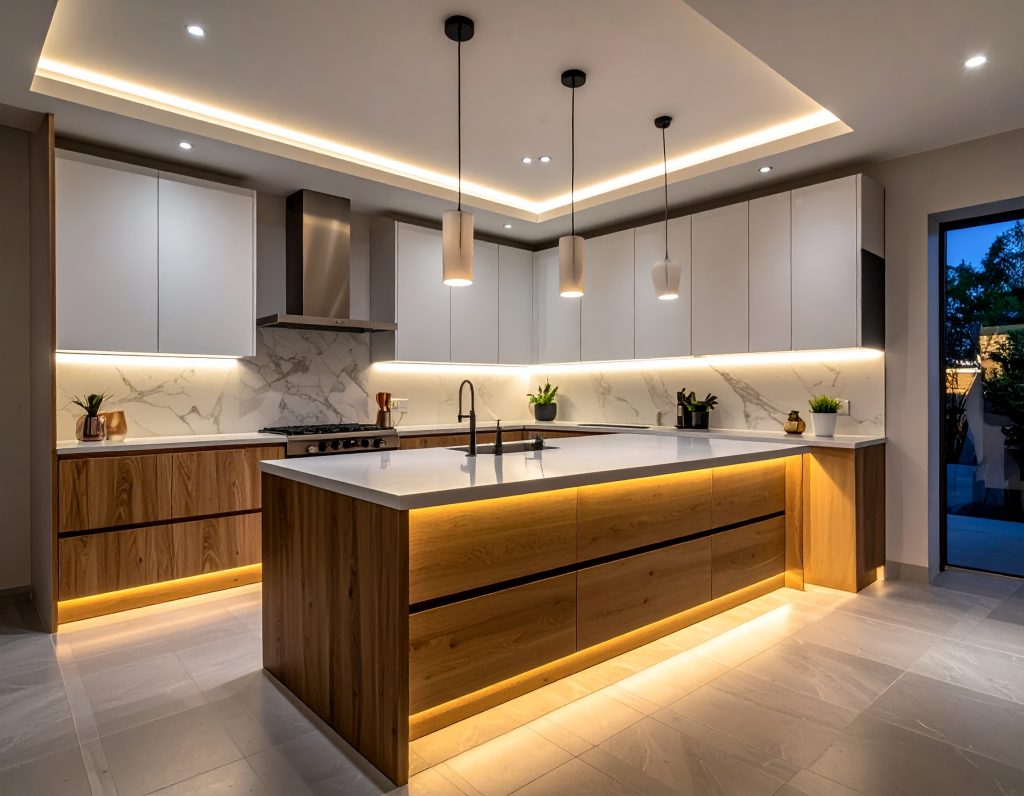
Switch to LED lighting — they use up to 80% less energy and last much longer. Task lighting under cabinets or over benchtops helps you see clearly without needing to flood the entire kitchen with bright overhead lights.
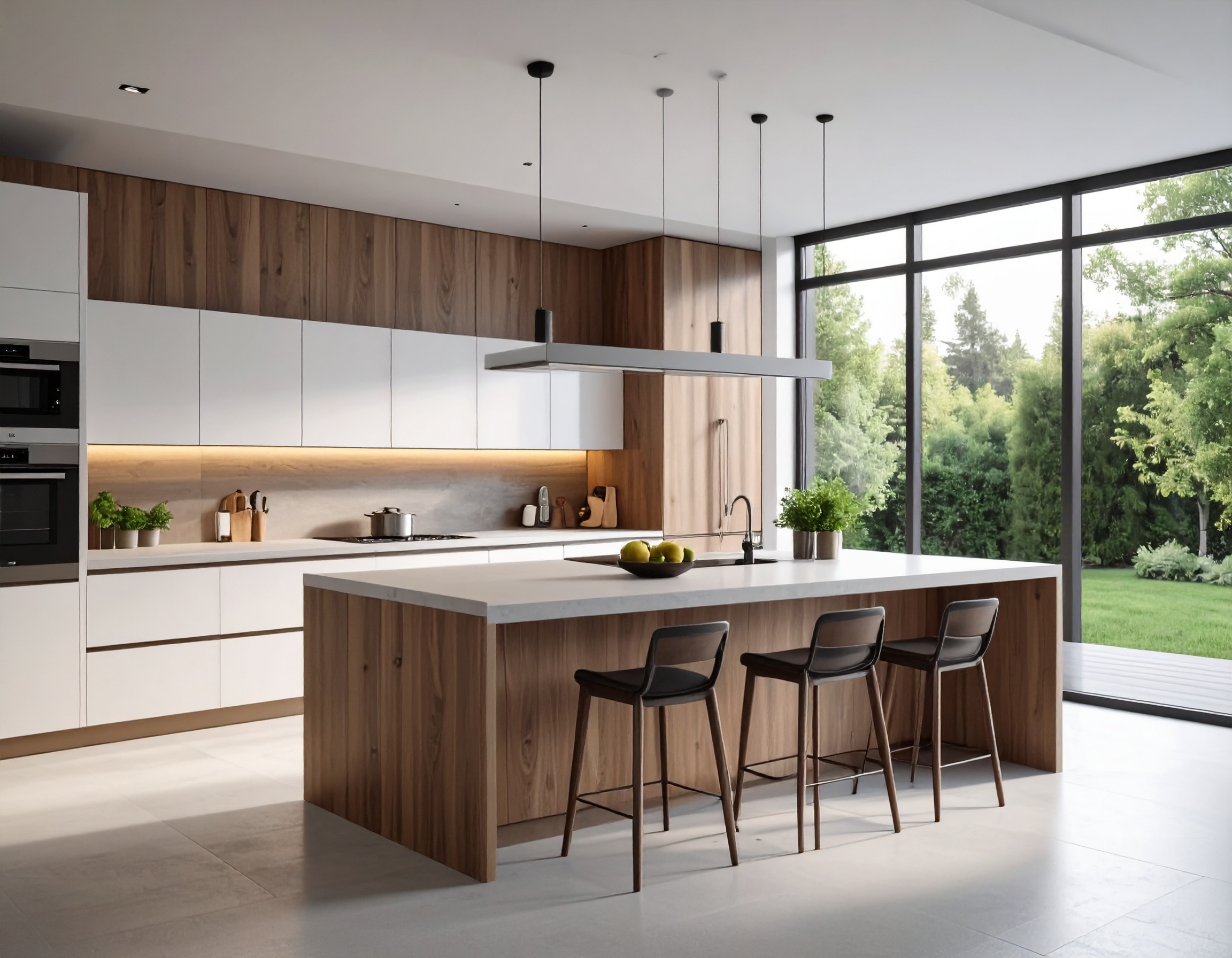
And don’t underestimate natural light. If your renovation allows, add a skylight or larger window to reduce daytime electricity use and make your kitchen feel more open and inviting.
5. Be Smart About Hot Water Usage
If your kitchen sink is a long way from the hot water system, you could be wasting litres of water and energy waiting for it to warm up.
Here’s how to fix it:
- Install a small instant hot water system under the sink to reduce waste.
- Insulate hot water pipes to keep heat in for longer.
- Use cold water whenever possible — for rinsing dishes, cleaning produce, or soaking pans.
Over time, these small adjustments can add up to significant water and energy savings.
6. Use Your Dishwasher Efficiently
Contrary to popular belief, running a dishwasher can actually use less water and energy than washing by hand — but only if used correctly.
To maximise efficiency:
- Always run full loads, not half-empty ones.
- Choose the eco or energy-saving cycle — it uses lower water temperatures and less energy.
- Skip the heat-dry function and open the door at the end of the cycle to air dry your dishes naturally.
Modern dishwashers are designed to be energy-efficient, so letting them do the work smartly can save you both time and money.
7. Upgrade Power Points and Switchboards
Many older Australian homes still rely on outdated switchboards and power circuits that struggle with modern kitchen loads. Running multiple high-demand appliances (like ovens, kettles, and air fryers) on old circuits can cause power trips, inefficiency, and even safety risks.
During a kitchen renovation or upgrade, consider having a licensed electrician inspect your system. Upgrading your switchboard, adding extra circuits, and installing energy-efficient power points with built-in USBs can make your kitchen safer and more convenient.
Smart plugs and switches are also a great addition — they let you monitor and control appliance usage remotely, helping you keep an eye on your energy habits in real time.
8. Keep Appliances Well-Maintained
An often-overlooked part of energy efficiency is regular maintenance. Even high-end appliances lose efficiency if they’re dirty or poorly maintained.
- Defrost your freezer regularly to prevent ice build-up.
- Clean oven doors and seals so heat doesn’t escape.
- Descale kettles and coffee machines to improve performance.
- Check power cords for wear and tear to prevent inefficiencies or hazards.
A few minutes of maintenance each month helps appliances run at peak efficiency and extends their lifespan — saving you money in replacements and repairs.
Final Thoughts: Make Your Kitchen Work Smarter, Not Harder
Creating an energy-efficient kitchen isn’t about massive overhauls or expensive upgrades — it’s about being smart with how you use, maintain, and power your appliances. Every change you make, from switching to LEDs to running your dishwasher wisely, contributes to lower bills, a smaller carbon footprint, and a more sustainable home.
At Spectra Electrical, we help Australian homeowners make their homes safer, smarter, and more efficient. Whether you’re upgrading your kitchen, planning a renovation, or just want to reduce your energy use, our qualified electricians can assess your setup and recommend the best energy-saving solutions — from smart lighting and power management to switchboard upgrades and safety checks.