
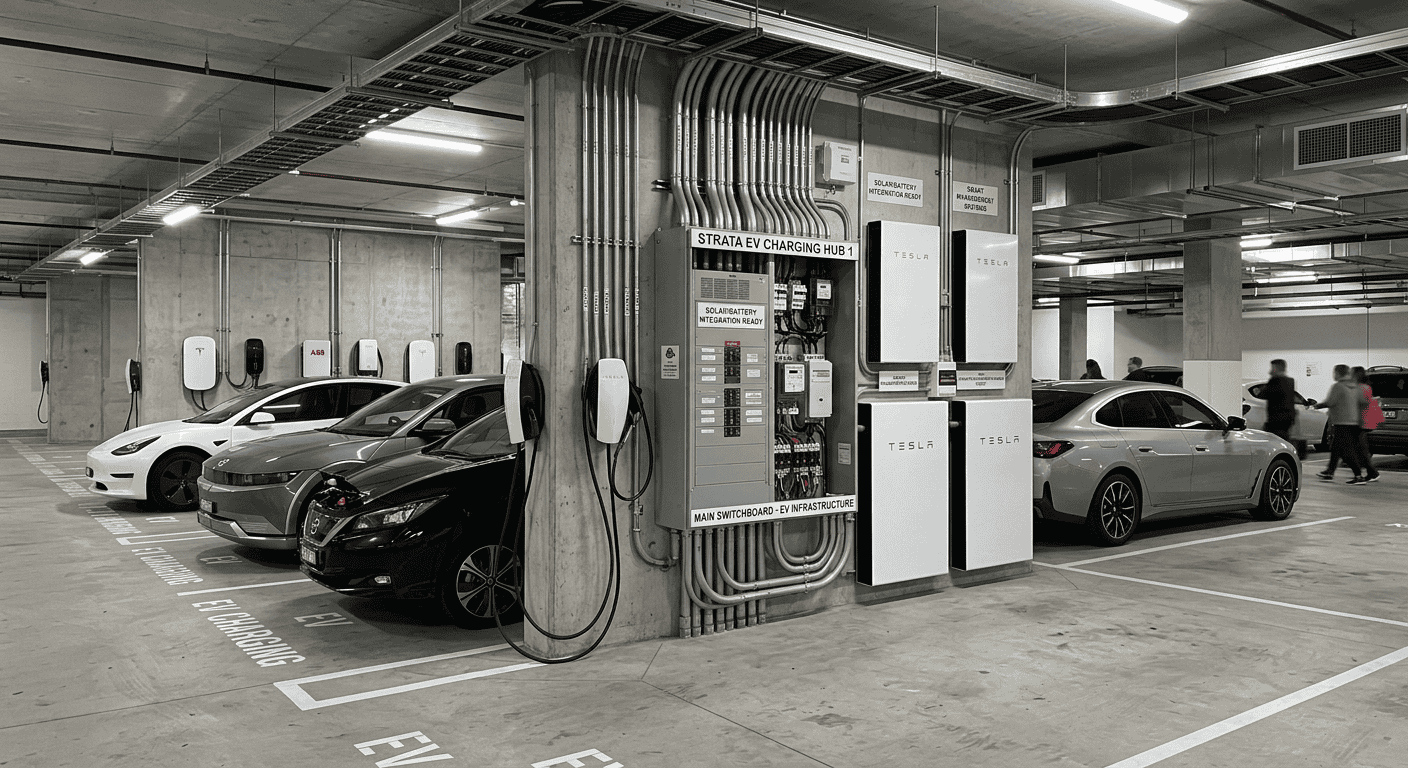
11 Future-Ready EV Infrastructure Decisions for Strata Buildings
Electric vehicles are becoming an increasingly common sight on Australian roads, and that shift is creating a new challenge for strata buildings: how to provide reliable, safe and scalable EV charging infrastructure for residents.
For a standalone home, installing an EV charger can be relatively straightforward. In a strata building, however, charging an electric vehicle involves shared electrical infrastructure, limited parking spaces, building capacity, resident expectations, budgets and long-term planning.
This makes EV charging infrastructure more than simply installing a charger on a wall.
For strata committees and owners corporations, the decisions made today can determine whether a building can efficiently support five, ten or dozens of EV chargers in the future—or whether residents face expensive electrical upgrades and ongoing installation complications.
The good news is that strata buildings have an opportunity to plan ahead. By treating EV charging as part of the property’s broader electrical infrastructure strategy, committees can create a system that is safer, more practical and capable of expanding as EV ownership grows.
Here are 11 future-ready EV infrastructure decisions for strata buildings that committees, owners and property managers should consider.
1. Assess the Building’s Existing Electrical Capacity
Before installing EV chargers, the first step should be understanding how much electrical capacity the building actually has available.
A strata building’s existing electrical infrastructure may already support significant loads from:
- Apartments
- Common area lighting
- Lifts
- Air conditioning
- Swimming pools
- Garage ventilation
- Security systems
- Pumps
- Other shared services
Adding EV chargers introduces another substantial electrical demand.
Why Capacity Matters
Installing chargers without properly assessing the building’s available capacity can create unnecessary pressure on existing infrastructure.
A professional electrical assessment can help determine whether the current switchboard, supply and distribution infrastructure can support EV charging and whether upgrades may be required.
Understanding capacity at the beginning provides a much stronger foundation for planning.
2. Plan for More Than One EV Charger
One of the biggest mistakes a strata committee can make is planning for the number of EVs in the building today rather than the number there could be in the future.
Perhaps only two residents currently own electric vehicles. That doesn’t mean the building will only ever need two charging points.
EV Adoption Will Continue to Change Demand
As more residents transition to electric vehicles, demand for charging facilities is likely to increase.
A future-ready design should consider how additional chargers can be added without completely redesigning the electrical system.
This may involve planning:
- Additional circuits
- Conduits
- Cable pathways
- Switchboard capacity
- Communications infrastructure
- Load management systems
Planning the backbone of the system early can make future expansion considerably easier.
3. Consider Dynamic Load Management
Dynamic load management can be an important consideration for strata EV charging infrastructure.
Rather than allowing every charger to draw its maximum possible power simultaneously, a load management system can monitor available electrical capacity and adjust charging demand accordingly.
Why This Can Be Valuable
Imagine a building has several EV chargers operating while residents are also using lifts, air conditioning and other high-demand equipment.
Without appropriate management, simultaneous charging could place significant demand on the building’s electrical infrastructure.
A properly designed load management solution can help distribute available capacity more efficiently.
More Chargers Without Simply Maximising Demand
This can provide strata buildings with a more scalable approach to EV charging, potentially allowing more vehicles to charge while making better use of the building’s existing electrical capacity.
4. Design EV Charging Around the Parking Layout
Installing EV chargers isn’t only an electrical decision. Parking arrangements also need to be considered.
Strata car parks can contain a mixture of:
- Basement parking
- Tandem spaces
- Visitor spaces
- Allocated lots
- Shared areas
The physical location of chargers affects cable routes, installation complexity and future expansion.
Plan the Cable Pathways
During an initial installation, it can be beneficial to consider how cables could eventually reach other parking spaces.
A well-planned cable pathway can make future installations simpler and reduce the need for disruptive building works.
This is particularly important in large basement car parks where access can be difficult.
5. Establish a Clear Approach to Ownership and Billing
EV charging introduces another consideration that traditional common electrical services don’t always involve: determining who pays for the electricity used to charge each vehicle.
A future-ready strata EV charging system should consider how charging costs will be allocated.
Avoid Creating Ongoing Disputes
If multiple residents use shared infrastructure, the strata community needs a transparent way to determine individual charging consumption and associated costs.
Depending on the system selected, this could involve:
- Individual metering
- Smart charging systems
- Usage monitoring
- User accounts
- Automated billing arrangements
The specific approach should be considered alongside the building’s strata requirements and relevant professional advice.
The goal is to create a system that is fair, transparent and practical to manage.
6. Choose EV Chargers That Support Future Expansion
Not all EV charging systems are designed in exactly the same way.
When selecting charging equipment, strata committees should consider not only the immediate charging requirements but also how the technology can integrate into a larger system.
Look Beyond the Charger
Consider whether the proposed system can support:
- Multiple chargers
- Load management
- User identification
- Energy monitoring
- Remote monitoring
- Future expansion
Choosing an appropriate charging platform can make it easier to grow the system as EV adoption increases.
A charger should be viewed as one component of a wider EV infrastructure solution.
7. Prepare the Switchboard and Distribution Infrastructure
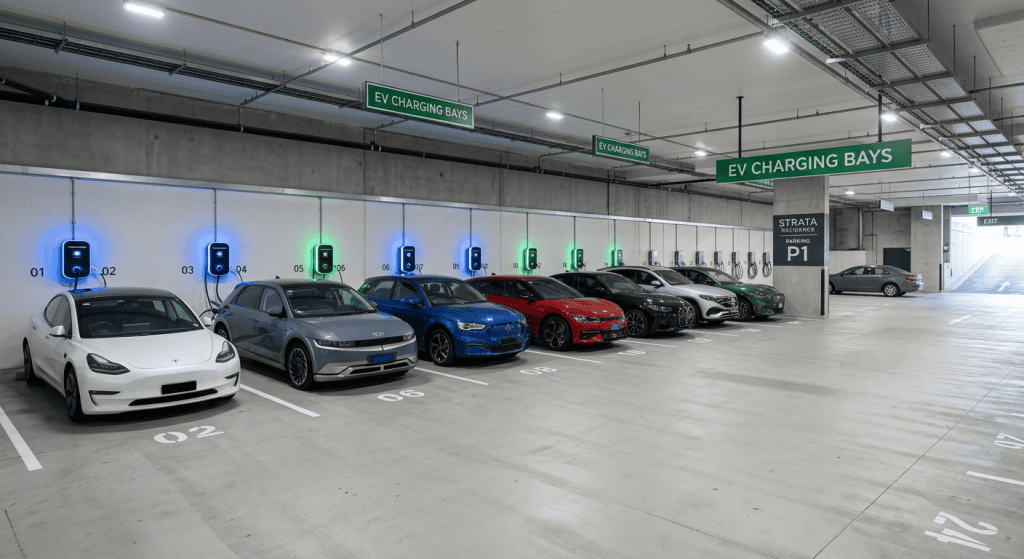
The switchboard is central to any EV charging installation.
If a building’s existing switchboard is ageing, overcrowded or operating close to its capacity, EV charging may require additional electrical infrastructure.
Possible Upgrade Requirements
Depending on the building, upgrades may involve:
- Additional circuit protection
- New distribution boards
- Increased capacity
- New cabling
- Protective devices
- Surge protection
- Dedicated EV circuits
The exact requirements will vary from building to building.
A professional assessment can determine what infrastructure is appropriate rather than relying on assumptions.
8. Consider Solar and Battery Integration
Future-ready EV infrastructure doesn’t have to operate independently from the building’s other energy systems.
Strata buildings with suitable solar installations may eventually be able to integrate EV charging with broader energy management strategies.
Use Energy More Strategically
Solar power, battery storage, energy monitoring and EV charging can potentially work together as part of a broader energy strategy.
For example, energy management systems can help building operators understand when electricity is being generated, consumed and used for vehicle charging.
This creates opportunities to make better decisions about how the building uses energy.
Think About the Entire Energy System
Rather than treating EV charging as an isolated project, strata committees should consider how it fits into the building’s wider electrical future.
9. Don’t Overlook Communications Infrastructure
Modern EV charging stations can involve more than electricity.
Many systems rely on communications connectivity for features such as:
- Remote monitoring
- User authentication
- Usage reporting
- Software updates
- Load management
- Billing
- Fault notifications
Data Cabling Can Be Part of the Plan
When designing an EV charging system, consider whether appropriate communications infrastructure is available throughout the car park.
Installing suitable cabling pathways during an electrical project may be easier than retrofitting communications infrastructure later.
This is another reason to think about EV charging as a complete infrastructure project rather than simply mounting a charger.
10. Build EV Charging Into Long-Term Strata Planning
EV charging should be considered alongside other major electrical assets when strata committees develop long-term maintenance and capital works strategies.
A building’s electrical infrastructure will continue evolving over time.
Committees may eventually need to plan for:
- Switchboard upgrades
- Electrical distribution upgrades
- Additional EV chargers
- Solar systems
- Battery storage
- LED lighting
- Security upgrades
- Data infrastructure
Stage the Investment
Not every building needs dozens of chargers installed immediately.
A staged approach can allow the strata community to establish the necessary infrastructure now while expanding charging capacity as demand increases.
This can make financial planning easier and reduce unnecessary upfront expenditure.
11. Work With Experienced Electrical Professionals
Perhaps the most important decision is choosing the right professionals to design and install the infrastructure.
EV charging in a strata building can involve complex electrical considerations that go beyond installing a single residential charger.
Experience Matters
A professional electrical contractor can assess the building’s existing infrastructure, understand its limitations and develop a charging solution around current and future requirements.
This can include assessing:
- Electrical capacity
- Switchboards
- Cable routes
- Parking layouts
- Charger locations
- Load management
- Future expansion
- Communications infrastructure
A Long-Term Partnership
Strata committees can also benefit from working with an electrical contractor who can support the building beyond the initial installation.
Ongoing inspections, maintenance and future expansion can all become easier when the contractor already understands the property’s electrical infrastructure.
The Benefits of Future-Ready EV Infrastructure
Taking a strategic approach to EV charging can provide significant benefits for strata communities.
These can include:
- Greater resident convenience
- Improved property appeal
- Better use of existing electrical capacity
- Easier future expansion
- More predictable long-term costs
- Improved electrical planning
- Support for increasing EV ownership
- Reduced need for disruptive future works
EV charging infrastructure may also become an increasingly important consideration for prospective apartment buyers and tenants as electric vehicle ownership continues to grow.
A building that has already considered EV charging may be better positioned for changing expectations than one that has ignored the issue.
Common EV Charging Mistakes Strata Committees Should Avoid
Installing Chargers Without Assessing Capacity
The existing electrical infrastructure should be assessed before committing to a charging system.
Planning Only for Current Demand
A system that works for two EVs today may not work for twenty vehicles in the future.
Ignoring Cable Pathways
Future expansion becomes more difficult when there is no practical way to route additional cabling through the car park.
Forgetting About Billing
Charging electricity needs to be allocated fairly and transparently.
Treating EV Charging as a One-Off Project
The best results come from considering EV infrastructure as part of the building’s long-term electrical strategy.
How Spectra Electrical Can Help
At Spectra Electrical, we understand that EV charging in strata buildings requires more than simply installing a charger.
With more than 20 years of electrical industry experience across Sydney, our team can help strata committees, owners corporations and property managers assess their existing electrical infrastructure and develop practical EV charging solutions designed around current requirements and future expansion.
Our electrical services include:
- EV charger installations
- Electrical capacity assessments
- Switchboard upgrades
- Commercial electrical services
- Strata electrical maintenance
- Data and communications cabling
- Preventative electrical maintenance
- Thermal imaging inspections
- LED lighting upgrades
- Surge protection
- Level 2 electrical services
Whether your strata building is considering its first EV charger or planning a larger charging network, Spectra Electrical can help you approach the project strategically.
By considering the building’s electrical capacity, parking configuration, future EV demand and broader infrastructure requirements, you can create a charging system that is practical today and easier to expand tomorrow.
Final Thoughts
EV charging is quickly becoming an important consideration for strata buildings across Australia. As more residents make the transition to electric vehicles, demand for convenient and reliable charging infrastructure will continue to grow.
For strata committees, the biggest opportunity is to plan ahead.
Rather than installing individual chargers whenever residents request them, a future-ready approach considers the building’s electrical capacity, switchboard infrastructure, cable pathways, load management, billing, communications, parking arrangements and potential future demand.
The objective isn’t necessarily to install every charger immediately. It’s to create an electrical infrastructure strategy that allows the building to respond efficiently as EV ownership increases.
By making smart infrastructure decisions today, strata committees can reduce future disruption, improve resident convenience and create a more adaptable property.
Working with an experienced electrical contractor such as Spectra Electrical can help ensure your EV charging infrastructure is professionally planned, safely installed and positioned to support the evolving needs of your strata building for years to come.