
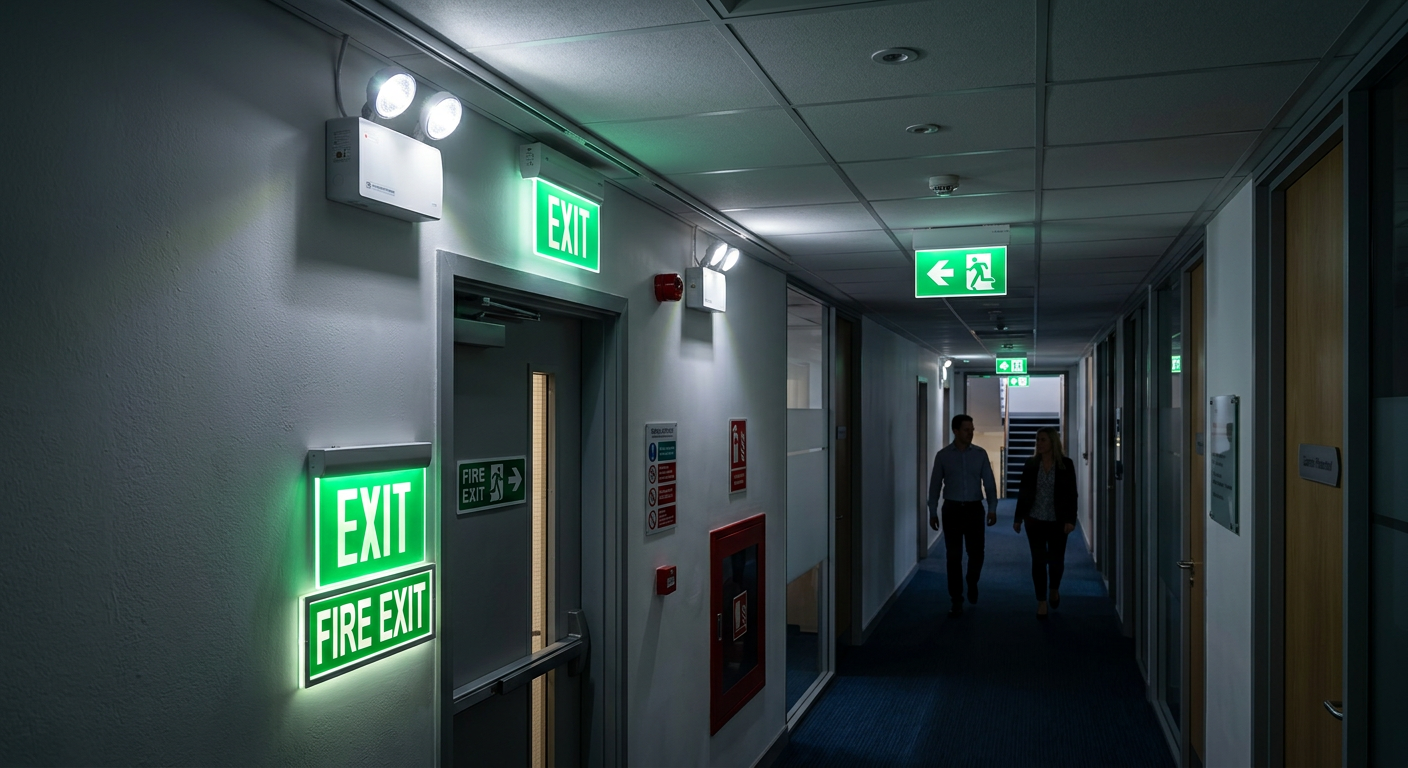
11 Critical Emergency Lighting Standards Commercial Buildings Must Meet
Emergency lighting is one of the most important yet often overlooked safety systems in any commercial building. While it’s easy to focus on everyday lighting, emergency lighting plays a vital role when normal power is interrupted. During a power outage, fire, or other emergency, occupants rely on emergency lighting to safely evacuate the building, locate exits, and avoid hazards.
For business owners, property managers, strata managers, facility managers, and commercial landlords, ensuring emergency lighting complies with Australian Standards isn’t just about meeting legal obligations—it’s about protecting lives, reducing liability, and maintaining a safe working environment.
Unfortunately, many commercial buildings operate with ageing emergency lighting systems, overdue testing schedules, or outdated fittings that no longer provide the required level of performance. These issues may not become apparent until an emergency occurs, when reliable lighting is needed most.
In this guide, we’ll explore 11 critical emergency lighting standards commercial buildings must meet, explain why ongoing compliance matters, and show how regular inspections and professional maintenance help ensure your building remains safe, compliant, and prepared for emergencies.
1. Emergency Lighting Must Be Installed Where Required
Not Every Light Is an Emergency Light
Emergency lighting is specifically designed to operate when the normal electrical supply fails. Unlike standard lighting, emergency luminaires contain battery backup systems that automatically activate during a power outage.
Australian Standards require emergency lighting in designated locations throughout many commercial buildings to ensure occupants can safely navigate escape routes during emergencies.
Common Areas Requiring Emergency Lighting
These often include:
- Exit pathways
- Corridors
- Stairwells
- Fire exits
- Plant rooms
- Underground car parks
- Assembly areas
- Large open floor spaces
Correct placement is essential to ensure occupants can safely evacuate.
Proper Design Improves Safety
Emergency lighting should be designed as part of an overall emergency evacuation strategy rather than installed as an afterthought.
2. Exit Signs Must Remain Clearly Visible
Exit Identification Saves Valuable Time
During an emergency, clearly illuminated exit signs help occupants quickly identify the safest evacuation route.
Poor visibility can delay evacuations and create confusion.
Exit Signs Must Remain Operational
Exit signs should remain illuminated during normal operation and continue functioning during power outages through battery backup systems.
Regular Inspections Are Essential
Routine inspections help ensure exit signs remain:
- Clearly visible
- Correctly positioned
- Properly illuminated
- Free from damage
- Operating as intended
3. Emergency Lighting Must Operate During Power Failure
Backup Power Is Critical
The primary purpose of emergency lighting is to provide illumination when mains power fails.
Battery systems must automatically activate without manual intervention.
Reliable Battery Performance Matters
Emergency lighting batteries naturally deteriorate over time.
Without regular testing, batteries may fail when needed most.
Ongoing Maintenance Protects Occupants
Routine battery testing helps identify fittings requiring replacement before reliability is compromised.
4. Regular Testing Must Be Performed
Compliance Doesn’t End After Installation
Installing emergency lighting is only the beginning.
To remain compliant, emergency lighting systems require routine testing to verify they continue operating correctly.
Testing Typically Includes
- Functional operation
- Battery performance
- Illumination duration
- Fitting condition
- Exit sign visibility
Regular testing helps detect faults before they become serious safety concerns.
Prevent Unexpected Failures
Scheduled testing significantly reduces the likelihood of emergency lighting failures during real emergencies.
5. Testing Results Should Be Properly Documented
Accurate Records Support Compliance
Maintaining detailed testing records demonstrates that emergency lighting has been inspected and maintained appropriately.
These records also assist future maintenance planning.
Documentation May Include
- Inspection dates
- Test results
- Battery replacements
- Fault reports
- Repairs completed
- Maintenance history
Well-maintained documentation simplifies future compliance inspections.
Better Asset Management
Accurate records also help identify recurring issues and ageing equipment requiring replacement.
6. Damaged Emergency Lighting Should Be Repaired Promptly
Small Faults Can Become Serious Problems
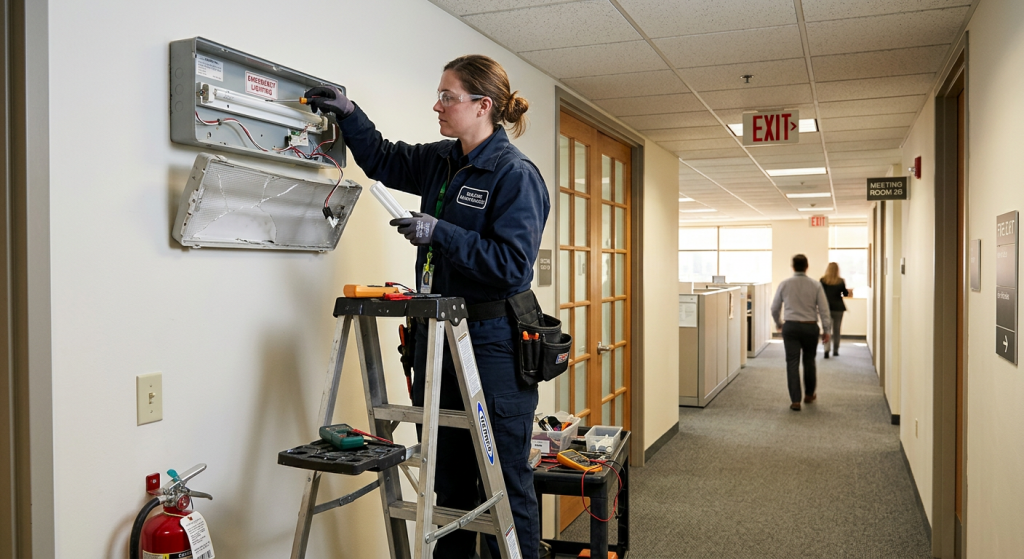
Cracked fittings, damaged lenses, faulty batteries, and electrical faults reduce the effectiveness of emergency lighting systems.
Ignoring minor issues may leave sections of the building inadequately illuminated during emergencies.
Common Maintenance Issues
Professional inspections often identify:
- Battery failures
- Damaged fittings
- Faulty chargers
- Loose connections
- Water damage
- Age-related deterioration
Prompt Repairs Improve Reliability
Repairing defects early helps maintain consistent emergency lighting performance throughout the building.
7. Emergency Lighting Must Support Safe Evacuation Routes
Evacuation Routes Should Always Be Clearly Lit
Emergency lighting should provide adequate illumination along designated evacuation pathways, helping occupants safely navigate towards exits.
Areas Requiring Particular Attention
Lighting should effectively support:
- Changes in floor level
- Staircases
- Direction changes
- Exit doors
- External assembly paths
Good visibility reduces panic and improves evacuation efficiency.
Lighting Design Matters
Professional system design ensures lighting coverage remains consistent throughout the evacuation route.
8. Emergency Lighting Systems Should Be Upgraded as Buildings Change
Buildings Evolve Over Time
Office layouts, tenancy configurations, warehouse shelving, and commercial fit-outs often change.
These changes may affect emergency lighting coverage.
Renovations Can Create Compliance Gaps
Adding walls, relocating workstations, or expanding office spaces may leave some areas without adequate emergency illumination.
Review Systems During Renovations
Whenever commercial spaces are modified, emergency lighting should also be reviewed to ensure continued compliance.
9. Battery Systems Must Be Monitored Throughout Their Lifespan
Batteries Naturally Age
Every emergency lighting system relies on battery backup.
Like all rechargeable batteries, performance gradually declines over time.
Ageing Batteries Can Reduce Performance
As batteries deteriorate they may:
- Lose capacity
- Fail duration tests
- Charge incorrectly
- Fail completely
Replacement Before Failure Is Best
Proactive battery replacement helps maintain reliable emergency operation while reducing unexpected failures.
10. Professional Maintenance Improves Long-Term Compliance
Compliance Is an Ongoing Process
Emergency lighting requires regular attention throughout its service life.
Professional maintenance programs help ensure systems remain reliable while reducing administrative burden for building owners.
Preventative Maintenance May Include
- Routine inspections
- Battery testing
- Cleaning fittings
- Fault identification
- Replacement recommendations
- Compliance reporting
Better Long-Term Performance
Preventative maintenance extends system lifespan while improving reliability and reducing costly emergency repairs.
11. Work Should Always Be Completed by Qualified Electrical Professionals
Specialist Knowledge Matters
Emergency lighting forms part of a building’s essential life safety systems.
Installation, testing, maintenance, and upgrades should always be completed by licensed electricians familiar with Australian Standards and commercial compliance requirements.
Professional Services Provide
- Accurate inspections
- Reliable testing
- Quality workmanship
- Compliance reporting
- Safe installations
- Long-term maintenance planning
Protect Your Business
Working with experienced electrical professionals helps ensure emergency lighting continues protecting occupants while supporting ongoing regulatory compliance.
Why Emergency Lighting Compliance Matters
Emergency lighting does far more than satisfy regulatory requirements.
It protects:
- Employees
- Customers
- Visitors
- Contractors
- Emergency responders
Maintaining compliant emergency lighting also helps deliver:
- Safer evacuations
- Improved visibility
- Reduced business risk
- Better building management
- Greater occupant confidence
- Lower long-term maintenance costs
- Improved emergency preparedness
When properly maintained, emergency lighting provides reassurance that your building remains prepared for unexpected situations.
How to Maintain Emergency Lighting Compliance
Schedule Regular Professional Inspections
Routine inspections allow qualified electricians to identify ageing equipment, battery failures, damaged fittings, and compliance concerns before they become serious problems.
Keep Maintenance Records Up to Date
Maintaining detailed documentation simplifies audits while demonstrating ongoing commitment to electrical safety.
Upgrade Ageing Equipment
Older emergency lighting systems may no longer provide the efficiency, reliability, or performance available through modern LED emergency lighting technology.
Replacing outdated fittings improves reliability while reducing maintenance requirements.
Include Emergency Lighting in Preventative Maintenance Programs
Rather than treating emergency lighting separately, incorporating inspections into an overall preventative electrical maintenance program helps ensure nothing is overlooked.
How Spectra Electrical Can Help
At Spectra Electrical, we understand the critical role emergency lighting plays in protecting commercial buildings, employees, customers, and visitors. With more than 20 years of industry experience, we provide professional emergency lighting installation, testing, maintenance, and upgrade services for commercial, industrial, strata, and facility management clients across Sydney.
Our experienced electricians help businesses maintain safe and compliant electrical systems through proactive maintenance and expert advice tailored to each property’s unique requirements.
Our commercial electrical services include:
- Emergency lighting inspections and testing
- Emergency lighting upgrades
- Exit sign installation and maintenance
- Preventative electrical maintenance
- Commercial electrical compliance inspections
- Switchboard upgrades
- Data and communications cabling
- LED lighting upgrades
- Thermal imaging inspections
- Electrical fault finding
- Level 2 ASP services
- General commercial electrical services
Whether you’re managing an office building, warehouse, retail centre, educational facility, healthcare environment, or strata property, Spectra Electrical can help ensure your emergency lighting systems remain reliable, compliant, and ready to perform when they’re needed most.
Final Thoughts
Emergency lighting is one of the most important life safety systems in any commercial building. While it may rarely be used, its performance during an emergency can make a significant difference to the safe evacuation of occupants.
By ensuring emergency lighting is correctly installed, regularly tested, properly maintained, accurately documented, and professionally managed, building owners and managers can meet their compliance obligations while creating a safer environment for everyone who enters the property.
Rather than waiting for inspections to uncover problems, adopting a proactive maintenance strategy helps reduce risk, improve reliability, and extend the lifespan of your emergency lighting system.
Partnering with experienced commercial electricians like Spectra Electrical ensures your emergency lighting remains compliant with Australian Standards, professionally maintained, and ready to provide critical illumination whenever an emergency occurs.