
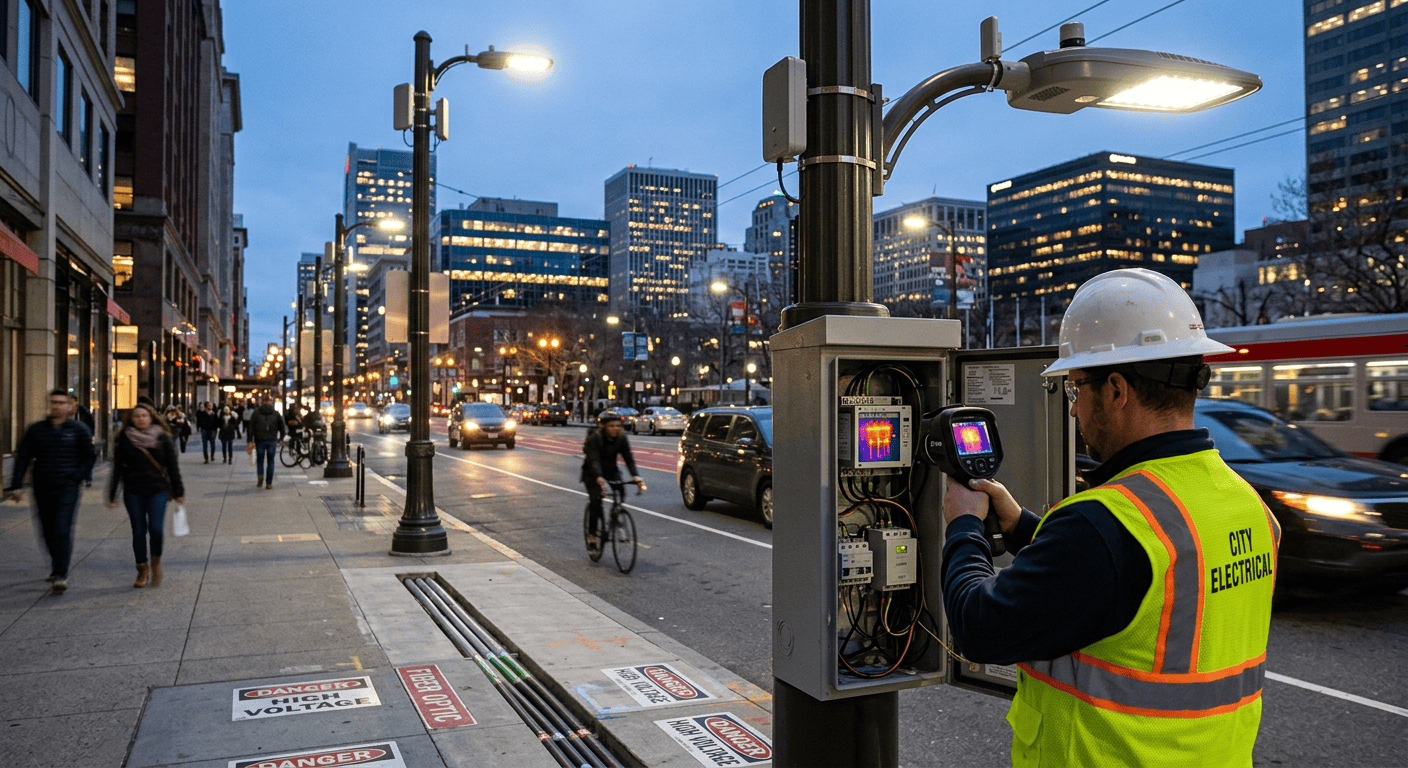
11 Smart Infrastructure Upgrades That Improve Public Safety
Public safety depends on more than emergency services and effective regulations. The infrastructure surrounding communities also plays a critical role in keeping people safe.
From public buildings and community centres to car parks, commercial properties, sporting facilities, aged care environments and shared residential developments, well-designed electrical infrastructure can improve visibility, security, communication and emergency response.
As technology continues to evolve, traditional infrastructure can be enhanced with smarter and more efficient solutions. LED lighting, CCTV systems, access control, emergency lighting, data cabling, smart monitoring and electrical maintenance programs can all contribute to safer environments when properly designed and maintained.
For property owners, facility managers, strata committees and organisations responsible for public-facing buildings, investing in infrastructure upgrades isn’t simply about modernising a property. It’s about creating environments where people can move, work and gather with greater confidence.
Here are 11 smart infrastructure upgrades that improve public safety, while also making buildings more reliable, efficient and future-ready.
1. Upgrade to Modern LED Lighting
Good lighting is one of the simplest and most effective ways to improve safety around a property.
Poorly illuminated car parks, walkways, entrances, stairwells and communal areas can create visibility issues and make it harder for people to identify hazards or suspicious activity.
Improve Visibility With LED Technology
Modern LED lighting can provide brighter, more consistent illumination while using less energy than many older lighting technologies.
LED upgrades can be particularly valuable in:
- Car parks
- Footpaths
- Building entrances
- Stairwells
- Corridors
- Sporting facilities
- Public amenities
- Outdoor gathering areas
A professionally designed lighting system should consider more than simply increasing brightness. Light placement, coverage, glare and consistency all influence how effectively an area is illuminated.
2. Install Smart Lighting Controls
Modern lighting can become even more effective when combined with intelligent controls.
Motion and occupancy sensors can automatically activate lighting when people enter particular areas. Timers and automated controls can also ensure lighting operates when it is needed.
Improve Safety While Managing Energy
Smart lighting controls can be useful in areas that aren’t occupied continuously, such as:
- Storage areas
- Car parks
- Hallways
- Bathrooms
- Back-of-house areas
Lighting can be programmed to respond to occupancy patterns while maintaining appropriate visibility.
This creates a balance between public safety and energy efficiency.
3. Strengthen CCTV Infrastructure
CCTV has become an important component of security infrastructure across many public and commercial environments.
Modern camera systems can provide greater visibility around entrances, car parks, building perimeters and other important areas.
Infrastructure Matters
A CCTV system isn’t only about the cameras themselves. Reliable power and communications infrastructure are essential for supporting the system.
A professional installation may require appropriate:
- Data cabling
- Power supplies
- Network equipment
- Communications cabinets
- Camera positioning
- Recording infrastructure
Strategically positioned cameras can help provide greater visibility across areas where security incidents or safety concerns may occur.
4. Upgrade Access Control Systems
Not every part of a property needs to be accessible to everyone.
Access control systems can help organisations manage who can enter specific areas and when.
Modern systems can incorporate:
- Electronic access cards
- Keypads
- Mobile credentials
- Intercoms
- Electronic locks
- Automated gates
Control Access More Effectively
Access control can be particularly useful in commercial buildings, apartment complexes, schools, community facilities and other properties with restricted areas.
It can help separate public spaces from areas containing sensitive equipment, electrical infrastructure, records or other restricted assets.
5. Maintain Emergency and Exit Lighting
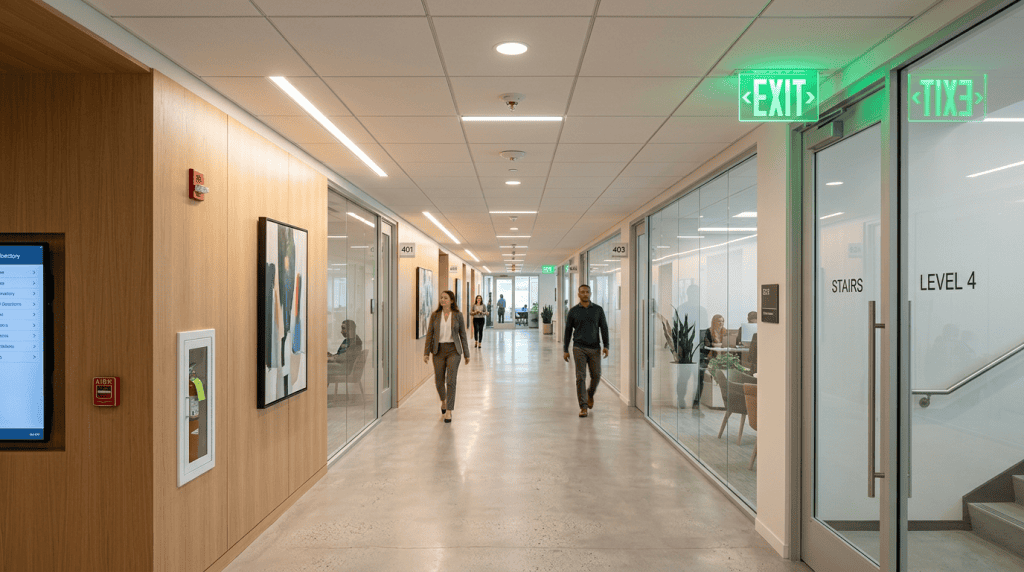
Emergency lighting is a critical safety system that shouldn’t be overlooked.
If normal electrical power fails, occupants need to be able to identify evacuation routes and exits.
Regular Maintenance Is Essential
Emergency lighting systems should be regularly inspected and maintained to ensure they remain capable of operating when required.
Potential issues can include:
- Failed batteries
- Faulty fittings
- Damaged exit signs
- Poor illumination
- Electrical faults
A modern emergency lighting system is only useful if it functions correctly during an emergency.
Regular testing and maintenance should therefore form part of a property’s broader safety strategy.
6. Improve Data and Communications Infrastructure
Public safety increasingly depends on reliable communications.
CCTV, access control, intercoms, alarms, Wi-Fi and other connected systems all rely on communications infrastructure.
Build a Reliable Network
Structured data cabling can provide the physical foundation required to support these technologies.
An organised communications network can make it easier to:
- Connect security equipment
- Expand CCTV coverage
- Install additional access points
- Integrate smart systems
- Troubleshoot faults
- Upgrade technology
Poor or outdated data infrastructure can become a significant limitation as buildings adopt more connected technology.
7. Upgrade Electrical Switchboards and Protection
Electrical safety is a fundamental part of public safety.
An ageing or overloaded switchboard can create risks while also limiting a building’s ability to support modern equipment.
Know What’s Happening Inside the Switchboard
A professional electrical inspection can identify issues such as:
- Ageing components
- Overloaded circuits
- Poor connections
- Damaged equipment
- Inadequate protection
Switchboard upgrades may improve the reliability and protection of the building’s electrical system.
This becomes particularly important when additional infrastructure such as CCTV, EV chargers, lighting systems or security equipment is being installed.
8. Use Thermal Imaging for Preventative Electrical Maintenance
Some electrical problems aren’t obvious during a visual inspection.
Thermal imaging technology can identify unusual heat patterns within electrical equipment, potentially helping electricians identify developing problems before they result in equipment failure.
Identify Problems Earlier
Thermal imaging can be useful when inspecting equipment such as:
- Switchboards
- Distribution boards
- Electrical connections
- Circuit protection equipment
Detecting abnormal temperatures can provide an opportunity for further investigation and preventative maintenance.
For larger buildings and facilities, incorporating thermal imaging into a broader electrical maintenance strategy can help identify potential problems before they become more disruptive.
9. Improve Security and Emergency Lighting Around Car Parks
Car parks can present unique safety challenges, particularly in larger commercial or residential buildings.
Adequate lighting, CCTV coverage, access control and clear pedestrian pathways can all contribute to a safer environment.
Create Better Visibility
A car park infrastructure upgrade might include:
- LED lighting
- Motion sensors
- CCTV
- Emergency lighting
- Security access control
- Pedestrian lighting
- Improved electrical distribution
These systems can work together to improve visibility and security rather than operating as isolated technologies.
10. Introduce Smart Monitoring and Building Technology
Smart building systems can provide greater visibility over what is happening throughout a property.
Sensors and monitoring systems can help facility managers understand equipment performance, energy consumption and other building conditions.
Make Infrastructure More Responsive
Depending on the property, smart systems can monitor areas such as:
- Lighting
- Energy consumption
- Electrical equipment
- Building access
- Environmental conditions
- Equipment status
Greater visibility can help facility managers respond more quickly when something isn’t operating as expected.
Smart infrastructure can therefore support both operational efficiency and safety management.
11. Implement a Preventative Electrical Maintenance Program
Perhaps the most important infrastructure upgrade isn’t a particular piece of equipment at all.
It’s a commitment to maintaining the infrastructure already installed.
Electrical systems, lighting, security equipment and communications infrastructure can deteriorate over time.
Don’t Wait for Equipment to Fail
Preventative electrical maintenance can help identify developing issues before they become major problems.
A maintenance program may involve:
- Electrical inspections
- Switchboard inspections
- Thermal imaging
- Emergency lighting testing
- Fault finding
- Equipment checks
- Electrical repairs
- Documentation and reporting
Regular maintenance helps ensure safety systems remain functional rather than discovering a problem only when the equipment is urgently needed.
Why Public Safety Infrastructure Should Be Integrated
One of the biggest mistakes organisations can make is treating each safety system as a completely separate project.
Lighting, CCTV, access control, communications, electrical distribution and emergency systems often rely on one another.
For example, a CCTV camera needs appropriate power and communications connectivity. An access control system requires electrical infrastructure and data connectivity. Smart lighting depends on suitable electrical distribution and potentially communications infrastructure.
Design Systems Together
Taking an integrated approach can make infrastructure more reliable and easier to manage.
When planning upgrades, consider how each system interacts with the others and whether existing infrastructure can support additional technology.
The Importance of Future-Proofing Public Safety Infrastructure
Technology continues to change rapidly.
A security system installed today may eventually need additional cameras. A building with basic lighting may later adopt smart controls. An EV charging installation may expand as more people switch to electric vehicles.
This makes future planning particularly important.
Build in Flexibility
Future-ready infrastructure can include:
- Spare electrical capacity
- Additional data cabling
- Accessible cable pathways
- Scalable switchboards
- Modular security systems
- Expandable lighting controls
Planning for expansion doesn’t mean installing everything immediately.
Instead, it means making sensible infrastructure decisions that prevent future upgrades from becoming unnecessarily difficult or expensive.
Benefits Beyond Public Safety
Smart infrastructure upgrades can provide benefits that extend beyond safety.
Depending on the project, organisations may also achieve:
Improved Energy Efficiency
LED lighting and intelligent controls can reduce unnecessary electricity consumption.
Reduced Maintenance
Modern equipment can require less maintenance, while preventative programs can identify problems earlier.
Better Property Management
Smart monitoring and connected systems can provide facility managers with greater visibility.
Improved User Experience
Better lighting, security, access and connectivity can make public and shared spaces more comfortable and convenient.
Greater Long-Term Value
Well-maintained and future-ready infrastructure can help a property remain functional as technology and user expectations change.
How to Plan a Public Safety Infrastructure Upgrade
Before starting a major upgrade, property owners and facility managers should consider the existing condition of the building.
Start by identifying areas where safety or reliability could be improved.
This may include:
- Poorly lit areas
- Ageing electrical infrastructure
- Inadequate CCTV coverage
- Outdated access control
- Insufficient emergency lighting
- Poor data infrastructure
- Repeated electrical faults
From there, upgrades can be prioritised based on safety, urgency, budget and future requirements.
A professional electrical assessment can help identify weaknesses and establish a practical improvement plan.
How Spectra Electrical Can Help
At Spectra Electrical, we understand that reliable electrical infrastructure plays an important role in creating safer, more functional properties.
With more than 20 years of experience servicing Sydney properties, our team provides electrical, communications and infrastructure solutions for commercial buildings, strata properties, industrial sites, community facilities, aged care environments and other properties where safety and reliability matter.
Our services include:
- Commercial electrical services
- LED lighting upgrades
- Emergency lighting
- Switchboard upgrades
- Preventative electrical maintenance
- Thermal imaging
- Data and communications cabling
- CCTV and security infrastructure
- Access control infrastructure
- EV charger installations
- Surge protection
- Level 2 electrical services
Whether you’re managing a community facility, commercial building, strata property or other public-facing environment, Spectra Electrical can help identify practical opportunities to improve your electrical infrastructure.
By considering electrical systems, lighting, communications and security together, property owners can create safer and more reliable environments while preparing for future technology.
Final Thoughts
Public safety relies on infrastructure that people often don’t think about until something goes wrong.
Lighting needs to work when people are walking through a car park at night. Emergency systems need to operate when normal power fails. CCTV needs reliable power and communications. Access control needs to function when it is needed. Electrical equipment needs to be maintained before faults become serious.
Smart infrastructure upgrades provide an opportunity to address these requirements proactively.
From LED lighting and smart controls to CCTV, access control, emergency lighting, structured data cabling, switchboard upgrades, thermal imaging and preventative maintenance, there are numerous ways property owners can strengthen the safety and reliability of their buildings.
The most effective approach is to look at the property as a complete system rather than upgrading individual components in isolation.
By investing in well-designed, professionally installed and properly maintained infrastructure, organisations can create environments that are safer, more efficient and better prepared for the future.
For properties across Sydney, working with an experienced electrical contractor such as Spectra Electrical can help turn these infrastructure improvements into practical, reliable solutions that support both public safety and long-term property performance.