
5 Amazing Ways Warm vs Cool Lights Affect Your Mood
5 Amazing Ways Warm vs Cool Lights Affect Your Mood.
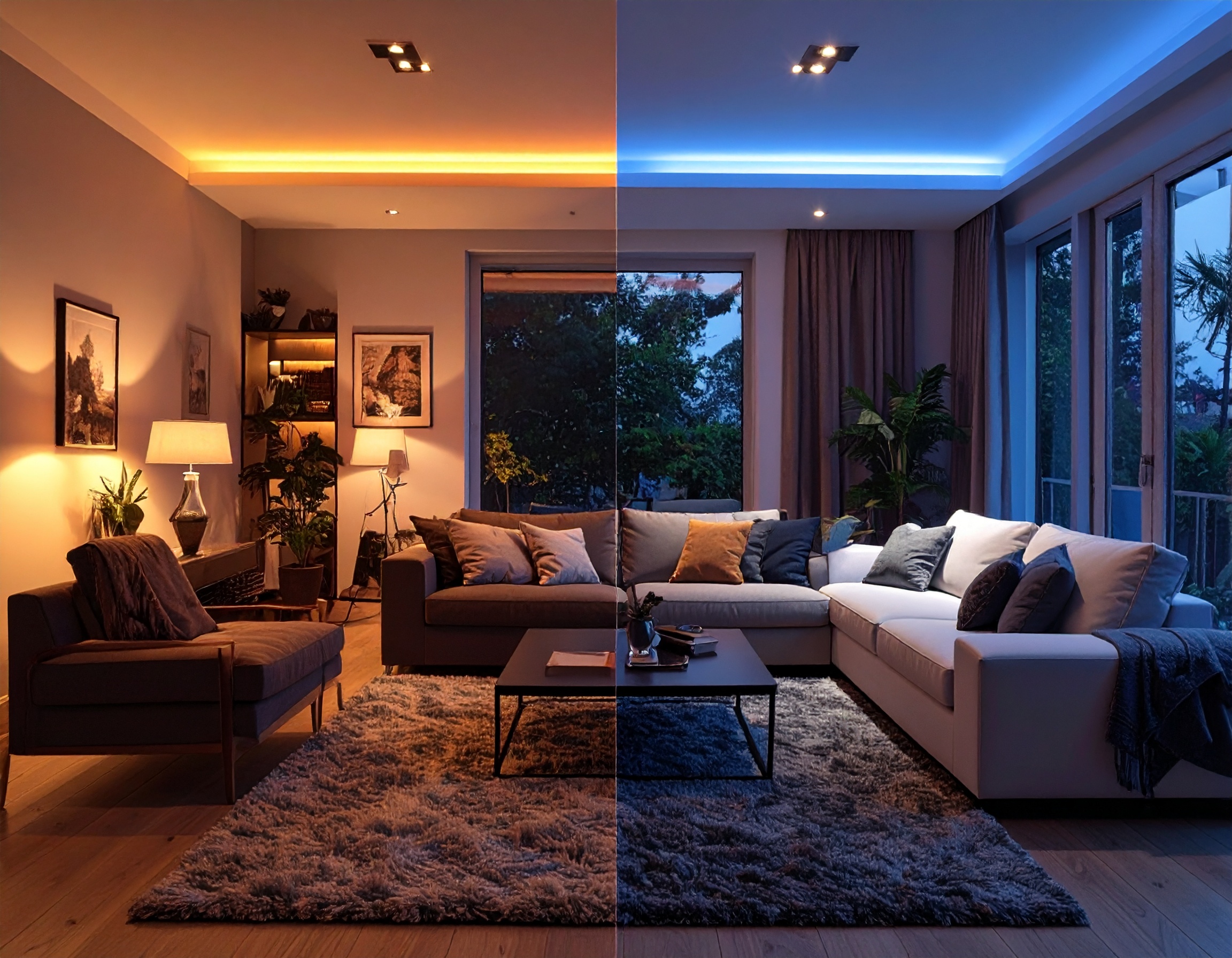
If you’ve ever walked into a café bathed in golden light and instantly felt relaxed—or stepped into a bright pharmacy and felt awake—you’ve experienced the mood-shaping power of colour temperature. In lighting, “warm” usually means 2700–3000K (think sunset glow) and “cool” means 4000–6500K (think bright daylight). Choosing the right end of that spectrum can nudge your body clock, influence stress levels, and even change how food tastes and spaces feel. Here are five powerful ways warm vs cool lighting affects your mood—plus practical tips to use them well in an Aussie home.
1) It tunes your body clock (and your sleep)
Your brain takes lighting cues to decide when to be alert and when to wind down. Cool, blue-richer light (4000–6500K) mimics daylight and tells your body, “It’s time to be switched on.” Warm light (2700–3000K) resembles sunset and signals, “Relax—bedtime’s coming.”
Why it matters for mood:
Get this wrong and you can feel out of sync—wired at night, sluggish in the morning. In Australia, where summer daylight stretches long and winter sunsets arrive early, matching interior light to your rhythm makes a big difference. Use cooler light in the morning and daytime to lift alertness; shift to warmer light after dusk to support relaxation and better sleep.
Do this at home:
- Use tunable white or smart bulbs to schedule cool light at breakfast and warm light after dinner.
- Keep bedrooms and living areas warm-toned in the evening (lamps at 2700K).
- In rooms with poor daylight (e.g., internal studies), introduce a 4000–5000K task light during the day, then switch back to warm in the evening.
2) It reshapes social comfort and connection
Warm light has a subtle, flattering amber cast that softens edges, warms skin tones, and reduces visual harshness. The result is a cosy, welcoming atmosphere that encourages conversation and lingers. Cool light can feel more clinical and objective—great for clarity, not so great for intimacy.
Why it matters for mood:
Humans naturally associate firelight and sunset hues with safety and togetherness. That’s why warm light helps people relax, share, and stay. If your dining room feels a bit “rushed” or your lounge never quite settles, the colour temperature could be the culprit.
Do this at home:
- Aim for 2700–3000K in living rooms, dining areas, and outdoor entertaining spaces.
- Use multiple low-level light sources—table lamps, wall lights, or dimmable pendants—to layer ambience instead of one harsh downlight.
- Choose high-CRI (90+) warm LEDs to keep skin tones natural and flattering in family spaces.
3) It boosts (or blunts) focus and productivity
When you need to read, design, calculate, or assemble, cooler or neutral-cool light improves visual acuity and reduces mental drift. You perceive contrast more readily and maintain attention longer. Conversely, trying to work under very warm, dim light can make you feel sleepy and imprecise.
Why it matters for mood:
Struggling to concentrate is frustrating. Over a day, that frustration compounds into stress. Good task lighting doesn’t just help you see—it supports a calm, controlled mental state, especially in home offices where competing demands (kids, pets, deliveries) can erode focus.
Do this at home:
- In home offices and study nooks, target 4000–5000K at the desk with a dedicated task lamp; keep the surrounding area slightly warmer and dimmer to reduce glare and visual fatigue.
- In kitchens and laundries—true task zones—use neutral to cool (3500–4000K) under-cabinet strips or down lights for crisp, shadow-free prep areas.
- Avoid ultra-cool 6500K unless you’re matching specific daylight-critical tasks; it can feel stark in homes.
4) It changes how you see colour, cleanliness, and space
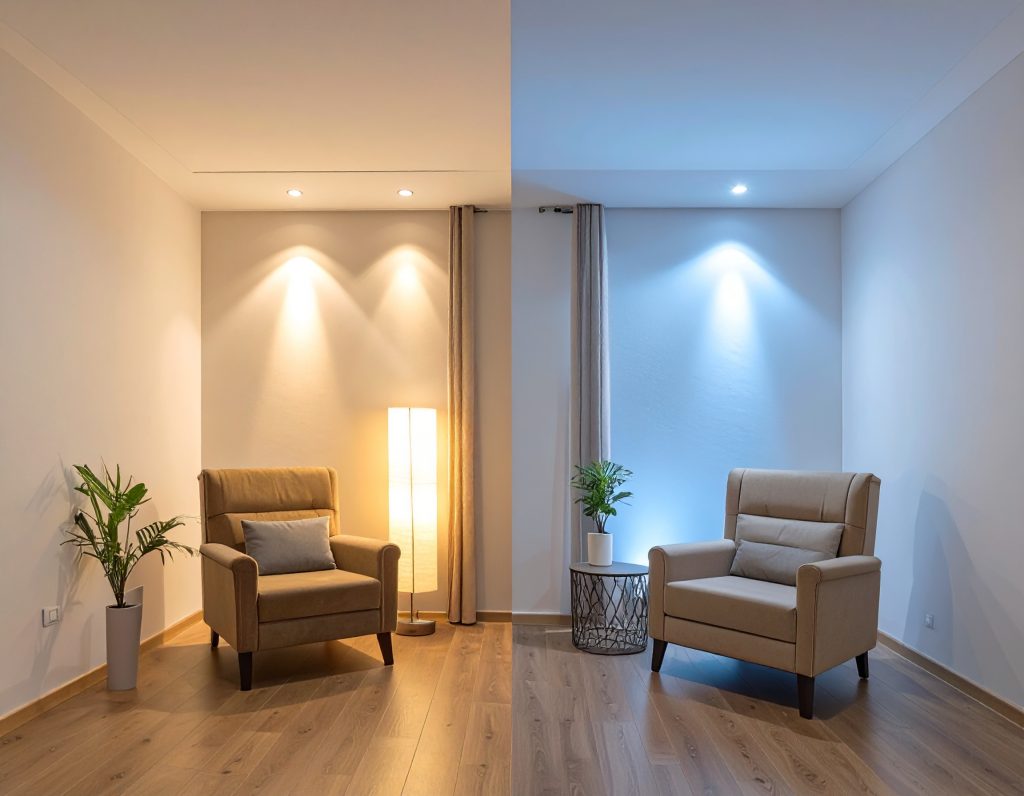
Colour temperature alters perception. Cool light makes whites look crisper, stainless steel sleeker, and tiles cleaner—great for bathrooms and modern kitchens. Warm light makes timber richer, fabrics cosier, and spaces more intimate—perfect for bedrooms and lounges. It even influences how big a room feels: cool light can open up a space; warm light can wrap it in.
Why it matters for mood:
Feeling like your bathroom is perpetually “meh”? It might be too warm and dull. Think your lounge is cold and echoey? It may be too cool and sparse. By shifting colour temperature you can align a room’s visual character with its emotional purpose—calm here, crisp there—without repainting a wall.
Do this at home:
- Bathrooms: 3500–4000K at the mirror for truer skin tones and a clean, fresh feel; add a warm, dimmable night light for wind-down baths.
- Kitchens: combine neutral task light on benches with warmer pendants over the island to balance clarity and hospitality.
- Hallways and entries: lean warmer (2700–3000K) to feel welcoming as you arrive home.
5) It nudges stress, appetite, and emotional tone
Lighting doesn’t just help you see; it sets your emotional baseline. Cooler, brighter scenes energise and can subtly raise arousal—great before school runs or workouts. Warmer, lower-brightness scenes calm the nervous system, helping you decompress after a long day. Warm light also enhances the appearance of food, boosting appetite and making meals feel more indulgent—ever notice restaurants rarely use icy-white lighting?
Why it matters for mood:
When your lighting fights the moment, you feel off—wired when you want calm, flat when you need pep. Aligning brightness and colour temperature with activity reduces daily friction and supports healthier routines (wind-down, family time, sleep).
Do this at home:
- Set scenes: “Morning Boost” (brighter, neutral-cool), “After-School Calm” (warmer, medium), “Dinner & Chat” (warm, layered), “Pre-Sleep” (very warm, low).
- Use dimmers as much as colour temperature—brightness and tone work together.
- In dining spaces, aim warm; in workout/garage zones, lean neutral-cool to energise.
Putting it into practice in an Aussie home
Room-by-room cheat sheet:
- Living & Bedrooms: 2700–3000K, layered with lamps and dimmers for evening wind-down.
- Kitchen: 3500–4000K on benches; 2700–3000K pendants for hospitality.
- Bathroom: 3500–4000K at the mirror; warm, low-level night option near the bath.
- Study/Home Office: 4000–5000K at the desk, indirect ambient light around 3000–3500K.
- Outdoor Entertaining: 2200–2700K festoons or wall lights for cosy gatherings; keep glare low to avoid insect swarms and eye strain.
- Garage/Laundry: 4000K for clarity and contrast.
Tech to make it easy:
- Tunable white (CCT) LEDs let you slide from cool to warm in one fitting.
- Smart dimmers and schedules automate morning boost/evening wind-down.
- Choose high CRI (90+) lamps so colours and skin tones look natural under any temperature.
Safety first:
If you’re adding dimmers, upgrading multiple circuits, or installing smart controls, use a licensed electrician to ensure compatibility (especially with existing down lights and drivers) and AS/NZS compliance.
Final thoughts
Warm vs cool lighting is more than a style choice—it’s a mood tool. Cool light sharpens focus and energises your day; warm light softens edges, deepens connection, and prepares you for sleep. By matching colour temperature (and brightness) to the purpose of each room and time of day, you’ll feel the difference in productivity, calm, and comfort—no renovations required. Start with one space, set a couple of scenes, and let your lighting do the quiet work of making home feel exactly right, exactly when you need it. If you are in need of any lighting installations, reach out to Spectra Electrical today!