

5 Dangerous Myths About Overhead-to-Underground Service Conversions
Overhead-to-underground electrical service conversions are becoming an increasingly popular option for property owners looking to improve the appearance, accessibility and electrical infrastructure of their properties. Replacing overhead service cables with an underground connection can remove visible wires, reduce exposure to certain weather-related risks and support changes to a property’s electrical supply.
However, there are several misconceptions surrounding the process. Some property owners assume the conversion is a straightforward job, while others believe their electricity distributor will automatically cover the costs or that any electrician can complete the work.
These misunderstandings can lead to unexpected expenses, project delays and potentially unsafe electrical installations.
Whether you’re planning a home renovation, building a new property or simply looking to modernise your electrical connection, understanding how an overhead-to-underground service conversion works is essential.
Here are 5 dangerous myths about overhead-to-underground service conversions, and what property owners should know before getting started.
1. Myth: Any Electrician Can Complete an Overhead-to-Underground Conversion
One of the most common misconceptions is that converting an overhead electrical service to an underground connection is a standard electrical job that any licensed electrician can undertake.
While a licensed electrician can complete many types of electrical installation work, certain activities involving the connection between a property and the electricity distribution network require additional accreditation.
The importance of a Level 2 Accredited Service Provider
In NSW, an Accredited Service Provider (ASP) with the appropriate Level 2 accreditation is generally required for work involving the alteration, installation or reconnection of service lines between a property and the electricity network.
This is because the work involves specialised procedures and coordination with the local electricity distributor, such as Ausgrid, Endeavour Energy or Essential Energy.
Depending on the project, the required work may involve disconnecting an existing overhead service, installing underground service cables, modifying the connection arrangement and completing the necessary testing and reconnection procedures.
Importantly, Level 2 accreditation is divided into different classes, so the contractor must hold the appropriate accreditation and authorisation for the specific work being undertaken.
Why choosing the right contractor matters
Engaging an appropriately accredited Level 2 ASP helps ensure the network-related work is completed by qualified and authorised personnel.
Before proceeding, confirm that your contractor has the relevant accreditation for both the overhead and underground components of the proposed conversion.
Choosing the right contractor from the beginning can help prevent compliance issues, unnecessary delays and complications during the connection process.
2. Myth: The Electricity Distributor Pays for the Entire Conversion
Another common misconception is that the local electricity distributor will cover the cost of converting overhead power lines to an underground connection.
While electricity distributors own and maintain their distribution networks, this does not automatically mean they will pay for changes requested by individual property owners.
Understanding who is responsible for the costs
When a property owner requests an overhead-to-underground conversion, the costs can depend on the existing electrical infrastructure, the proposed connection arrangement and the requirements of the local distributor.
In many cases, property owners are responsible for costs associated with the work required to convert their individual service connection.
These expenses may include:
- Level 2 electrical contractor labour.
- Underground service cables and electrical materials.
- Conduit installation and trenching.
- Connection alterations and associated equipment.
- Required inspections, applications or distributor-related charges.
- Removal or disconnection of redundant overhead components, where applicable.
The exact scope and cost will vary depending on the property and the distributor’s requirements.
Obtain a clear understanding of the project costs
Before commencing work, arrange an assessment and request a detailed quotation outlining the proposed conversion.
A reliable Level 2 contractor should be able to explain the expected work, identify potential additional requirements and clarify which costs are included in the quotation.
Understanding these responsibilities early can help property owners avoid unexpected expenses once the project is underway.
3. Myth: Underground Electrical Connections Can Be Installed Anywhere
It is easy to assume that if you want your overhead electrical connection moved underground, the new cable can simply be installed wherever it is most convenient.
Unfortunately, underground electrical installations must follow specific technical requirements, and the available connection options can depend on the existing distribution network.
Existing infrastructure determines what is possible
The location of nearby electricity poles, underground distribution assets, property boundaries, existing services and available access can all influence the design of an overhead-to-underground conversion.
For example, some properties may be suitable for an underground service connected from an existing electricity distribution pole. This arrangement is commonly referred to as an underground-to-overhead connection, or UGOH, because the service transitions from underground cabling to the overhead network at the pole.
However, not every property will be suitable for the same arrangement.
The electricity distributor may need to inspect the site and assess whether the proposed connection meets its requirements. Additional design considerations or approvals may also be necessary.
Underground services must be located before excavation
Another important consideration is the presence of existing underground infrastructure.
Properties may contain electrical cables, telecommunications conduits, gas pipes, water services and drainage infrastructure. Excavating without identifying these services can create serious safety hazards and expensive damage.
Before excavation begins, appropriate underground service information should be obtained through Before You Dig Australia (BYDA), and further locating work may be necessary.
Why professional planning is essential
A Level 2 ASP can assess the existing connection, discuss suitable options and help coordinate the proposed work with the relevant electricity distributor.
Planning the cable route, excavation requirements and connection arrangement before work begins can help reduce unnecessary disruption to driveways, landscaping and other finished areas.
4. Myth: Converting to Underground Power Is a Quick and Simple Process
Some property owners expect an overhead-to-underground conversion to be completed in a single day with minimal preparation.
While certain straightforward projects may be completed relatively quickly, the overall process can involve several stages that need to be coordinated before the new connection can be energised.
What does the conversion process involve?
Depending on the property’s circumstances, an overhead-to-underground service conversion may involve:
Initial site assessment: The existing electrical supply, property layout and proposed cable route are assessed to determine what work is required.
Planning and approvals: The proposed arrangement may need to be submitted to the electricity distributor for review or approval, depending on the scope of work.
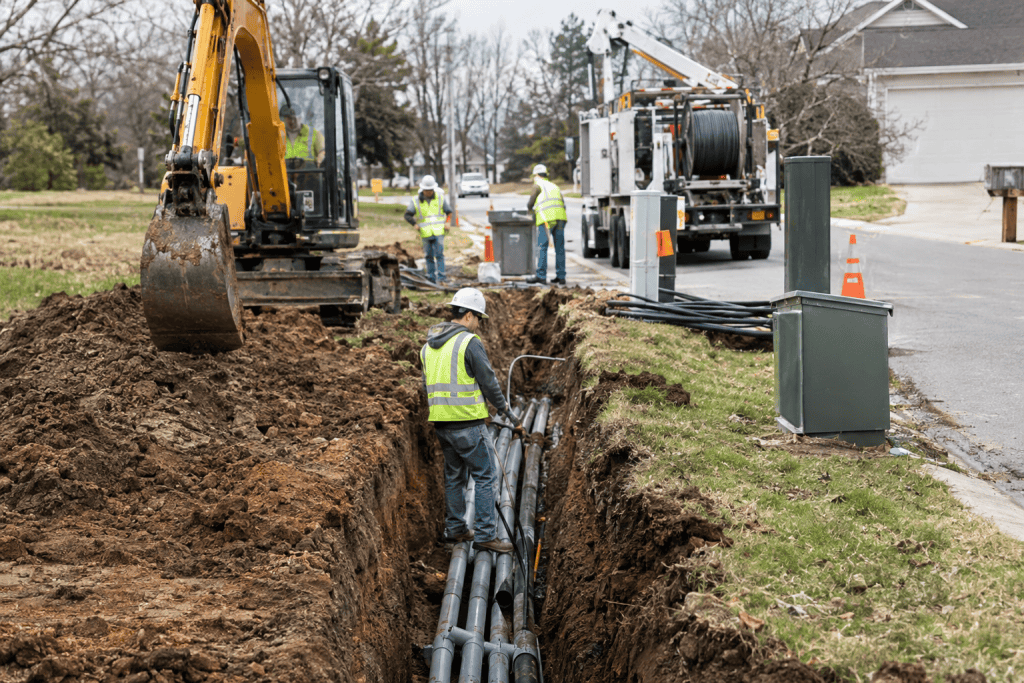
Preparation and excavation: The underground cable route is prepared, which may involve trenching, conduit installation and coordination around existing underground services.
Electrical installation: The required underground service cable and associated equipment are installed in accordance with applicable requirements.
Connection and testing: The existing overhead connection is disconnected or modified as required, and the new arrangement is tested and connected through the appropriate authorised process.
Completion and reinstatement: Once electrical work is complete, remaining site works such as backfilling, surface repairs and landscaping reinstatement may be required.
Why allowing enough time matters
Delays can occur if approvals are outstanding, underground services are discovered or the proposed installation needs to be modified.
Weather conditions, site access and distributor scheduling can also influence the overall timeframe.
Property owners should discuss expected timeframes with their contractor before booking the work, particularly when the conversion forms part of a larger renovation or construction project.
5. Myth: Underground Power Eliminates All Electrical Risks and Maintenance
Moving electrical service cables underground can provide several benefits, but it does not make a property’s electrical installation completely maintenance-free or eliminate every electrical hazard.
Underground connections can reduce the property’s exposure to certain risks associated with overhead cables, but the electrical infrastructure still needs to be correctly installed, protected and maintained.
Underground cables still require protection
Underground electrical cables can be affected by excavation damage, ground movement, water ingress where installation protection is inadequate, deteriorating equipment and other external factors.
Incorrect installation or damage to underground infrastructure can create serious electrical safety concerns and potentially interrupt the property’s electricity supply.
This is why appropriate cable selection, conduit protection, installation depth, mechanical protection and compliance with relevant installation requirements are important considerations.
Your switchboard and electrical installation still matter
An overhead-to-underground conversion does not automatically resolve unrelated electrical issues within the property.
For example, an older switchboard may still require attention, existing wiring may need assessment and electrical protection devices must remain suitable for the installation.
Depending on the property’s condition and electrical requirements, additional upgrades may be recommended as part of the project.
Think beyond the connection itself
A successful conversion should consider the property’s broader electrical requirements, not simply the removal of visible overhead cables.
Having the existing installation assessed can help identify other issues that may need attention and provide a clearer understanding of the work required to maintain a safe and reliable electrical supply.
What Are the Benefits of an Overhead-to-Underground Service Conversion?
Despite the misconceptions, converting overhead electrical services to underground connections can offer several advantages when the property and network infrastructure are suitable.
Some potential benefits include:
- Improved street appeal: Removing visible overhead service cables can create a cleaner appearance around the property.
- Reduced exposure to weather: Underground cables are less exposed to falling branches, strong winds and other direct weather impacts.
- Improved property presentation: Underground connections can complement landscaping, renovations and modern building designs.
- Greater flexibility around property improvements: Removing overhead service arrangements may assist with certain building or landscaping plans, subject to approvals and network requirements.
- A modernised electrical connection: The conversion can provide an opportunity to review the existing service arrangement and address relevant electrical requirements.
It is important to remember that the benefits and feasibility of an underground conversion depend on the property’s location, existing network infrastructure and the proposed installation.
Speak to Spectra Electrical About Overhead-to-Underground Conversions
Converting overhead electrical services to underground connections requires careful planning, the correct accreditation and an understanding of the local electricity distributor’s requirements.
Whether you’re improving your home’s appearance, undertaking a major renovation or planning a new construction project, engaging an experienced Level 2 contractor can help ensure the work is properly assessed and coordinated.
Spectra Electrical & Communications is a Sydney-based electrical business and Level 2 Accredited Service Provider, supporting residential and commercial customers across Sydney, including the Hills District, Parramatta and the Eastern Suburbs.
For assistance with overhead-to-underground service conversions and other Level 2 electrical requirements, contact Spectra Electrical on 1300 665 587 or visit spectraelectrical.com.au to discuss your project.
Conclusion
Overhead-to-underground electrical service conversions can be a worthwhile improvement for suitable properties, but believing common misconceptions can lead to unnecessary costs, delays and electrical safety concerns.
Not every electrician is authorised to complete the required network connection work, the electricity distributor will not necessarily cover the entire project cost, and underground cables still require appropriate installation and protection.
The best approach is to understand the requirements before starting, assess the existing electrical infrastructure and engage an appropriately accredited Level 2 ASP.
With the right planning and professional support, property owners can make informed decisions and complete their overhead-to-underground conversion with greater confidence.
