
6 Alarming Signs Your Switchboard Needs Urgent Replacement
Your home’s switchboard plays a critical role in electrical safety, yet it’s easy to forget about it until something goes wrong. Hidden behind a panel in the garage, hallway or external meter box, it distributes electricity throughout your property and houses protective devices designed to respond to electrical faults.
However, switchboards don’t last forever. As electrical components age and household electricity demand increases, an older switchboard may become unsuitable for modern living.
From air conditioning and induction cooking to EV chargers, solar systems and battery storage, today’s homes place very different demands on electrical infrastructure than they did decades ago.
Ignoring warning signs can leave you dealing with unexpected power interruptions, expensive repairs or potentially dangerous electrical faults.
Recognising the signs your switchboard needs replacing can help you take action before a minor concern develops into a more serious problem.
Here are 6 alarming signs your switchboard needs urgent replacement.
1. Your Switchboard Has Burning Smells, Scorch Marks or Melted Components
This is one of the most serious warning signs of a potentially dangerous switchboard fault.
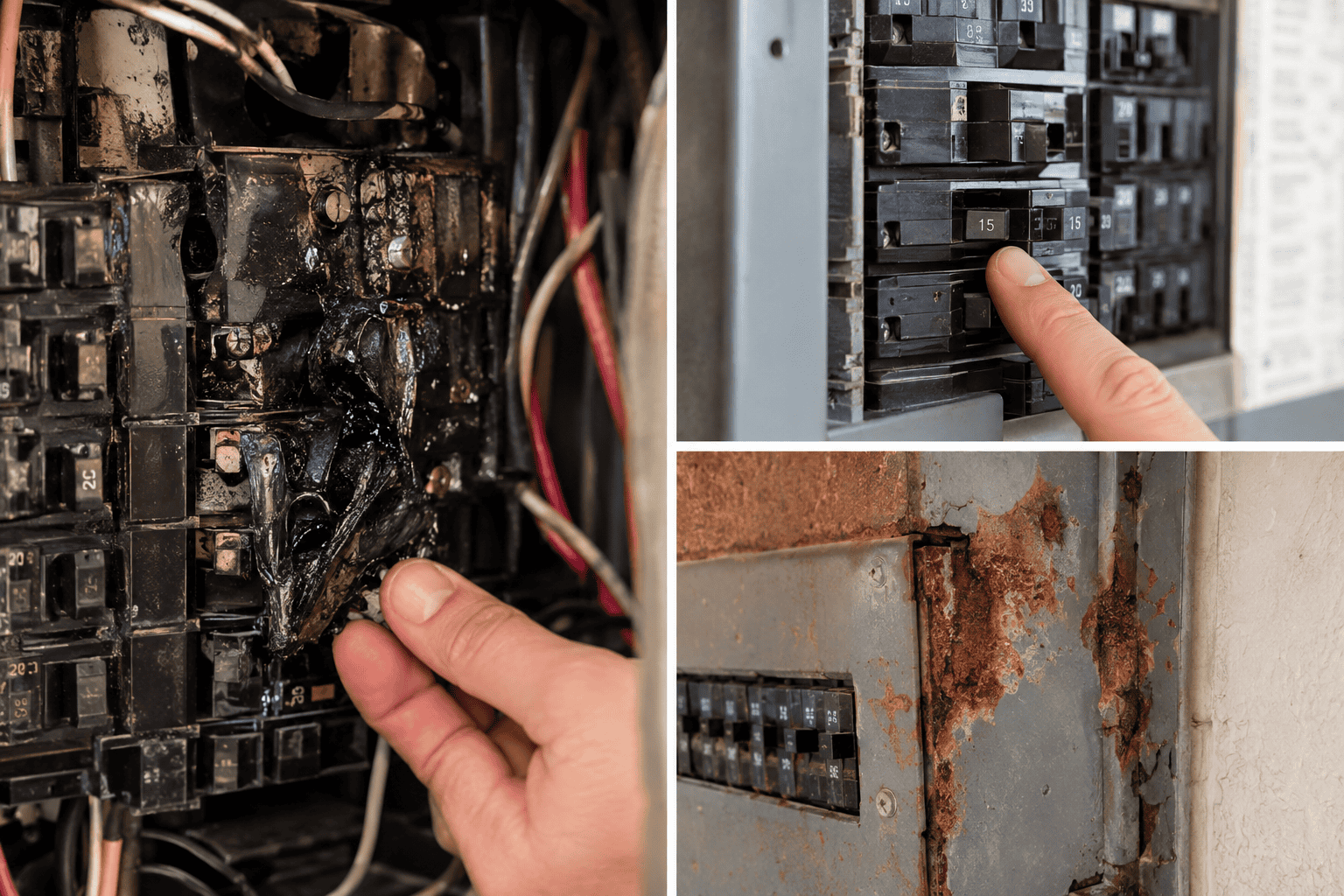
If you notice a burning smell near your switchboard, see scorch marks or spot melted plastic around electrical components, there may be excessive heat or an electrical connection problem.
Why Heat Damage Is Dangerous
Electrical connections can deteriorate over time. Loose connections, damaged components and other faults may generate heat, potentially damaging surrounding materials.
Warning signs include:
- Brown or black marks around breakers or fuse holders
- Melted or warped plastic
- A persistent burning or unusual electrical smell
- Smoke or visible sparking
- Components that appear visibly damaged
These symptoms should never be treated as ordinary wear and tear.
What Should You Do?
Treat signs of burning, smoke or active sparking as urgent. Keep clear of the switchboard, don’t remove its cover or touch potentially damaged components, and seek urgent professional assistance. If there is a fire or immediate danger, evacuate and call emergency services.
A damaged switchboard may need urgent repair or replacement, depending on the cause and extent of the damage.
2. Your Circuit Breakers Keep Tripping
Circuit breakers are designed to disconnect electrical circuits when certain overcurrent conditions occur, including overloads and short circuits.
Occasional operations can happen for legitimate reasons. However, if the same breaker repeatedly trips during normal household use, it deserves investigation.
What Repeated Tripping Could Mean
Possible causes include:
- Too many appliances operating on one circuit
- A faulty appliance
- Damaged wiring
- A short circuit
- A deteriorating connection
- An unsuitable or ageing electrical installation
The switchboard isn’t necessarily the cause every time a breaker trips. However, recurring faults can reveal problems that need to be addressed.
Why You Shouldn’t Keep Resetting the Breaker
Repeatedly switching a breaker back on without identifying the cause can leave an underlying fault unresolved.
If a breaker continues to trip, stop repeatedly resetting it and arrange an assessment by a licensed electrician.
The electrician can determine whether the problem involves the appliance, circuit, switchboard or another part of the installation, and recommend the appropriate solution.
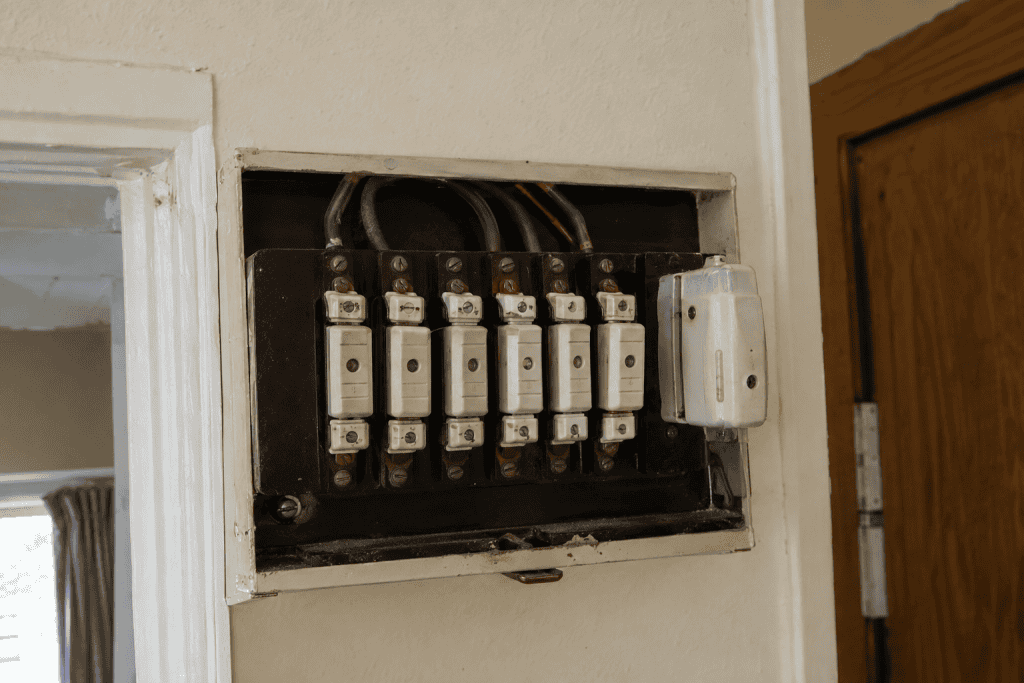
3. Your Property Still Has an Old Ceramic Fuse Board
If your home still uses ceramic or rewirable fuses, it’s worth arranging a professional switchboard assessment.
These older systems were common in Australian homes decades ago, but they may lack protection and functionality expected in many modern electrical installations.
Why Older Fuse Boards Deserve Attention
A ceramic fuse board may have been designed when households used far fewer electrical appliances.
Today, a typical home might run multiple air conditioners, kitchen appliances, computers, entertainment equipment, pool pumps and other electrical devices.
Older fuse arrangements may also have been modified over time, making it important to understand their condition and suitability.
A professional assessment can determine whether the existing installation provides appropriate protection and whether an upgrade is recommended.
What About Safety Switches?
Safety switches, also known as residual current devices (RCDs), help protect people from electric shock by detecting certain current leakage conditions and disconnecting the affected circuit.
They perform a different function from circuit breakers, which primarily protect wiring against overcurrent.
NSW Government guidance recommends checking that safety switches are installed where required and testing them every six months. You can read its electrical safety guidance for more information.
An old fuse board doesn’t automatically mean the entire installation is unsafe, but missing or inadequate protection is a good reason to have it assessed.
4. Your Switchboard Is Showing Signs of Corrosion or Physical Damage
Your switchboard needs a suitable enclosure to protect its electrical components from physical damage and environmental conditions.
Over time, exposure to moisture, dust, heat and other conditions can contribute to deterioration.
This can be particularly relevant to switchboards installed in garages, external areas, older utility rooms or locations exposed to the weather.
Warning Signs to Look For
Pay attention to:
- Rust or visible corrosion
- Cracked or broken enclosure components
- Missing or damaged covers
- Signs of moisture entering the enclosure
- Exposed electrical components
- Damage caused by impact or renovations
These conditions can affect the protection provided by the enclosure and may indicate that further inspection is required.
Why Professional Assessment Matters
Don’t remove covers or attempt to inspect internal components yourself.
A licensed electrician can assess the condition of the enclosure, protective devices and surrounding installation, then determine whether repairs or a complete switchboard replacement are appropriate.
If the switchboard is wet, significantly damaged or has exposed live parts, keep clear and seek urgent professional assistance.
5. Your Lights Flicker or You Experience Repeated Electrical Problems
Flickering lights and unexplained power interruptions can be frustrating, especially when they happen repeatedly.
While these symptoms don’t automatically mean your switchboard needs replacing, they can indicate an electrical issue that shouldn’t be ignored.
What Could Be Causing the Problem?
Possible causes include faulty appliances, circuit problems, loose connections or issues elsewhere in the electrical supply.
If multiple lights flicker, appliances behave unusually or power interruptions happen alongside other switchboard warning signs, a professional investigation is particularly important.
Don’t Assume It’s Just an Old House
Older properties can continue operating reliably, but age alone doesn’t guarantee that every component remains suitable.
If your electrical system has become increasingly unreliable, an electrician can investigate the cause and determine whether the switchboard is contributing to the problem.
Replacing the switchboard without identifying the underlying issue may not resolve every electrical symptom. The goal is to find the actual cause and correct it properly.
6. Your Switchboard Can’t Accommodate Your Modern Electrical Needs
Sometimes a switchboard needs attention not because it has visibly failed, but because the property’s electrical requirements have changed.
Modern homes increasingly use high-demand equipment that may not have been anticipated when the original switchboard was installed.
Examples include:
- Electric vehicle chargers
- Additional air conditioning
- Induction cooktops
- Solar panels and battery storage
- Pool equipment
- Electric hot water systems
- Home offices and additional circuits
Why Capacity and Space Matter
A switchboard may have limited room for additional protective devices, or its existing configuration may not be suitable for planned upgrades.
An empty space doesn’t automatically mean there is enough electrical capacity, and a full switchboard isn’t necessarily unsafe simply because every position is occupied.
The condition of the equipment, available supply capacity, circuit requirements and proposed new loads all need to be considered.
Plan Before Installing New Equipment
If you’re renovating or adding major electrical equipment, have your switchboard assessed beforehand.
An electrician can determine whether the existing installation is suitable, whether additional protection or circuits are required, or whether upgrading the switchboard would be the more practical long-term solution.
When Does a Switchboard Need Urgent Replacement?
Not every aging switchboard needs immediate replacement. The urgency depends on its condition, the nature of any faults and whether the installation remains suitable for its intended use.
However, burning smells, melting, smoke, sparking, exposed electrical components and significant water damage should never be ignored.
Recurring circuit faults and visible deterioration also warrant prompt professional assessment.
If your switchboard has any of these warning signs, avoid attempting DIY repairs. A licensed electrician can establish whether the appropriate response is immediate isolation, repair, replacement or further investigation.
Why Switchboard Upgrades Matter for Older Homes
Older homes can have electrical infrastructure that was designed for a much lower level of demand.
As properties are renovated and new technology is installed, their electrical requirements can change substantially.
A modern switchboard upgrade can provide an opportunity to review circuit protection, organisation, labelling and capacity for future additions.
However, the correct solution depends on the existing installation and applicable requirements. An upgrade should address the underlying needs of the property rather than simply replacing old equipment with new equipment.
Speak to Spectra Electrical About Switchboard Upgrades
Spectra Electrical can assist homeowners, strata properties and businesses with switchboard assessments, electrical maintenance and upgrades.
If your switchboard is showing signs of heat damage, repeatedly tripping, deteriorating or struggling to accommodate modern electrical demands, getting professional advice early can help you understand what needs attention.
Whether you’re dealing with an older fuse board, planning a renovation or preparing your property for an EV charger or other major electrical upgrade, Spectra Electrical can help assess your electrical infrastructure and identify an appropriate path forward.
Contact Spectra Electrical to discuss your switchboard concerns and arrange a professional assessment before an existing electrical problem becomes a more serious safety risk.
Conclusion
Your switchboard is one of the most important parts of your home’s electrical infrastructure, and warning signs should never be ignored.
Burning smells, visible heat damage, repeatedly tripping circuit breakers, old ceramic fuses, corrosion, persistent electrical problems and insufficient capacity for modern appliances can all indicate that your switchboard needs attention.
Some issues may be resolved with targeted repairs, while others may require a complete replacement. The correct decision depends on the condition of the installation and the findings of a licensed electrician.
Don’t wait for a switchboard fault to interrupt your home or put your household at risk. Address warning signs promptly and have your electrical system professionally assessed so you can make an informed decision about the safety and reliability of your property’s electrical infrastructure.
