
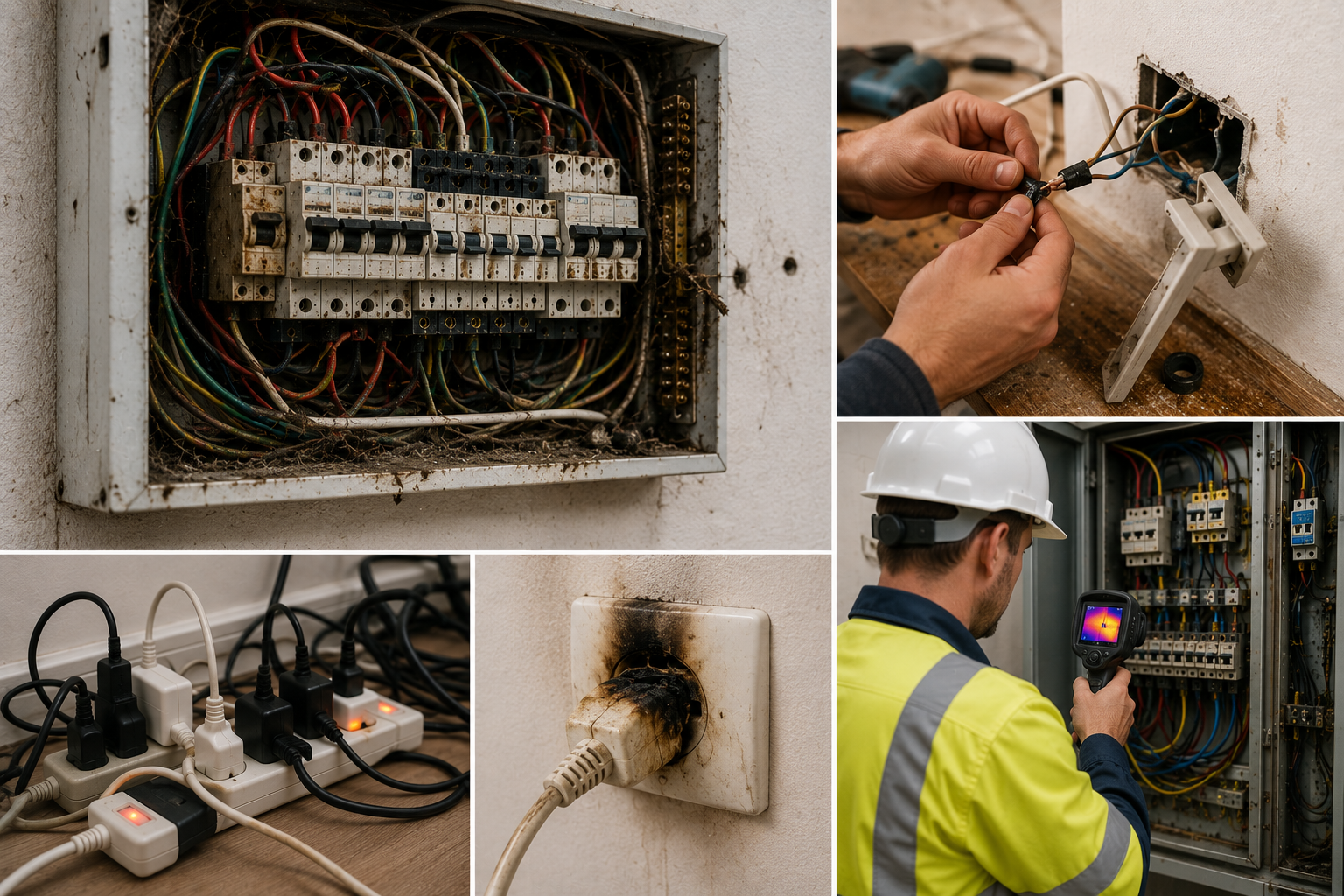
6 Dangerous Electrical Non-Compliance Issues That Trigger Fines
Electrical compliance isn’t just about ticking boxes—it’s about protecting people, property, and businesses from avoidable risks. Across Australia, electrical laws, Australian Standards, and workplace safety regulations exist to ensure electrical installations remain safe, reliable, and fit for purpose.
Unfortunately, many homeowners, landlords, strata managers, commercial property owners, and business operators unknowingly overlook electrical compliance issues. While some non-compliance problems may appear minor, they can expose occupants to serious safety hazards, invalidate insurance claims, lead to costly repairs, and in some cases result in regulatory action or financial penalties.
As electrical systems continue to evolve with increasing energy demands, electric vehicle charging, solar installations, and smart technologies, ensuring compliance has become more important than ever.
In this guide, we’ll explore 6 dangerous electrical non-compliance issues that trigger fines, and costly consequences, along with practical steps to help keep your property safe and compliant.
1. Failing to Upgrade Unsafe or Non-Compliant Switchboards
Why Older Switchboards Can Become a Compliance Issue
Many Australian homes and commercial buildings still operate with switchboards installed decades ago. While older switchboards may continue to function, they often fail to meet current safety expectations and may lack modern protective devices.
Older switchboards can contain outdated components that no longer provide the level of protection expected under today’s electrical standards.
Common Compliance Concerns
Potential issues include:
- Ageing switchboard components
- Insufficient circuit protection
- Lack of modern safety devices
- Limited capacity for today’s electrical loads
- Deteriorating internal wiring
Why It Matters
A non-compliant or deteriorating switchboard increases the risk of electrical faults, equipment damage, and safety incidents. For businesses and rental properties, ignoring these issues may also expose owners to regulatory scrutiny and significant rectification costs.
2. Ignoring Mandatory Electrical Testing and Maintenance
Compliance Doesn’t End After Installation
Many property owners mistakenly believe that once an electrical installation is completed, no further attention is required.
In reality, many commercial, industrial, strata, and workplace environments require ongoing inspection, testing, and maintenance to ensure electrical systems continue operating safely.
Preventative Maintenance May Include
- Switchboard inspections
- Safety device testing
- Thermal imaging inspections
- Emergency lighting testing
- Exit sign inspections
- Routine fault detection
The Cost of Neglect
Failure to carry out appropriate maintenance can increase the likelihood of equipment failures, workplace incidents, and expensive emergency repairs. It may also place organisations at risk of failing to meet workplace safety obligations.
3. Using Unlicensed Electrical Work
Cutting Corners Creates Serious Risks
Attempting DIY electrical work or hiring unlicensed contractors may appear to reduce costs initially, but it often creates far greater problems later.
Electrical work completed without the required licensing or approvals may fail to comply with Australian Standards and relevant legislation.
Risks of Unlicensed Electrical Work
Improper installations can lead to:
- Faulty wiring
- Loose electrical connections
- Increased fire risk
- Electric shock hazards
- Equipment damage
- Costly rectification work
Protecting Your Property
Using licensed electricians ensures installations are completed safely, professionally, and in accordance with applicable regulations.
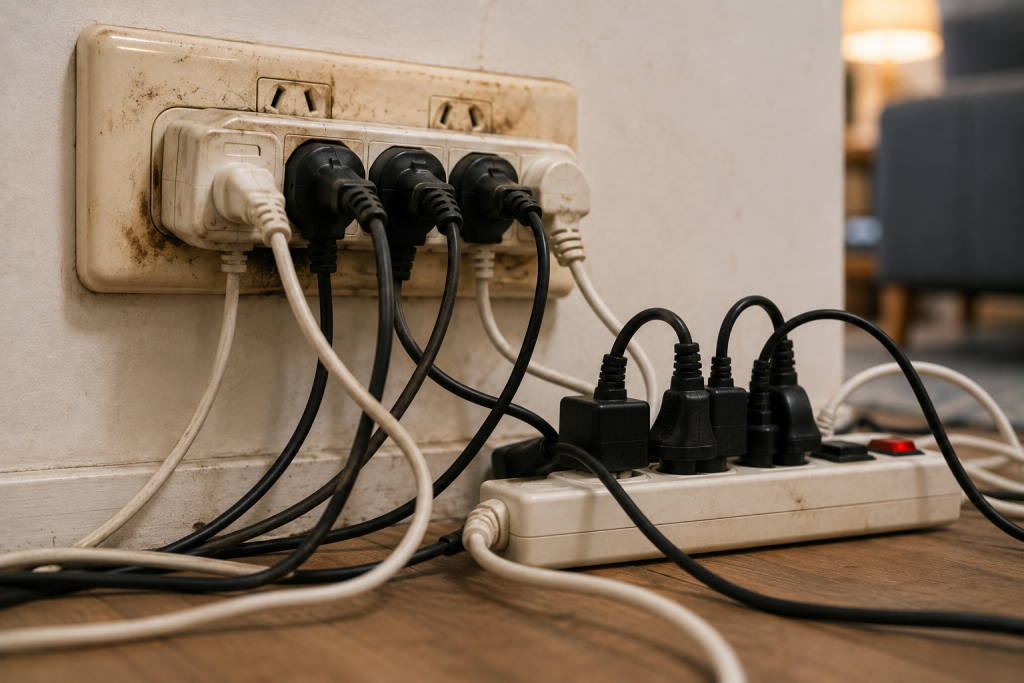
4. Overloading Electrical Circuits Beyond Their Design Capacity
Modern Demand Continues to Increase
Electrical systems originally designed decades ago often struggle to support today’s appliances and technologies.
Additional electrical demand commonly comes from:
- Air conditioning systems
- Electric vehicle chargers
- Home offices
- Commercial equipment
- Smart home technology
- Industrial machinery
Warning Signs
Common indicators include:
- Circuit breakers frequently tripping
- Flickering lights
- Warm power outlets
- Overloaded power boards
- Reduced equipment performance
Compliance Benefits of Proper Upgrades
Installing additional circuits and upgrading electrical infrastructure helps ensure systems remain safe while supporting modern electrical loads.
5. Neglecting Emergency and Safety Systems in Commercial Buildings
Safety Equipment Requires Ongoing Attention
Commercial buildings, offices, industrial facilities, and strata properties often rely on essential electrical safety systems.
These systems help protect occupants during emergencies and support compliance with workplace and building safety obligations.
Common Safety Systems Include
- Emergency lighting
- Exit lighting
- Fire indicator panels
- Security systems
- Access control
- Backup power systems
Why Routine Testing Matters
Regular inspection and maintenance help ensure these systems remain operational when they are needed most while supporting ongoing compliance.
6. Failing to Keep Electrical Infrastructure Ready for Modern Requirements
Compliance Evolves Over Time
Electrical regulations, technologies, and industry best practices continue to evolve.
Properties that fail to modernise their electrical infrastructure may eventually struggle to accommodate new technologies safely.
Examples include:
- Electric vehicle charging
- Solar power integration
- Battery storage systems
- Smart building automation
- Data and communications upgrades
The Hidden Risks
Attempting to install modern technologies onto outdated electrical infrastructure may create:
- Overloaded circuits
- Unsafe installations
- Increased maintenance costs
- Future compliance issues
- Reduced system reliability
Planning Ahead Pays Off
Future-proofing electrical systems helps properties remain adaptable while supporting ongoing compliance as technology advances.
Why Electrical Compliance Matters
Electrical compliance goes well beyond avoiding financial penalties.
Properly maintained and compliant electrical systems help:
- Protect occupants
- Reduce fire risks
- Improve workplace safety
- Increase electrical reliability
- Support insurance requirements
- Reduce unexpected downtime
- Extend equipment lifespan
- Protect valuable property assets
Investing in compliance today often prevents significantly larger costs tomorrow.
Best Practices for Maintaining Electrical Compliance
Creating a compliant electrical system requires proactive planning rather than reactive repairs.
Schedule Regular Electrical Inspections
Routine inspections allow licensed electricians to identify developing issues before they become safety concerns.
Upgrade Ageing Infrastructure
Replacing outdated switchboards, wiring, and protective devices helps improve safety while supporting future electrical demand.
Maintain Safety Systems
Ensure emergency lighting, exit lighting, backup power systems, and other critical electrical safety equipment are inspected and maintained in accordance with applicable requirements.
Work With Licensed Professionals
Qualified electricians understand current Australian Standards and industry requirements, helping ensure electrical work is completed safely and correctly.
How Spectra Electrical Can Help
At Spectra Electrical, we help homeowners, businesses, strata managers, builders, industrial facilities, and commercial property owners across Sydney maintain safe, reliable, and compliant electrical systems.
With more than 20 years of industry experience, our qualified electricians deliver tailored solutions designed to minimise risk, improve reliability, and support ongoing compliance with Australian Standards and industry best practices.
Our services include:
- Electrical compliance inspections
- Preventative electrical maintenance
- Switchboard upgrades
- Thermal imaging inspections
- Emergency and exit lighting testing
- Electrical fault finding
- Commercial electrical services
- Data and communications cabling
- EV charger installations
- Smart building automation
- Level 2 ASP services
Whether you’re managing a commercial building, maintaining a residential investment property, or planning future electrical upgrades, Spectra Electrical can help identify potential compliance concerns before they become costly problems.
Our proactive approach helps protect your people, your property, and your long-term investment while ensuring your electrical infrastructure remains safe, reliable, and prepared for the future.
Final Thoughts
Electrical non-compliance is rarely intentional, but overlooking ageing infrastructure, delaying maintenance, using unlicensed electrical work, overloading circuits, neglecting emergency systems, or failing to prepare for modern electrical demands can have serious consequences.
Beyond the potential for fines and regulatory action, these issues can compromise safety, increase repair costs, reduce system reliability, and impact insurance outcomes.
The best approach is a proactive one. Regular inspections, preventative maintenance, strategic upgrades, and professional electrical advice help ensure your property remains safe, compliant, and ready to meet the demands of modern living.
By partnering with experienced professionals such as Spectra Electrical, you can confidently maintain your electrical systems, reduce long-term risks, and protect your property for many years to come.