

7 Common Mistakes in Bathroom Electrical Design (and How to Avoid Them)
7 Common Mistakes in Bathroom Electrical Design (and How to Avoid Them).
Your bathroom might be one of the smallest rooms in your home — but when it comes to electrical design, it’s also one of the most complex and critical. Between the moisture, steam, heating, and lighting, there’s very little margin for error.
Whether you’re renovating, building new, or simply updating fixtures, poor bathroom electrical planning can lead to safety hazards, frustration, or expensive rework down the track.
At Spectra Electrical, we’ve seen it all — from powerpoints installed dangerously close to sinks, to lighting that makes your morning routine feel like a cave expedition.
To help you get it right, here are 7 of the most common mistakes in bathroom electrical design — and how you can avoid them.
1. Powerpoints Too Close to Water Sources
Let’s start with the most serious one: safety around water.
It’s surprisingly common to see powerpoints (or “GPOs”) installed right next to vanities or bathtubs, simply for convenience. But in wet zones, this is a major hazard. Water and electricity don’t mix — ever — and Australian Standards are very clear about how far outlets must be placed from water sources.
As a general rule, GPOs must be at least 600mm horizontally from a shower or bath, and at least 300mm above the vanity benchtop (though exact requirements depend on your bathroom layout).
A licensed electrician will design outlet placement to comply with AS/NZS 3000:2018 (Wiring Rules) — ensuring your bathroom is both practical and safe.
How to avoid this mistake: Always get a qualified electrician involved early in your renovation planning. It’s much easier (and cheaper) to design safe locations before the walls are sealed and tiled.
2. Poor Lighting Placement (Especially Around Mirrors)
There’s nothing worse than stepping up to your mirror in the morning and realising your lighting makes you look tired, washed out, or like you’re starring in a horror film.
This happens because of poor light placement and tone. Many bathrooms rely solely on ceiling downlights — which create shadows under the eyes, nose, and chin.
The solution? Combine overhead lighting with vertical lighting on either side of the mirror or integrated LED mirror lights. These provide even, flattering illumination ideal for grooming, shaving, or makeup application.
Warm white (around 3000K) tends to work best in bathrooms, giving a softer, more natural look than cool white lighting.
How to avoid this mistake: Think about lighting from a user’s perspective — not just for aesthetics. Ask your electrician to plan multiple lighting layers: task, ambient, and accent.
3. Forgetting Ventilation and Exhaust Fan Power
Bathrooms generate a lot of moisture — and without proper ventilation, that humidity can lead to mould growth, peeling paint, and electrical issues.
A common mistake is installing an exhaust fan that’s too small, too weak, or wired incorrectly (e.g. not linked to a light or timer switch).
If the fan doesn’t extract enough air, humidity lingers — damaging fixtures and creating long-term maintenance problems.
How to avoid this mistake:
- Choose a fan with the right extraction rate for your bathroom size.
- Make sure it’s ducted to the outside, not just into the ceiling cavity.
- Ask your electrician about adding a timer or humidity sensor, so it continues running for a few minutes after you leave the room.
Good ventilation doesn’t just protect your walls — it protects your entire electrical system from moisture-related issues.
4. Not Planning for Enough Power Outlets
If you’ve ever fought for a spot to plug in your electric toothbrush, hair dryer, or shaver, you’ll know how frustrating it is to have too few outlets in your bathroom.
Many designs focus on the look and forget about everyday practicality. A well-designed bathroom should balance aesthetics and functionality — and that includes strategically placed GPOs.
How to avoid this mistake:
Plan for what you actually use daily. Consider:
- A double GPO near the vanity (safely distanced from water)
- A concealed outlet inside a shaving cabinet
- Dedicated outlets for towel warmers or underfloor heating
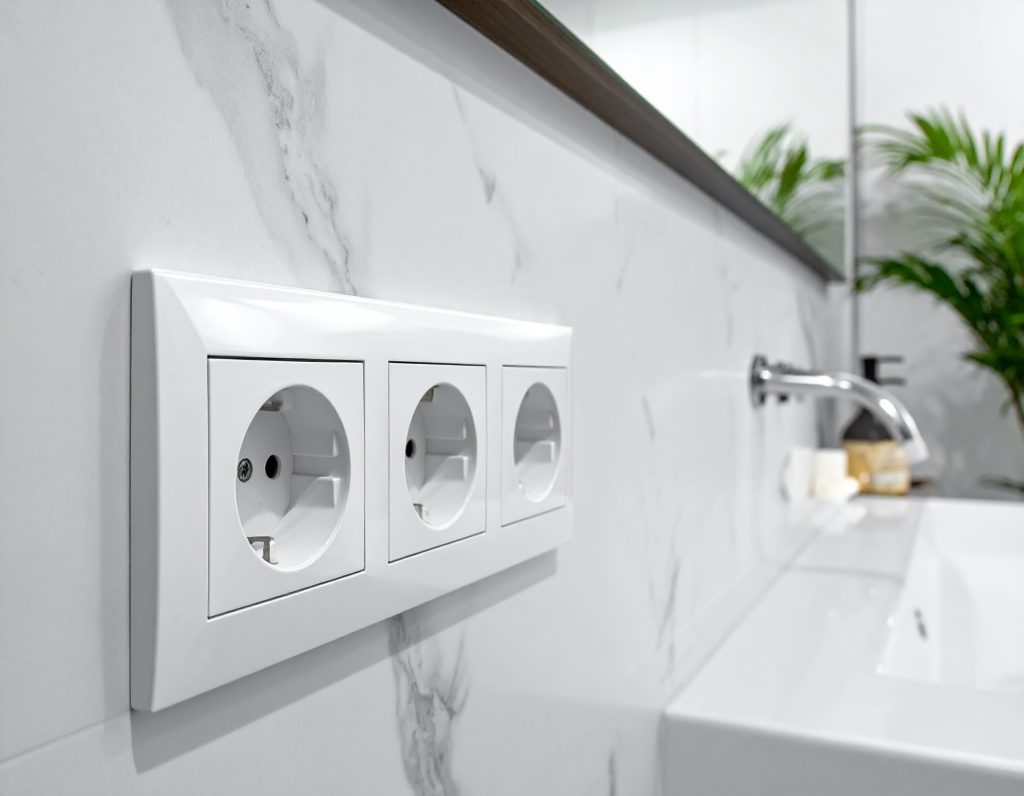
It’s also smart to choose IP-rated powerpoints (splash-proof) where necessary, especially in moist areas.
5. Ignoring Zoning and IP Ratings
Many homeowners (and even some designers) overlook the importance of bathroom zoning and IP ratings — which are essential for safety compliance.
The bathroom is divided into different electrical “zones”, each with restrictions on what kind of electrical equipment can be installed. For example:
- Zone 0: Inside the bath or shower – no electrical equipment allowed.
- Zone 1: Above the bath or shower – only IPX4 (splash-proof) or higher fittings allowed.
- Zone 2: The area 600mm beyond Zone 1 – some fittings allowed with proper rating.
If you install the wrong type of light, heater, or fan in the wrong zone, you risk serious safety hazards — and potential compliance issues during inspections.
How to avoid this mistake: Always check IP ratings before purchasing bathroom fittings, and ensure your electrician installs them in line with Australian Standards.
A quick discussion during design can save a lot of trouble later.
6. Overlooking Storage Lighting and Accessibility
Modern bathrooms are all about smart, functional design — yet many overlook one of the simplest touches: integrated lighting inside cabinets, drawers, and niches.
These small details make a huge difference in usability, especially for early mornings or late nights when you don’t want bright overhead lights.
Another related mistake is poor switch placement. Light switches should be easy to reach as you enter the bathroom, not hidden behind the door or across the room.
How to avoid this mistake:
Plan lighting zones and switch locations based on how you’ll actually use the space. Motion sensors or dimmers can add both luxury and practicality.
7. DIY Electrical Work (or Hiring Unqualified Trades)
This one can’t be stressed enough: never attempt DIY electrical work in a bathroom.
Bathrooms are high-risk areas due to moisture, confined spaces, and the combination of water and electricity. Even a small wiring mistake can lead to serious injury, electric shock, or fire.
Unfortunately, some renovators still try to save a few dollars by doing it themselves or hiring an unlicensed contractor. The result? Expensive rework, failed inspections, and unsafe conditions.
How to avoid this mistake: Always hire a licensed electrician, preferably one experienced in bathroom and wet-area installations. They’ll ensure your project meets all Australian safety standards, and you’ll get a compliance certificate for peace of mind.
Final Thoughts: Get It Right from the Start
The bathroom might be small, but it’s packed with electrical complexity. Between lighting, heating, ventilation, and power safety, there’s a lot to get right — and even more to get wrong.
Avoiding these 7 common mistakes can save you time, money, and potential safety risks, ensuring your new bathroom is both beautiful and functional.
At Spectra Electrical, we specialise in safe, compliant, and stylish bathroom electrical design and installation. From custom lighting layouts to underfloor heating, exhaust systems, and power upgrades — our licensed electricians ensure your bathroom is designed to last and meet all Australian Standards.
If you’re planning a bathroom renovation or new build in Sydney, don’t leave your electrical design to chance. Contact Spectra Electrical today for expert advice, professional workmanship, and peace of mind that your bathroom is powered safely and beautifully.