

8 Serious Electrical Compliance Risks Property Owners Face
Electrical compliance is one of the most critical — and most commonly overlooked — responsibilities for property owners. While electrical systems often operate quietly in the background, non-compliance can expose owners to serious safety hazards, legal consequences, insurance complications, and unexpected financial loss.
From commercial buildings and strata complexes to industrial facilities and mixed-use properties, compliance is not a one-time checkbox. It is an ongoing obligation that evolves as buildings age, standards change, and electrical demand increases.
Below are 8 serious electrical compliance risks property owners face, explained clearly and practically to help you understand where issues arise and why proactive management matters.
1. Outdated Switchboards That No Longer Meet Current Standards
Many properties still operate with switchboards installed decades ago, long before modern electrical standards and load requirements were introduced. While these boards may still function, they often lack essential safety features such as adequate fault protection, modern circuit breakers, or correct separation of circuits.
Outdated switchboards can struggle to handle today’s electrical demand, increasing the risk of overheating, nuisance tripping, or complete failure. From a compliance perspective, these boards often fall short of current regulations, particularly when properties undergo changes in use or upgrades elsewhere in the electrical system.
2. Inadequate or Missing RCD Protection
Residual Current Devices (RCDs) are designed to protect people from electric shock by disconnecting power almost instantly when a fault is detected. Despite their importance, many older properties still lack adequate RCD coverage — especially on power and lighting circuits.
Missing or incorrectly installed RCDs represent a major compliance risk, particularly in commercial, strata, and industrial environments where public and worker safety is a legal responsibility. Failure to provide appropriate protection can lead to severe injury, liability exposure, and regulatory penalties.
3. Non-Compliant Emergency Lighting and Exit Systems
Emergency lighting and exit signage play a vital role during power failures and emergency situations. Compliance requires not only correct installation but also regular testing, maintenance, and accurate record keeping.
A common risk for property owners is assuming these systems are compliant simply because the lights turn on. In reality, battery degradation, faulty fittings, or missed testing schedules can render emergency systems ineffective — leaving occupants at risk and owners exposed to serious compliance breaches.
4. Unauthorised or Poor-Quality Electrical Modifications
Over the life of a property, electrical systems are often altered multiple times by different contractors. In some cases, modifications are carried out without proper certification, documentation, or adherence to standards.
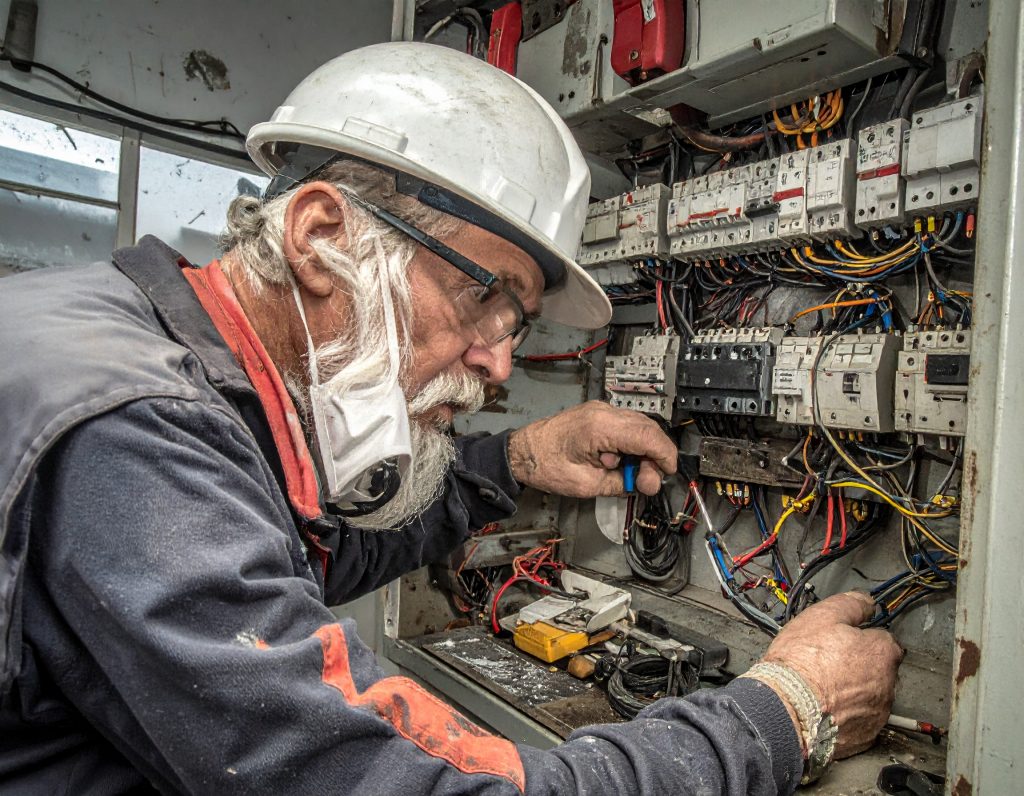
These unauthorised changes can introduce hidden hazards such as overloaded circuits, incorrect cable sizing, or compromised protection devices. From a compliance standpoint, undocumented or substandard work becomes the property owner’s responsibility — regardless of who originally carried it out.
5. Deteriorated Cabling and Insulation
Electrical cabling does not last forever. Age, heat, mechanical damage, and environmental conditions all contribute to insulation breakdown over time. Deteriorated cabling significantly increases the risk of short circuits, electric shock, and fire.
Older properties are particularly vulnerable, as early insulation materials may no longer meet safety expectations. Failing to identify and address degraded cabling is a serious compliance risk, especially when combined with increased electrical loads from modern equipment.
6. Inadequate Earthing and Bonding Systems
Proper earthing and bonding are essential for safely clearing faults and preventing dangerous touch voltages. However, many properties operate with earthing systems that are outdated, damaged, or incorrectly installed.
Inadequate earthing can prevent protective devices from operating correctly during a fault, increasing the risk of electric shock or equipment damage. From a compliance perspective, poor earthing is a fundamental failure that can invalidate safety systems across the entire electrical installation.
7. Lack of Preventative Testing and Inspection Programs
Electrical compliance relies heavily on regular inspection and testing. Without structured maintenance programs, issues such as loose connections, overheating components, and failing protection devices can go undetected.
Property owners who rely solely on reactive repairs often discover compliance issues only after an incident occurs. In many cases, the absence of documented testing and maintenance records becomes a major liability during audits, insurance claims, or regulatory investigations.
8. Failure to Adapt to Changing Building Use or Load Demand
Electrical systems are designed based on how a building is used at a specific point in time. When occupancy levels increase, tenants change, or new equipment is installed, electrical demand often grows beyond the original design capacity.
Failing to reassess and upgrade electrical infrastructure as building use evolves creates significant compliance and safety risks. Overloaded circuits, insufficient protection, and inadequate capacity planning are common issues that emerge when systems are pushed beyond their intended limits.
Final Thoughts: Compliance Is About Responsibility, Not Just Regulation
Electrical compliance is ultimately about protecting people, property, and long-term asset value. The risks outlined above rarely appear overnight — they develop gradually as systems age, loads increase, and standards evolve.
For property owners, proactive compliance management reduces the likelihood of emergencies, minimises legal and financial exposure, and ensures electrical systems remain safe, reliable, and fit for purpose.
How Spectra Electrical Can Assist
At Spectra Electrical, we help property owners, strata managers, and commercial operators stay ahead of electrical compliance risks through proactive inspections, strategic upgrades, and ongoing maintenance programs. With over 20 years of industry experience, our team understands how to identify non-compliance issues before they escalate into safety incidents or costly liabilities.
We provide:
- Comprehensive electrical compliance assessments
- Switchboard upgrades and RCD protection improvements
- Emergency lighting testing, reporting, and rectification
- Preventative maintenance and inspection programs
- Electrical upgrades aligned with changing building use and demand
By partnering with Spectra Electrical, property owners gain clarity, confidence, and compliance — backed by experienced professionals who prioritise safety, reliability, and long-term performance.
Engaging the right electrical contractor isn’t just about meeting regulations; it’s about protecting your people, your property, and your peace of mind.