
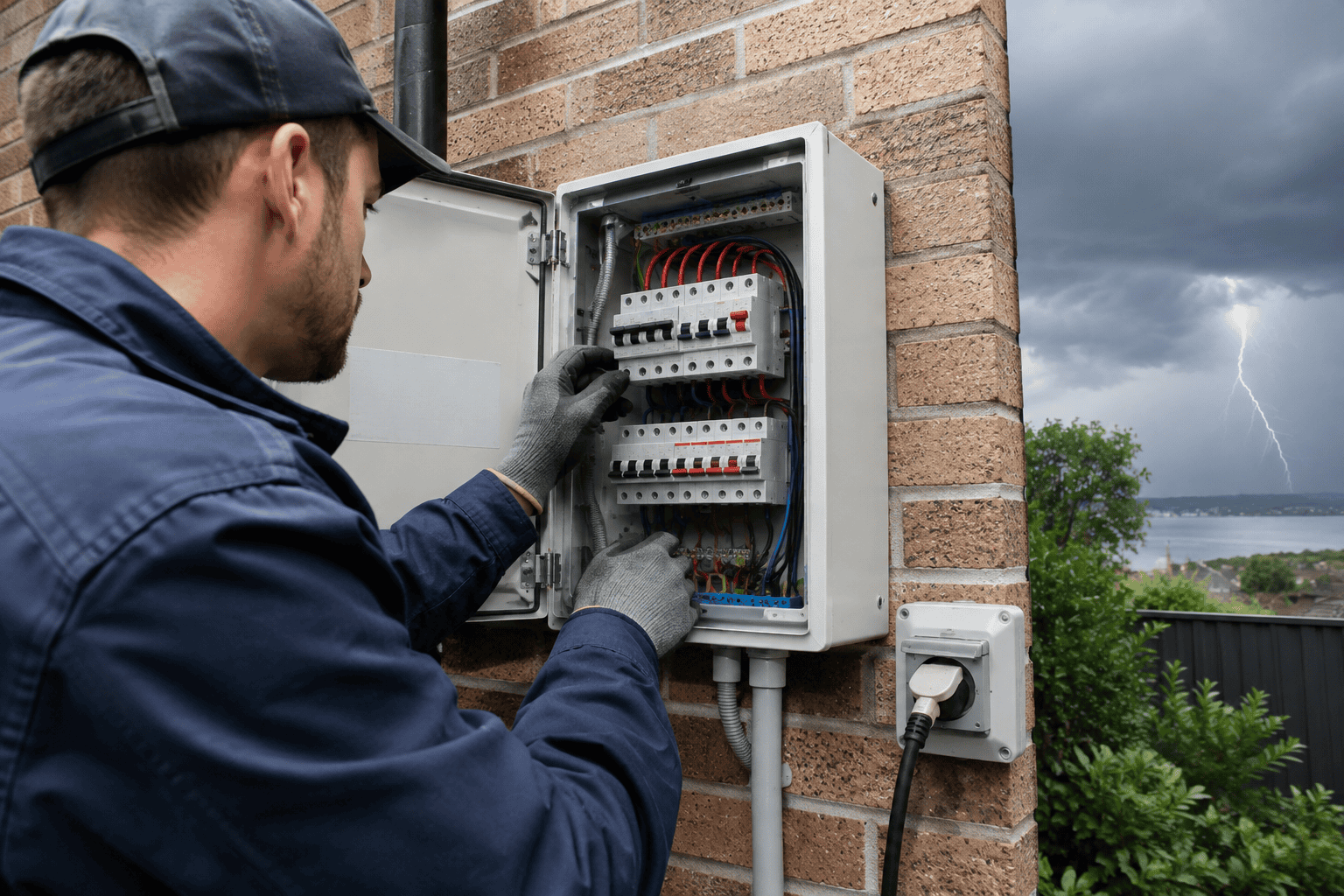
9 Urgent Electrical Checks Before Sydney’s Storm Season Hits
Sydney’s storm season can bring heavy rain, lightning, damaging winds and sudden power outages. While severe weather can affect any property, electrical problems that have been ignored throughout the year may become more concerning when storms arrive.
An ageing switchboard, damaged outdoor power point, deteriorating cable or inadequate electrical protection can create unnecessary risks for homeowners and businesses. Heavy rain and flooding can expose electrical equipment to moisture, while lightning and power disturbances can potentially damage sensitive electronics.
The NSW State Emergency Service (SES) identifies storm season as generally running from September to April, although severe storms can occur throughout the year. Preparing before extreme weather arrives gives property owners an opportunity to identify electrical problems and organise necessary repairs.
Here are 9 urgent electrical checks before Sydney’s storm season hits.
1. Check Your Switchboard for Warning Signs
Your switchboard distributes electricity throughout your property and houses protective devices designed to respond to electrical faults. If it is ageing, damaged or poorly maintained, existing problems may become more concerning during severe weather.
What Should You Look For?
From a safe distance, look for obvious warning signs such as:
- Scorch marks or discolouration
- Burning smells
- Unusual buzzing or crackling
- Damaged covers or visible corrosion
- Circuit breakers that repeatedly trip
- An old ceramic fuse board that has not been assessed recently
Never remove the switchboard cover or attempt to inspect internal electrical components yourself.
When Is an Upgrade Worth Considering?
Older switchboards may not be well suited to modern electrical demand, particularly where a property has added air conditioning, EV charging, solar systems or other high-demand equipment.
A licensed electrician can assess the switchboard’s condition and determine whether repairs, maintenance or replacement are appropriate.
If you notice smoke, active sparking or signs of burning, keep clear and seek urgent assistance. If there is a fire or immediate danger, evacuate and call Triple Zero (000).
2. Make Sure Your Safety Switches Are Working Properly
Safety switches, also known as residual current devices (RCDs), help reduce the risk of electric shock by detecting certain electrical current leakage conditions and disconnecting the affected circuit.
They perform a different function from circuit breakers, which primarily protect wiring against excessive current, including overloads and short circuits.
Why This Check Matters
If a safety switch does not operate correctly, an important layer of electrical protection may be compromised.
Know where your safety switches are located and follow the manufacturer’s instructions for using their test buttons. NSW guidance recommends testing safety switches regularly.
If a device does not operate as expected, arrange an assessment by a licensed electrician.
Never bypass a safety switch or repeatedly reset a device that continues to operate without investigating the cause.
3. Inspect Outdoor Power Points and Electrical Equipment
Outdoor electrical equipment is particularly exposed to moisture, corrosion, physical damage and changing weather conditions.
Power points, garden lighting, pool pumps, outdoor entertainment equipment and electrical accessories should be checked for obvious signs of deterioration before heavy rain arrives.
Look for Visible Damage
Pay attention to:
- Cracked or broken covers
- Frayed cables
- Exposed wiring
- Corroded fittings
- Loose components
- Signs of water entry
A weather-resistant fitting may no longer be suitable if its enclosure or seals have deteriorated.
Garages, workshops and garden sheds also deserve attention because they can contain power tools, extension leads, freezers and pumps that may be exposed to damp conditions.
If you discover damaged equipment, stop using it where it is safe to do so and arrange a professional assessment. Never attempt electrical repairs yourself.
4. Consider Appropriate Surge Protection
Lightning and electrical supply disturbances can create surges that potentially damage connected electronic equipment.
Modern homes contain valuable technology, including computers, televisions, networking equipment, security systems, home automation devices and household appliances.
What Can Surge Protection Do?
Appropriate surge protection can help reduce the risk of damage from certain transient voltage events.
Depending on the installation, a surge protection device may be fitted at the switchboard to protect connected circuits. Additional protection may also be appropriate for particular sensitive equipment.
However, surge protection cannot guarantee protection against every lightning-related event or electrical disturbance.
Arrange a Professional Assessment
A licensed electrician can assess your existing electrical installation and recommend suitable protection based on the property’s requirements.
This is particularly worth considering if your home contains extensive electronic equipment or has recently undergone major electrical upgrades.
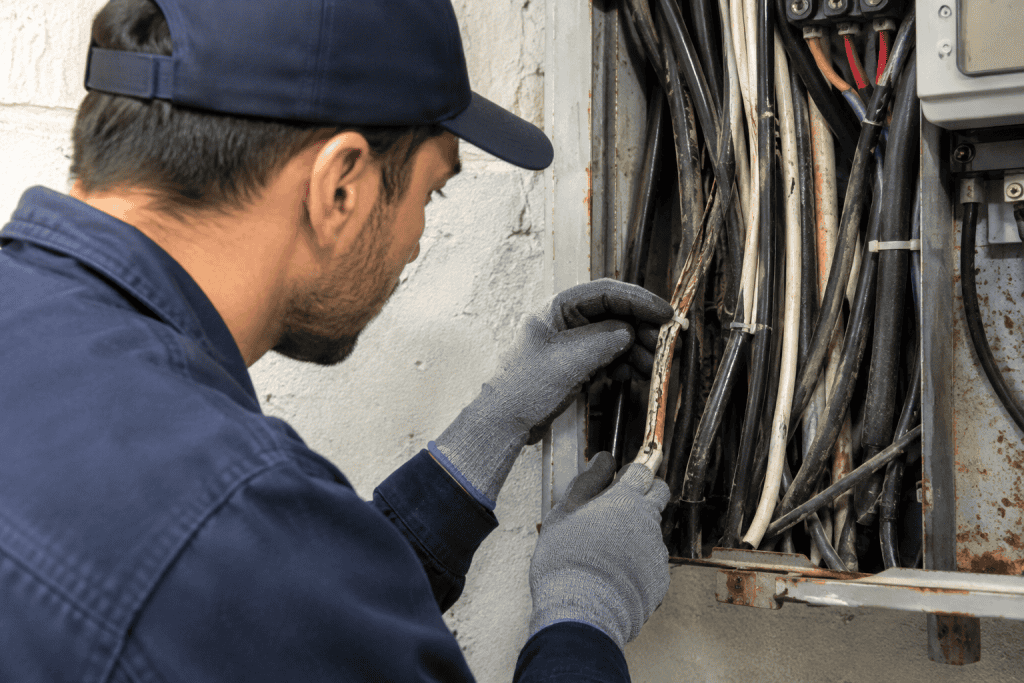
5. Check for Damaged or Ageing Electrical Cables
Electrical cables can deteriorate through age, sunlight exposure, moisture, pests, physical impact and general wear.
Damaged cables can become particularly hazardous when exposed to rain or other adverse weather conditions.
Warning Signs You Shouldn’t Ignore
Look for visible signs of damage around accessible areas, including:
- Cracked or damaged cable insulation
- Frayed appliance cords
- Exposed conductors
- Damaged external cabling
- Signs of crushing or pulling
- Electrical equipment that intermittently loses power
Never touch exposed wiring or attempt to repair damaged cables yourself.
If electrical cabling appears damaged, keep clear of the affected area and arrange professional assistance.
If you suspect a cable is live or there is an immediate electrical hazard, do not approach it.
6. Check for Risks Around Overhead Electrical Service Lines
Overhead electrical services can be affected by falling branches, strong winds and other storm damage.
Although homeowners cannot inspect or repair these services themselves, checking the surrounding area for obvious hazards can help identify concerns before severe weather arrives.
What Should You Watch For?
From a safe distance, look for trees or branches that appear likely to fall onto overhead electrical infrastructure, as well as visible damage to external service equipment.
Never attempt to trim vegetation near electrical lines, move cables or carry out repairs yourself.
If you notice damaged or fallen power lines, stay at least eight metres away, keep others clear and contact the relevant electricity distributor. Call Triple Zero (000) if there is an immediate threat to life.
7. Address Existing Electrical Faults Before Heavy Rain Arrives
One of the most valuable pre-storm checks is reviewing electrical problems that have already appeared.
A storm doesn’t necessarily create every electrical fault from scratch. Sometimes, severe weather exposes weaknesses that were present beforehand.
Common Warning Signs
Before storm season, consider whether you have experienced:
- Lights flickering repeatedly
- Circuit breakers tripping frequently
- Safety switches operating unexpectedly
- Burning smells near electrical equipment
- Power points becoming unusually hot
- Unexplained power interruptions
- Appliances behaving erratically
These symptoms can have several causes, so they should not automatically be blamed on the switchboard.
A licensed electrician can investigate the installation and determine what is causing the problem.
Why Acting Early Helps
Waiting until severe weather arrives can make an electrical fault more disruptive.
Arranging repairs beforehand gives you more opportunity to address problems under normal conditions.
Most importantly, don’t repeatedly reset a circuit breaker or safety switch without investigating why it is operating.
8. Prepare Your Household for Storm-Related Power Outages
Even a well-maintained electrical system cannot prevent every storm-related blackout.
Strong winds, lightning, falling trees and damage to the electricity network can interrupt the power supply regardless of the condition of your property’s internal wiring.
Preparing for an outage is therefore an important part of storm-season readiness.
Protect Essential Equipment
Before a storm arrives:
- Charge mobile phones and portable battery packs.
- Keep torches and spare batteries accessible.
- Keep important emergency contacts available.
- Follow instructions from your electricity distributor and emergency services.
- Plan how to maintain power for essential medical equipment.
Unplug sensitive electronics when severe weather is imminent where practical and safe, particularly if advised to do so.
If you rely on medical equipment requiring electricity, discuss suitable backup arrangements with your healthcare provider before an outage occurs.
9. Check Your Backup Power Arrangements
If your property relies on a generator, solar battery or another backup power system, make sure you understand how it should operate during an outage.
Backup power can be useful during severe weather, but poorly planned arrangements can introduce serious electrical hazards.
Generator Safety Is Essential
Never connect a portable generator directly to household wiring through an improvised connection or a standard power point.
Incorrect connections can create electric shock risks and potentially energise electricity infrastructure that workers believe is disconnected.
A generator intended to supply household circuits requires an appropriate, professionally installed connection and changeover arrangement.
Review Your Backup Power Needs
Before storm season, consider which equipment needs to remain operational and whether your existing backup system is suitable.
A licensed electrician can inspect relevant installations, explain safe operating arrangements and identify any required maintenance or improvements.
Planning ahead is much safer than improvising during a blackout.
Why Sydney Homeowners Should Arrange Pre-Storm Electrical Maintenance
Electrical maintenance is often postponed because everything appears to be working. However, an electrical installation can have hidden problems that may not become apparent until a fault develops.
A pre-storm inspection provides an opportunity to review the property’s condition, investigate known problems and identify electrical improvements worth considering.
Older Homes Deserve Particular Attention
An older home may still have its original switchboard or electrical components despite years of renovations and additions.
If the property now has air conditioning, an EV charger, pool equipment, solar panels or other modern technology, its electrical demand may be considerably different from when it was built.
That doesn’t automatically mean the installation is unsafe. It does mean its condition and suitability should be assessed rather than assumed.
Don’t Overlook Commercial and Strata Properties
Businesses, apartment buildings and shared properties also rely on electrical infrastructure to maintain normal operations.
Common-area lighting, switchboards, security systems, communications equipment and other electrical services can all be affected by faults or storm damage.
Property managers and strata committees should consider planned electrical maintenance as part of their broader building management responsibilities.
What to Do if Storms Damage Your Electrical System
If severe weather affects your property, safety should always come first.
Stay away from fallen power lines, damaged electrical equipment and areas where floodwater may have reached electrical installations.
Do not enter a flooded area containing potentially energised electrical equipment.
If your home has experienced flooding, electrical appliances, power points and other affected equipment should be assessed by a qualified electrician before being used again. Equipment can remain hazardous even after the water recedes.
For power outages, consult your electricity distributor for updates and follow advice from emergency services.
Speak to Spectra Electrical Before Sydney’s Storm Season
Don’t wait for a storm to expose an electrical problem in your home or business.
Spectra Electrical can assist with electrical inspections, switchboard assessments, surge protection, preventative maintenance and electrical upgrades to help property owners prepare for severe weather.
If your switchboard is aging, you’ve noticed recurring electrical faults or you’re concerned about the condition of outdoor electrical equipment, arranging a professional assessment can help identify issues before they become more disruptive.
Whether you’re preparing an older home, managing a commercial property or organising maintenance for a strata building, Spectra Electrical can help you understand the condition of your electrical infrastructure and determine what work may be required.
Contact Spectra Electrical to discuss your pre-storm electrical checks and arrange a professional assessment before the next major weather event. Taking action early can help you address existing faults, improve electrical preparedness and avoid preventable maintenance emergencies.
Conclusion
Sydney’s storm season can bring heavy rain, lightning, damaging winds and unexpected power outages. While no electrical inspection can guarantee uninterrupted power or eliminate every weather-related risk, checking your electrical system beforehand is a sensible preventative measure.
From inspecting your switchboard and safety switches to reviewing outdoor equipment, considering surge protection and resolving recurring faults, these nine checks can help identify potential problems before severe weather arrives.
Just as importantly, preparing for blackouts, checking backup power arrangements and understanding what to do after storm damage can help protect people and property when conditions become dangerous.
The best time to address an electrical problem is before the storm arrives. Arrange a professional assessment, take warning signs seriously and give your property the best possible preparation for Sydney’s storm season.
