
7 Essential Electrical Checks That Support Insurance Claims
When property owners think about insurance, they often focus on having the right policy in place. While adequate insurance coverage is important, many people overlook another critical factor that can significantly impact the claims process: the condition of their electrical system.
Whether you own a home, commercial property, strata complex, industrial facility, or investment property, electrical issues are one of the leading causes of property damage, equipment failure, business interruptions, and fire-related incidents. When these events occur, insurers may investigate the condition of the property’s electrical infrastructure as part of the claims process.
Having documented electrical inspections, maintenance records, and evidence of proactive system management can help demonstrate that reasonable steps were taken to maintain the property. In contrast, neglected electrical systems, unaddressed faults, or outdated infrastructure may complicate claims and lead to costly repairs.
The good news is that many electrical issues can be identified and addressed before they become major problems. By carrying out regular electrical checks, property owners can improve safety, reduce risk, and support future insurance claims if an incident occurs.
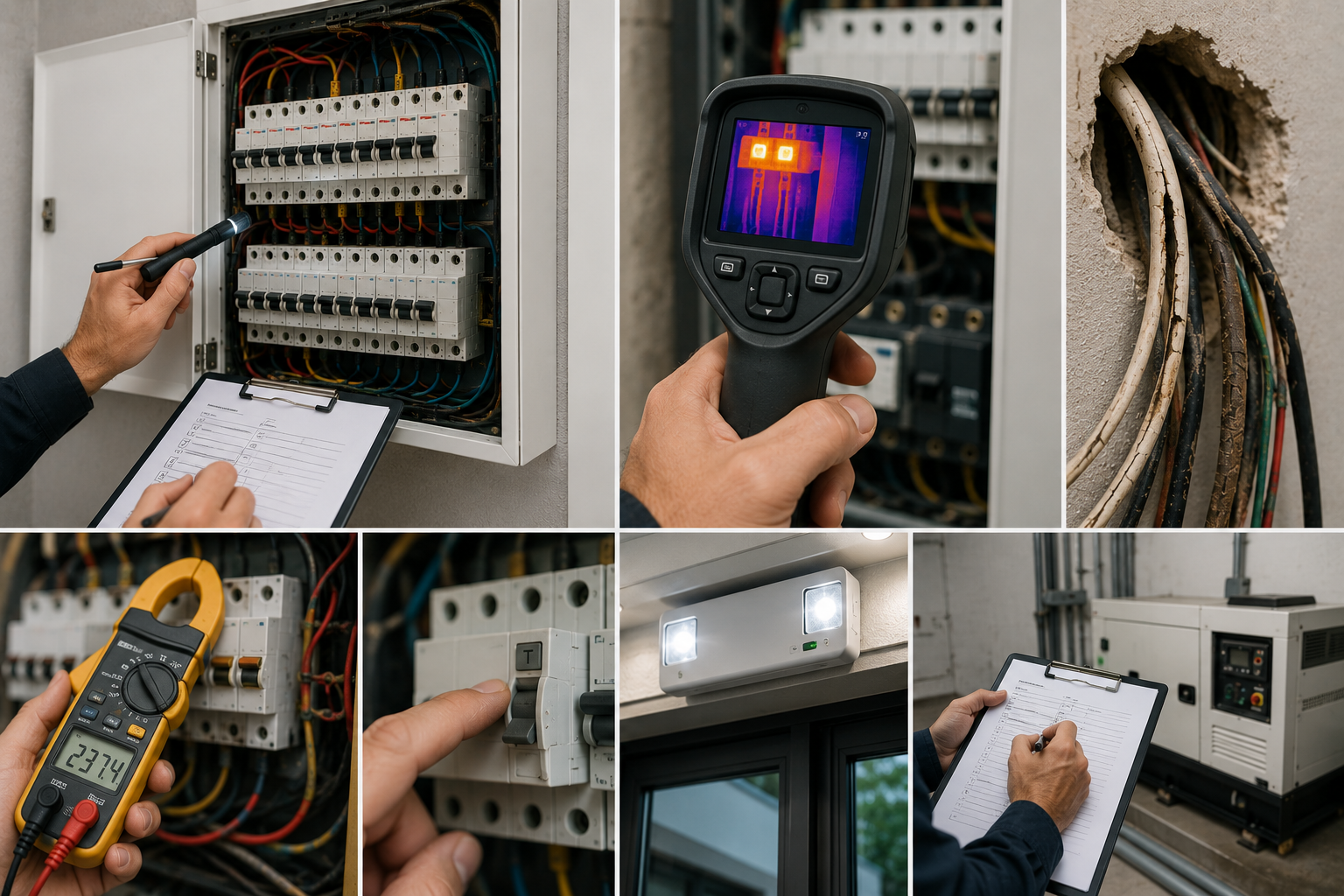
Here are 7 essential electrical checks that support insurance claims.
1. Regular Switchboard Inspections
Why the Switchboard Matters
The switchboard is the heart of your property’s electrical system. It distributes electricity throughout the building and houses important protective devices designed to minimise electrical risks.
Many switchboards operate for years without receiving a professional inspection.
Common Issues Found During Inspections
Electrical inspections often identify:
- Ageing components
- Loose connections
- Overloaded circuits
- Signs of overheating
- Deteriorated protective devices
- Capacity limitations
These issues may not be immediately visible to property owners.
Supporting Insurance Preparedness
Maintaining records of switchboard inspections demonstrates a proactive approach to electrical safety and system maintenance. This documentation can prove valuable if electrical-related incidents occur in the future.
2. Testing Safety Switches and Protective Devices
Small Devices With Major Responsibilities
Safety switches and circuit protection devices play a crucial role in protecting people and property from electrical faults.
However, like all electrical components, they should be tested periodically to ensure they are operating correctly.
Why Protective Devices Matter
These devices help reduce the risk of:
- Electrical shock
- Equipment damage
- Circuit overloads
- Electrical fires
If a fault occurs and protective devices fail to operate correctly, the consequences can be significant.
The Value of Ongoing Testing
Routine testing helps verify that these critical safety systems remain functional and capable of responding when required.
3. Inspecting Wiring for Signs of Ageing or Deterioration
Hidden Infrastructure Can Create Hidden Risks
Most electrical wiring remains concealed behind walls, ceilings, and floors.
Because it is rarely seen, wiring often becomes one of the most overlooked areas of electrical maintenance.
Common Causes of Wiring Deterioration
Over time, wiring may be affected by:
- Age
- Heat
- Moisture
- Physical damage
- Rodent activity
- Increased electrical demand
Why Wiring Inspections Matter
Identifying deteriorating wiring early can help prevent:
- Electrical faults
- Equipment failures
- Power disruptions
- Fire risks
Documented inspections provide evidence that the property’s electrical infrastructure has been appropriately maintained.
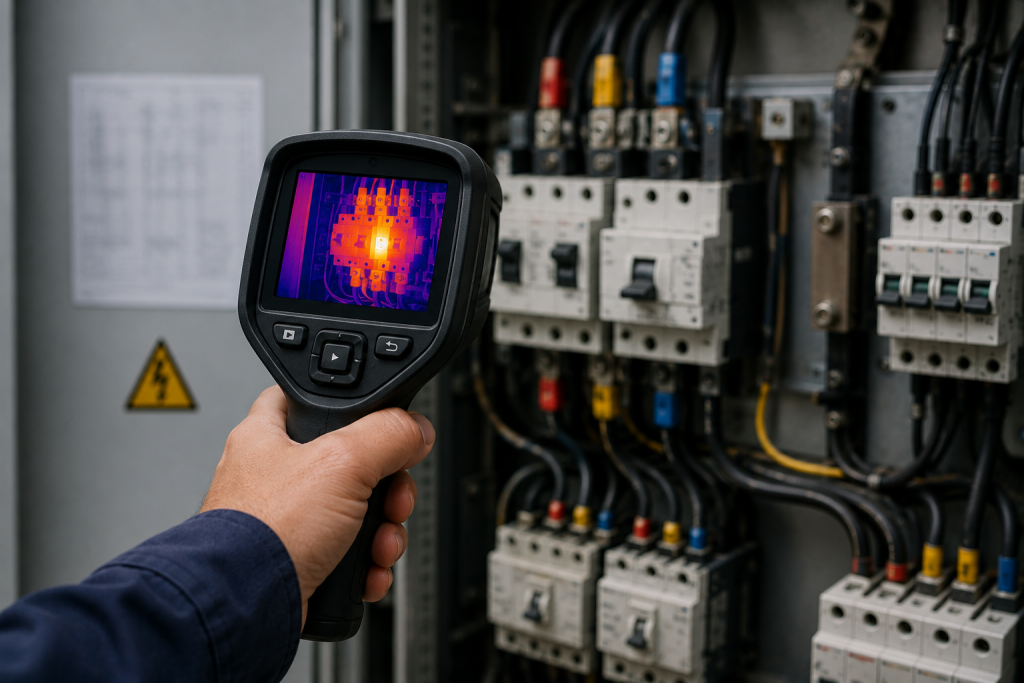
4. Thermal Imaging of Electrical Equipment
Seeing Problems Before They Become Failures
Thermal imaging has become an increasingly valuable tool for preventative electrical maintenance.
Using specialised cameras, electricians can identify abnormal heat patterns within electrical systems.
What Thermal Imaging Can Detect
Potential issues include:
- Loose electrical connections
- Overloaded circuits
- Failing components
- Uneven load distribution
- Equipment deterioration
Many of these problems are difficult to identify through visual inspections alone.
Insurance and Risk Reduction Benefits
Detecting issues before they cause failures helps reduce the likelihood of unexpected incidents that may lead to property damage and insurance claims.
5. Verifying Electrical Capacity and Load Distribution
Electrical Demand Continues to Grow
Modern properties use significantly more electricity than they did in previous decades.
Many homes and businesses have added:
- Air conditioning systems
- Home offices
- EV chargers
- Smart home technology
- Security systems
- Additional appliances
Without proper planning, electrical loads can become unevenly distributed.
Why Capacity Assessments Are Important
Electrical reviews can identify:
- Overloaded circuits
- Capacity limitations
- Future upgrade requirements
- Infrastructure bottlenecks
Supporting Long-Term Reliability
Ensuring electrical systems are appropriately sized for current and future demands helps improve reliability while reducing stress on infrastructure.
6. Reviewing Emergency and Backup Power Systems
Critical Systems Must Be Ready When Needed
Emergency and backup power systems often remain unused for extended periods.
Unfortunately, many property owners assume these systems will operate correctly without regular testing.
Common Systems Requiring Inspection
These may include:
- Backup generators
- Emergency lighting
- Exit lighting
- Battery backup systems
- Essential services infrastructure
Why Ongoing Checks Are Necessary
Routine inspections help verify that emergency systems remain operational and capable of performing during outages or emergencies.
Maintaining records of testing and maintenance can also demonstrate responsible system management.
7. Maintaining Accurate Electrical Documentation
The Most Overlooked Electrical Check
Many property owners focus on physical electrical maintenance while overlooking documentation.
However, accurate records can be extremely valuable.
Important Documentation to Keep
Examples include:
- Electrical inspection reports
- Maintenance records
- Test results
- Compliance certificates
- Upgrade documentation
- Equipment service records
Why Documentation Supports Insurance Claims
Detailed records help establish a history of responsible electrical maintenance.
If an incident occurs, documentation may assist in demonstrating that appropriate steps were taken to maintain the property’s electrical systems.
Why These Electrical Checks Matter
Electrical issues often develop gradually over time.
Small faults can remain hidden for months or years before eventually causing:
- Equipment damage
- Business interruptions
- Property damage
- Electrical fires
- Unexpected repair costs
Regular inspections and preventative maintenance help identify potential problems before they escalate.
Beyond improving safety and reliability, these checks provide valuable evidence that electrical systems have been professionally assessed and maintained.
For many property owners, this can be just as important as the repairs themselves.
Building a Proactive Electrical Maintenance Strategy
Waiting for electrical problems to occur is rarely the most effective approach.
A proactive maintenance strategy focuses on identifying risks early and addressing them before they create larger issues.
An effective strategy often includes:
Scheduled Inspections
Routine assessments help uncover hidden issues that may otherwise go unnoticed.
Preventative Maintenance
Maintaining equipment before failures occur often reduces long-term repair costs.
Modern Infrastructure Upgrades
Updating ageing systems improves safety, reliability, and future readiness.
Accurate Record Keeping
Well-maintained documentation creates a clear history of electrical maintenance and system performance.
Together, these measures help reduce risk while supporting property protection objectives.
Future-Proofing Electrical Systems
As technology continues to evolve, electrical systems face increasing demands.
Modern properties increasingly require support for:
- Smart home automation
- Electric vehicle charging
- Advanced security systems
- Renewable energy integration
- Battery storage
- High-speed communications networks
Future-proofing electrical infrastructure helps ensure systems remain capable of supporting these technologies while maintaining safe and reliable operation.
Properties that proactively invest in electrical maintenance and strategic upgrades are often better positioned to avoid disruptions and adapt to future requirements.
How Spectra Electrical Can Help
At Spectra Electrical, we help homeowners, businesses, strata managers, and facility managers across Sydney maintain safe, reliable, and future-ready electrical systems.
With more than 20 years of industry experience, our team provides:
- Electrical inspections and audits
- Thermal imaging services
- Switchboard upgrades
- Preventative maintenance programs
- Commercial electrical services
- Emergency and backup power solutions
- EV charger installations
- Data and communications cabling
- Level 2 electrical services
Our goal is to help clients identify potential issues before they become costly problems while improving the performance, reliability, and lifespan of their electrical infrastructure.
Final Thoughts
Insurance claims often focus on the event itself, but the condition of a property’s electrical system can also play an important role.
Regular switchboard inspections, safety device testing, wiring assessments, thermal imaging, capacity reviews, emergency system checks, and accurate documentation all contribute to a stronger electrical maintenance strategy.
By proactively addressing these areas, property owners can reduce risk, improve safety, enhance reliability, and create valuable records that support responsible property management.
Investing in preventative electrical checks today may help prevent costly disruptions tomorrow while ensuring your property remains prepared for future challenges.