

10 Proven Benefits of Thermal Imaging for Fault Detection
Electrical problems don’t always provide an obvious warning.
A switchboard can appear perfectly normal while a loose connection, overloaded circuit or deteriorating component is producing excessive heat. In many cases, the first visible sign of a problem only appears after the fault has progressed.
This is where thermal imaging for electrical fault detection can provide valuable insight.
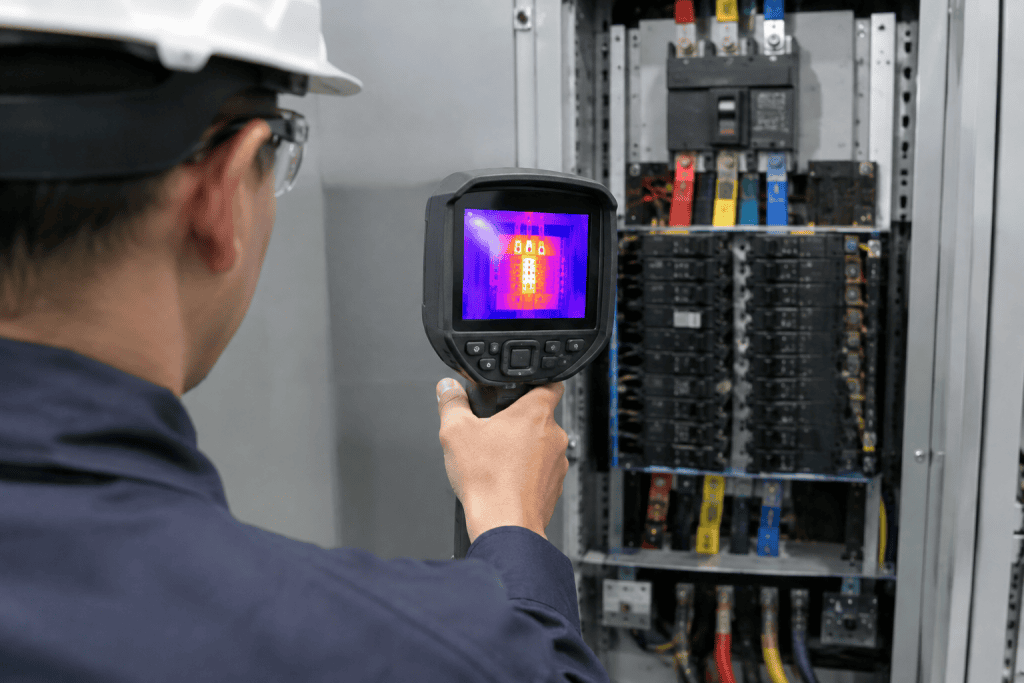
Thermal imaging cameras use infrared technology to identify temperature differences across electrical equipment. When a component is operating significantly hotter than comparable equipment, it can indicate that further investigation is required.
For commercial buildings, offices, industrial facilities, strata properties and larger homes, thermal imaging can be a useful addition to a broader electrical inspection and maintenance program.
Rather than relying entirely on what can be seen with the naked eye, thermal imaging provides another way to assess how electrical equipment is behaving under operating conditions.
Here are 10 proven benefits of thermal imaging for fault detection.
1. Reveals Problems That May Not Be Visibly Obvious
One of the greatest advantages of thermal imaging is that it can highlight temperature variations that aren’t necessarily visible during a standard inspection.
An electrical connection may look clean and intact while generating considerably more heat than neighbouring connections. Likewise, a circuit breaker or cable termination can show an abnormal thermal pattern without any obvious physical damage.
A Different View of Electrical Equipment
A visual inspection tells you what equipment looks like.
A thermal image provides information about how heat is being distributed across that equipment.
That additional perspective can help an electrician decide whether a component requires closer examination, testing or maintenance.
It is particularly useful in situations where there are no obvious visual symptoms but there is reason to believe an electrical system may be under stress.
2. Identifies Abnormal Heat Around Connections
Electrical connections deserve particular attention because poor or deteriorating connections can generate heat as resistance increases.
This may occur with loose terminals, damaged components, corrosion or other electrical issues.
A thermal camera can reveal a temperature difference between one connection and others operating under comparable conditions.
Why Temperature Differences Matter
A single hot spot doesn’t automatically prove that a component is faulty.
Load, ambient temperature, equipment design and operating conditions all influence thermal readings.
However, an unusual pattern can provide a valuable reason to investigate further before the issue develops into a larger problem.
This makes thermal imaging especially useful during inspections of switchboards and distribution equipment.
3. Helps Locate Overloaded or Highly Stressed Circuits
Electrical systems can experience changing loads throughout the day.
Commercial properties may have large HVAC systems, machinery and refrigeration equipment, while homes may experience significant demand from air conditioning, EV charging, kitchen appliances and pool equipment.
When circuits are carrying substantial loads, thermal imaging can help identify components that are operating hotter than expected.
Understanding Load Behaviour
The objective isn’t simply to find the hottest component.
An experienced electrician considers the thermal pattern alongside the circuit’s load, equipment specifications and operating conditions.
This information can help determine whether further investigation is necessary and whether an electrical installation is operating as expected.
4. Supports Planned Electrical Maintenance
Maintenance is often easier when problems are identified before equipment stops working.
Thermal imaging can form part of a scheduled inspection program, allowing businesses and property managers to monitor important electrical assets rather than waiting for an unexpected failure.
Moving Beyond Reactive Repairs
A reactive approach asks:
“What failed, and how do we fix it?”
A proactive approach asks:
“Is anything showing signs of abnormal operation that deserves attention?”
That difference can help organisations plan electrical maintenance around their operations rather than responding to faults at inconvenient times.
For facilities with critical electrical equipment, this can be particularly valuable.
5. Reduces the Need for Unnecessary Investigation
Electrical fault finding can sometimes involve checking numerous components before the source of a problem becomes clear.
Thermal imaging can help narrow the focus by highlighting areas with unusual temperature patterns.
This doesn’t eliminate the need for electrical testing, but it can give an electrician additional information when deciding where to investigate first.
Targeted Fault Finding
Instead of treating every component as equally suspicious, an electrician can compare thermal conditions and identify areas that stand out.
That can make the diagnostic process more targeted, particularly in large switchboards or complex electrical installations.
6. Helps Protect Critical Equipment
A commercial electrical system can contain equipment that is expensive, difficult to replace or essential to daily operations.
This might include:
- Industrial machinery
- Refrigeration systems
- HVAC equipment
- Pumps
- Data infrastructure
- Large switchboards
- Manufacturing equipment
An abnormal temperature pattern may provide an early indication that a component deserves attention.
Protecting the Wider System
The concern isn’t always limited to one component.
A developing electrical problem can affect connected equipment or interrupt an entire process.
Regular condition monitoring can therefore form part of a broader strategy for protecting important electrical assets.
7. Can Be Performed Under Suitable Operating Conditions
Thermal imaging can be particularly informative when electrical equipment is operating under a representative load, provided the inspection can be conducted safely.
This allows the thermal behaviour of the installation to be observed in conditions that are relevant to normal operation.
Why Operating Conditions Matter
A lightly loaded circuit may not display the same thermal characteristics as it does during periods of higher demand.
For commercial and industrial properties, inspections can therefore provide a useful snapshot of how equipment is behaving at the time of assessment.
The results can then be considered alongside electrical measurements and other inspection information.
8. Provides Useful Visual Records
Thermal imaging can produce images that form part of an electrical maintenance record.
This can be useful for facilities that monitor equipment over time.
Rather than relying solely on written notes, maintenance teams can retain thermal images alongside information about equipment, inspection dates and any actions taken.
Comparing Changes Over Time
A single inspection provides a snapshot.
Repeated inspections can provide a history.
If a component’s thermal pattern changes over several inspections conducted under comparable conditions, that trend may justify additional investigation.
This can help organisations build a more informed picture of the condition of their electrical assets.
9. Helps Maintenance Teams Prioritise Attention
Large electrical installations can contain hundreds of components.
Not every item will require the same level of attention at the same time.
Thermal imaging can help identify areas that stand out from comparable equipment, giving maintenance teams useful information when deciding which components should be investigated first.
Turning Inspection Results Into Action
The value of thermal imaging ultimately comes from what happens after the image is taken.
An abnormal reading may lead to further testing, tightening, component replacement, load assessment or another appropriate corrective action.
This creates a more structured process for dealing with potential issues rather than simply recording that a problem exists.
10. Adds Another Layer to Electrical Safety
Electrical safety is about more than responding to failures.
Understanding the condition of electrical equipment and identifying unusual behaviour can help property owners and facility managers take a more proactive approach to risk management.
Thermal imaging can contribute to this by highlighting temperature patterns that may otherwise go unnoticed.
It is especially useful when combined with appropriate inspection, testing, maintenance and documentation.
The result is a more complete picture of electrical equipment condition.
What Can Thermal Imaging Be Used For?
Thermal imaging has applications across a wide range of electrical infrastructure.
Depending on the property and inspection objectives, it may be used to examine:
- Main switchboards
- Distribution boards
- Circuit breakers
- Cable terminations
- Electrical connections
- Busbars
- Motor equipment
- Industrial machinery
- Power distribution equipment
The technology can be particularly useful when comparable components are operating under similar conditions, as temperature differences can help highlight areas that deserve closer attention.
Thermal Imaging Does Not Automatically Diagnose a Fault
It’s important to understand the limitations of the technology.
A thermal camera identifies temperature patterns. It does not independently determine the cause of an abnormal reading.
For example, a component may appear warmer because of its normal operating characteristics, its load at the time of inspection or an underlying electrical issue.
This is why thermal imaging needs to be interpreted by someone who understands both the technology and the electrical system being inspected.
Where an abnormal reading is identified, further investigation may be required before any conclusion is reached.
Thermal imaging is therefore best used as part of a broader professional electrical inspection rather than as a standalone diagnostic solution.
Which Properties Can Benefit From Thermal Imaging?
Thermal imaging can be valuable across many different property types.
Commercial Buildings
Offices, retail sites and commercial facilities often contain extensive electrical infrastructure that supports daily operations.
Industrial Facilities
Factories and warehouses may have high electrical loads and critical equipment where an unexpected failure could cause significant disruption.
Strata Properties
Apartment buildings and shared facilities can contain large switchboards and common electrical systems requiring ongoing attention.
Large Residential Properties
Modern homes can have considerable electrical demand from EV chargers, air conditioning, pool equipment, solar systems and other technology.
Property Management Portfolios
Property managers overseeing multiple sites may use scheduled inspections to gain better visibility over electrical infrastructure across their portfolio.
When Is Thermal Imaging Worth Considering?
Thermal imaging may be particularly useful where:
- Electrical equipment carries significant loads
- A property has experienced recurring electrical issues
- Switchboards are ageing
- Critical equipment depends on reliable power
- Maintenance costs are increasing
- Equipment requires regular condition monitoring
- A structured preventative maintenance program is being developed
- There is a need for better documentation of equipment condition
It may also be worth considering after significant electrical upgrades or changes to the property’s electrical demand.
Speak to Spectra Electrical About Thermal Imaging
Spectra Electrical can assist businesses, property owners and facility managers with electrical inspections, preventative maintenance and fault detection.
If you’re experiencing recurring electrical problems, managing critical equipment or want greater visibility into the condition of your switchboards and electrical infrastructure, thermal imaging may provide useful additional information.
Spectra Electrical can assess your property’s requirements and determine whether thermal imaging should form part of a broader electrical inspection or maintenance program.
Don’t wait for a component to fail before investigating what may be happening inside your electrical system. Contact Spectra Electrical to discuss a professional inspection and find out whether thermal imaging could help identify potential problems earlier.
Why Early Fault Detection Matters
Electrical failures rarely happen at a convenient time.
A problem affecting a switchboard can interrupt an entire property. A failing connection can take important equipment offline. A damaged component can create unexpected repair requirements.
Identifying unusual behaviour earlier gives property owners and maintenance teams more opportunity to investigate the cause and plan an appropriate response.
Thermal imaging doesn’t replace traditional electrical testing, but it can provide information that isn’t available through visual inspection alone.
Conclusion
Thermal imaging is a valuable technology for electrical fault detection, condition monitoring and preventative maintenance.
From highlighting unusual temperatures around connections to helping maintenance teams focus their attention and document equipment condition, it provides another way to understand what is happening inside an electrical installation.
Its greatest value comes when it is used alongside professional electrical knowledge, testing and maintenance rather than as a standalone solution.
For businesses and property owners responsible for important electrical infrastructure, that additional information can support better maintenance decisions and help uncover issues that may otherwise remain hidden.
A thermal image can reveal something your eyes can’t. Having the right professional interpret that information can help turn an early warning into a manageable maintenance task rather than an unexpected electrical failure.
