
10 Essential Steps in a Safe Service Connection Upgrade
Your property’s electrical service connection is one of the most important parts of its electrical infrastructure. It connects your home or business to the electricity distribution network, allowing power to reach your switchboard and supply your electrical equipment.
However, as properties age and electricity demand increases, an existing service connection may no longer be suitable for the property’s requirements.
Whether you’re renovating, building a new home, installing an EV charger or dealing with ageing electrical infrastructure, a safe service connection upgrade can help ensure your property has an appropriate electricity supply for its needs.
In New South Wales, certain connection and service work must be carried out by an appropriately accredited Level 2 Accredited Service Provider (ASP), with the required authorisations and approvals. The work involved depends on the existing installation, the proposed changes and the requirements of the relevant electricity distributor.
Understanding the process can help homeowners, builders, developers and property managers plan upgrades more effectively.
Here are 10 essential steps in a safe electrical service connection upgrade.
1. Assess Why the Service Connection Needs Upgrading
The first step is understanding why an upgrade is necessary.
An existing service connection may require attention because of ageing infrastructure, physical damage, increased electrical demand or changes to the property’s configuration.
Common reasons include:
- Renovating or extending a property
- Constructing a new building
- Upgrading electrical capacity
- Installing EV charging infrastructure
- Replacing deteriorated service cables
- Converting from overhead to underground services
- Addressing identified electrical defects
Establish the Scope of Work
Not every electrical upgrade requires a complete service connection replacement.
In some cases, the issue may relate to internal wiring or the switchboard rather than the connection to the electricity network.
A professional assessment can help establish which components require attention and whether specialised Level 2 services are needed.
Identifying the scope early reduces the risk of organising unnecessary work or discovering additional requirements halfway through the project.
2. Engage the Right Accredited Service Provider
Choosing the right contractor is one of the most important steps in the process.
A standard electrician can undertake many electrical installation and maintenance tasks, but specialised work involving the connection between a property and the electricity network may require an appropriately accredited and authorised Level 2 ASP.
According to the NSW Government’s ASP Scheme guidance, Level 2 providers undertake specified service connection work, while Level 1 and Level 3 providers cover different aspects of network construction and design.
Why Accreditation Matters
The right provider depends on the work required.
For example, a straightforward service line replacement may fall within Level 2 ASP responsibilities. A project requiring changes to the broader distribution network may also require Level 1 construction or Level 3 design services.
Before proceeding, confirm that your chosen provider holds the appropriate accreditation and distributor authorisation for the proposed work.
This helps ensure the project is managed by professionals qualified to carry out the relevant tasks.
3. Assess the Existing Electrical Supply and Infrastructure
Before upgrading a service connection, the property’s existing electrical infrastructure needs to be considered.
An electrician or appropriately qualified ASP can assess the service arrangement, existing switchboard, consumer mains and relevant connection equipment.
This helps establish what can remain in place and what may require modification or replacement.
Consider Current and Future Electrical Demand
Modern properties often require significantly more electricity than they did when originally constructed.
Air conditioning, induction cooking, EV chargers, solar systems, batteries and other equipment can increase the property’s electrical requirements.
Understanding these demands before the upgrade helps determine whether the proposed service arrangement is appropriate.
It can also help identify whether additional work may be required to accommodate future electrical upgrades.
4. Confirm the Electricity Distributor’s Requirements
Service connection upgrades must account for the requirements of the electricity distributor responsible for the property.
In NSW, this may be Ausgrid, Endeavour Energy or Essential Energy, depending on the property’s location.
Different projects can have different application, technical approval and inspection requirements.
Why Early Coordination Is Important
Before work begins, clarify whether the project requires a connection application, supporting plans, technical review or other approvals.
The NSW Government’s guidance on altering an electricity supply recommends confirming the required ASP level, understanding approvals and establishing who will coordinate with the distributor.
Your ASP should help clarify the process and identify the approvals relevant to the proposed work.
Getting these details organised early can reduce unnecessary delays once installation is scheduled.
5. Plan the Service Route and Installation Method
The physical route between the electricity network and the property needs to be carefully planned.
Depending on the existing arrangement, the service connection may involve overhead cables or underground electrical services.
Each option presents different installation considerations.
Overhead Service Connections
Overhead services need appropriate clearances and suitable support arrangements. The condition and positioning of relevant poles, attachment points and service cables may also need assessment.
Underground Service Connections
Underground services require careful consideration of cable routes, burial requirements, existing underground utilities and access for installation.
Excavation and other site works must be appropriately coordinated to avoid damaging existing services.
Planning the route before work begins helps the installation proceed more efficiently while reducing the likelihood of clashes with landscaping, driveways or other infrastructure.
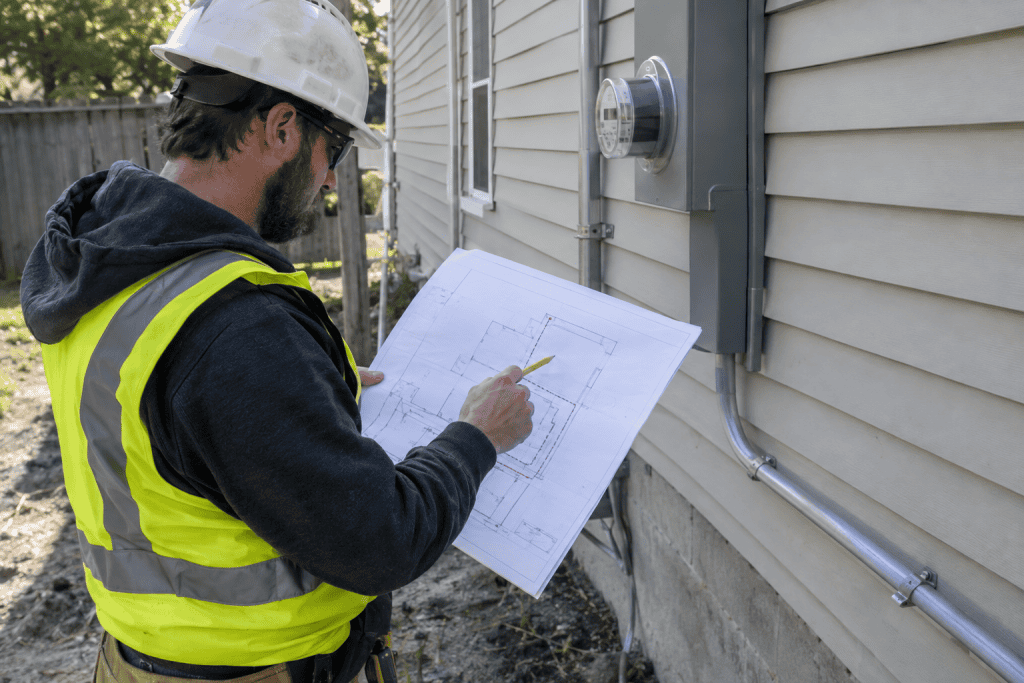
6. Prepare the Site and Coordinate Access
A safe service connection upgrade depends on more than the electrical installation itself.
The work area must be accessible, prepared and suitable for the tasks being carried out.
Depending on the project, preparation may include arranging access to the switchboard, clearing work areas, coordinating excavation or ensuring appropriate equipment can reach the installation.
Coordinate With Other Trades and Occupants
For construction projects, builders and other contractors should be informed of the planned electrical work.
For strata buildings and occupied properties, access arrangements and any required power interruptions should be communicated in advance.
Poor coordination can create delays, particularly if the work cannot proceed because the installation area is obstructed or the necessary access has not been arranged.
7. Arrange Safe Isolation and Disconnection
Before existing electrical service equipment can be altered or replaced, the required isolation and disconnection arrangements must be established.
This is a critical safety stage because service connections may involve equipment associated directly with the electricity distribution network.
Why Professional Control Is Essential
Electrical service work can expose workers to serious hazards if equipment is not properly isolated or the supply is not safely controlled.
Disconnection and reconnection must therefore be arranged through the appropriately authorised personnel and processes.
Homeowners, builders and property managers should never attempt to disconnect service cables or modify network-connected equipment themselves.
The relevant ASP and distributor will determine the appropriate procedures for the particular installation.
8. Complete the Upgrade Using Appropriate Installation Practices
Once the necessary preparation and approvals are complete, the service connection work can proceed.
The exact tasks depend on the project but may involve replacing overhead or underground service cables, modifying service equipment or completing other authorised changes to the connection.
Quality Workmanship Makes a Difference
Installation quality affects the reliability and long-term performance of the service connection.
Relevant considerations include suitable equipment, secure connections, appropriate cable support, protection against physical damage and compliance with applicable technical requirements.
Work should be carried out by appropriately qualified and authorised professionals in accordance with the relevant distributor requirements and applicable installation rules.
Rushing the installation or using unsuitable components can create problems that may be expensive to correct later.
9. Complete the Required Testing, Inspection and Documentation
Completing the physical installation does not automatically mean the upgrade is ready to be energised.
The required checks, inspections and documentation depend on the nature of the work and the distributor’s requirements.
These processes help establish that the installation has been completed appropriately and is ready for the next stage.
Why Documentation Matters
Records provide evidence of what work was completed and can help support future maintenance.
Depending on the project, documentation and approvals may include connection applications, inspection records, compliance documentation and information required by the electricity distributor.
Accurate records are particularly valuable for builders, developers, property managers and owners corporations that need to maintain an ongoing record of electrical infrastructure.
10. Coordinate Reconnection and Plan for Future Maintenance
The final step involves coordinating any required reconnection, metering and completion processes.
The arrangements depend on the project and the relevant electricity distributor.
Once the required work and approvals are complete, the appropriate parties can coordinate the return of the electricity supply.
Think Beyond the Immediate Upgrade
A completed service connection upgrade should also be considered as part of the property’s longer-term electrical plan.
If you are planning additional air conditioning, EV charging, solar, battery storage or other major electrical equipment, discuss these requirements with your electrician.
Understanding future demand can help avoid repeated modifications and ensure planned upgrades are considered together.
Maintaining records of the completed work also makes it easier to understand the property’s electrical infrastructure when future repairs or alterations are needed.
Why Professional Service Connection Upgrades Matter
A service connection is a critical part of the electrical system, and problems can affect the property’s ability to receive power safely and reliably.
Professional planning helps identify the work required, coordinate approvals, arrange safe disconnection and reconnection, and address relevant installation requirements.
For homeowners, this can reduce uncertainty during renovations or electrical upgrades.
For builders and developers, it helps integrate electrical infrastructure into the broader construction schedule.
For commercial property managers, it provides a structured way to address ageing service equipment and changing electrical demand.
Common Mistakes to Avoid During a Service Connection Upgrade
Even a straightforward project can become more complicated when important details are overlooked.
Avoid assuming that every service connection job requires the same type of provider or approval. The appropriate process depends on the proposed work.
Do not schedule installation before confirming access, site readiness and any required distributor approvals.
Avoid leaving future electrical demand out of the discussion, particularly if major appliances or EV charging are planned.
Finally, never attempt to carry out service disconnection, reconnection or network-related electrical work yourself.
Taking the time to organise the project correctly from the beginning can help minimise delays and unnecessary costs.
Speak to Spectra Electrical About Your Service Connection Upgrade
Spectra Electrical can assist homeowners, builders, developers and commercial property managers with Level 2 electrical services and service connection requirements.
Whether you’re upgrading ageing service infrastructure, preparing a property for increased electrical demand or coordinating electrical work as part of a renovation or new build, getting the right advice early can make the process easier to manage.
From assessing the existing installation to coordinating the required service work, a professional approach can help ensure the upgrade is planned around your property’s requirements.
Contact Spectra Electrical to discuss your service connection upgrade and establish the appropriate next steps for your property. Addressing the requirements early can help you plan costs, coordinate contractors and reduce avoidable delays.
Conclusion
A safe service connection upgrade involves more than replacing a cable or changing a piece of electrical equipment.
It requires understanding the property’s needs, engaging the right accredited provider, assessing existing infrastructure, coordinating distributor requirements and completing the necessary work, testing and documentation.
Every property is different, so the exact process will depend on the existing connection and the changes being proposed.
By planning ahead and using appropriately accredited and authorised professionals, homeowners, builders and property managers can approach service connection upgrades with greater confidence.
The smartest service connection upgrade is one that prioritises safety, meets the relevant requirements and provides a reliable foundation for the property’s current and future electrical needs.
