
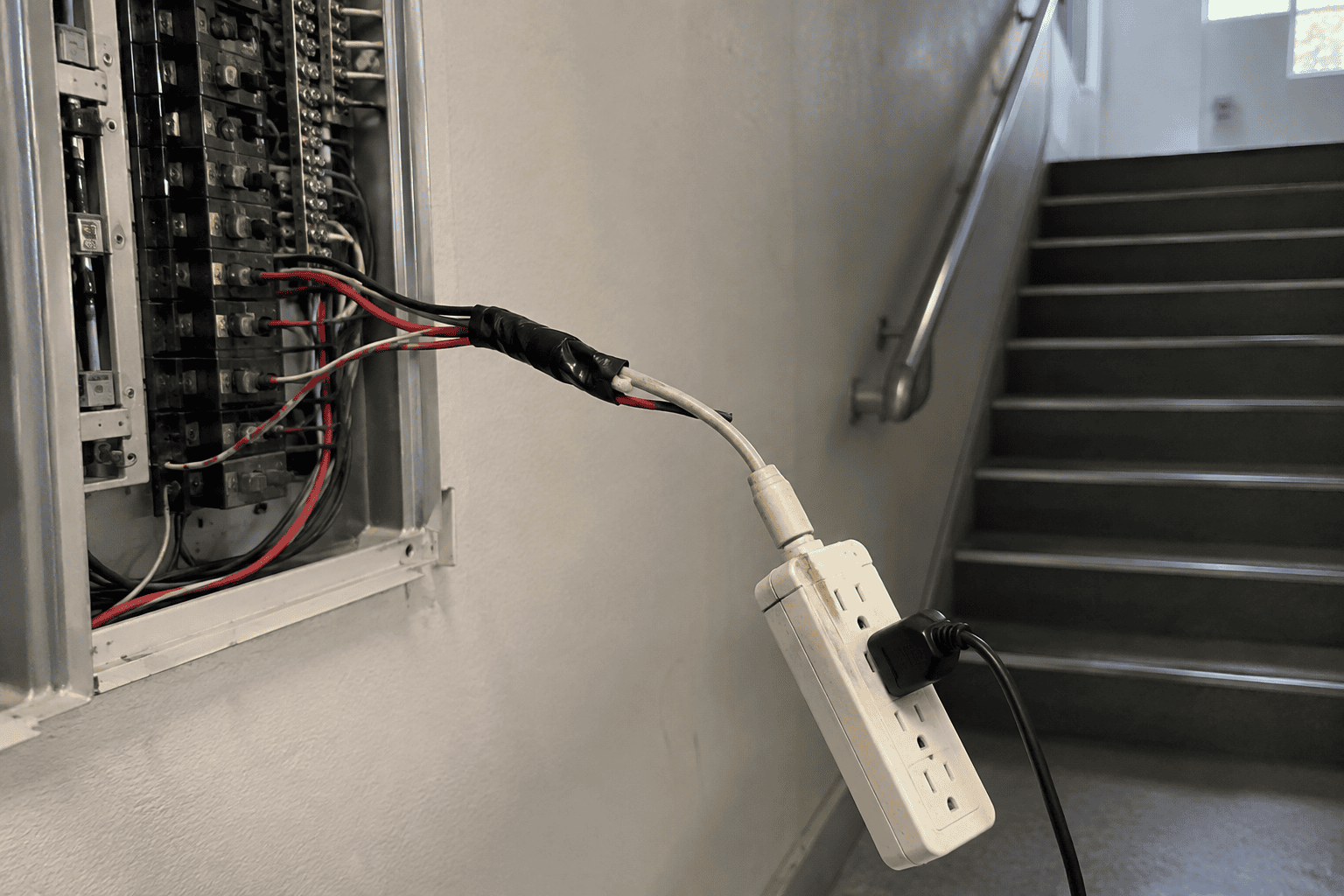
5 Risky Electrical Shortcuts That Increase Strata Liability
Managing electrical safety in a strata building involves more than fixing a faulty light or replacing a damaged power point. Owners corporations, strata committees and property managers must help ensure that common property is maintained appropriately, electrical defects are addressed and essential building systems remain safe and functional.
However, when budgets are tight or maintenance becomes difficult to coordinate, electrical work can sometimes be delayed, inspections overlooked or repairs handled with a short-term mindset.
These shortcuts may appear to save money initially, but they can create much larger problems if an electrical fault leads to property damage, injury, disrupted building operations or regulatory issues.
In NSW, owners corporations are responsible for repairing and maintaining common property. The NSW Government also warns that failing to meet this responsibility can expose owners corporations to legal action. (NSW Government: Strata repairs and maintenance).
Understanding common electrical maintenance mistakes can help strata decision-makers manage risks more effectively.
Here are 5 risky electrical shortcuts that increase strata liability.
1. Delaying Electrical Repairs to Save Money
One of the riskiest shortcuts is postponing electrical repairs because the problem appears minor or the budget is already stretched.
A faulty common-area light, repeatedly tripping circuit breaker or damaged electrical fitting might not seem urgent at first. However, ignoring warning signs can allow an underlying problem to deteriorate and potentially create a more serious hazard.
Why Delayed Repairs Can Become Costly
Electrical problems don’t always remain isolated.
A deteriorating connection, damaged cable or faulty protective device may require more extensive work if the issue is left unresolved. In shared areas, an electrical defect can also affect residents, visitors, contractors and building operations.
For example, if a damaged light fitting in a common walkway is repeatedly reported but never repaired, the owners corporation may be leaving an identifiable hazard unresolved.
The eventual cost may extend beyond the original repair to include emergency attendance, additional rectification and possible claims if someone suffers harm.
A Better Approach
Strata committees should establish a clear process for reporting, assessing and prioritising electrical defects.
Urgent hazards should receive prompt attention, while other identified issues should be documented and scheduled according to their severity and applicable requirements.
Saving money by delaying a necessary repair isn’t necessarily a saving if the problem becomes more serious.
2. Hiring Unlicensed or Inappropriately Qualified Contractors
Another dangerous shortcut is choosing a contractor based primarily on price without confirming their qualifications and authorisations.
Electrical work requires specific skills, and not every contractor is permitted to perform every type of electrical task.
In NSW, electrical wiring work must be undertaken by, or under the supervision of, a licensed electrician. Contractors must also meet applicable certification and compliance requirements. See the NSW Government’s electrical work guidance.
Why Qualifications Matter in Strata Buildings
Strata properties often contain a mixture of electrical systems, including:
- Common-area lighting
- Switchboards and distribution equipment
- Car park electrical infrastructure
- Security and access control systems
- Emergency and exit lighting
- Pumps and other building equipment
- Electrical service connections
Some tasks require specialist expertise or additional accreditation. For example, work involving a property’s connection to the electricity network may require an appropriately accredited Level 2 Accredited Service Provider.
Choosing someone without the correct licence or accreditation can result in improperly completed work, missing documentation and additional costs to rectify defects.
How to Reduce the Risk
Before engaging a contractor, confirm their licence, relevant experience and authorisation for the proposed scope of work.
Ask for a clearly defined quote, understand what the work includes and ensure the required compliance documentation will be provided.
The cheapest quote may not represent the best value if it excludes essential work or creates problems that another contractor must later correct.
3. Skipping Electrical Inspections and Preventative Maintenance
A third shortcut is waiting for equipment to fail before arranging an inspection.
Electrical infrastructure can deteriorate gradually, and some developing faults may not be obvious during everyday use.
This is especially relevant to older apartment buildings, where switchboards, wiring, lighting and common electrical equipment may have experienced years of wear and modifications.
What Can Go Wrong?
Without appropriate maintenance, a strata building may develop issues involving:
- Ageing electrical components
- Faulty circuit protection
- Damaged common-area fittings
- Deteriorating wiring
- Repeated electrical interruptions
- Equipment that no longer suits the building’s requirements
Emergency lighting and other essential fire safety measures also need to be managed according to the requirements applicable to the building.
In NSW, relevant buildings must have essential fire safety measures inspected and tested in accordance with AS 1851-2012 from 13 February 2026, unless an applicable performance solution provides otherwise. The NSW Government’s fire safety guidance explains these responsibilities.
Not every electrical inspection replaces specialist fire safety servicing, so the correct professionals must be engaged for each task.
Adopt a Planned Maintenance Schedule
A structured maintenance program allows strata managers to identify concerns before they become urgent and gives committees more time to budget for repairs.
Inspections should be appropriate to the building, its equipment, previous defects and applicable requirements.
Preventative maintenance cannot eliminate every failure, but it can help reduce avoidable surprises and improve the condition of shared electrical infrastructure.
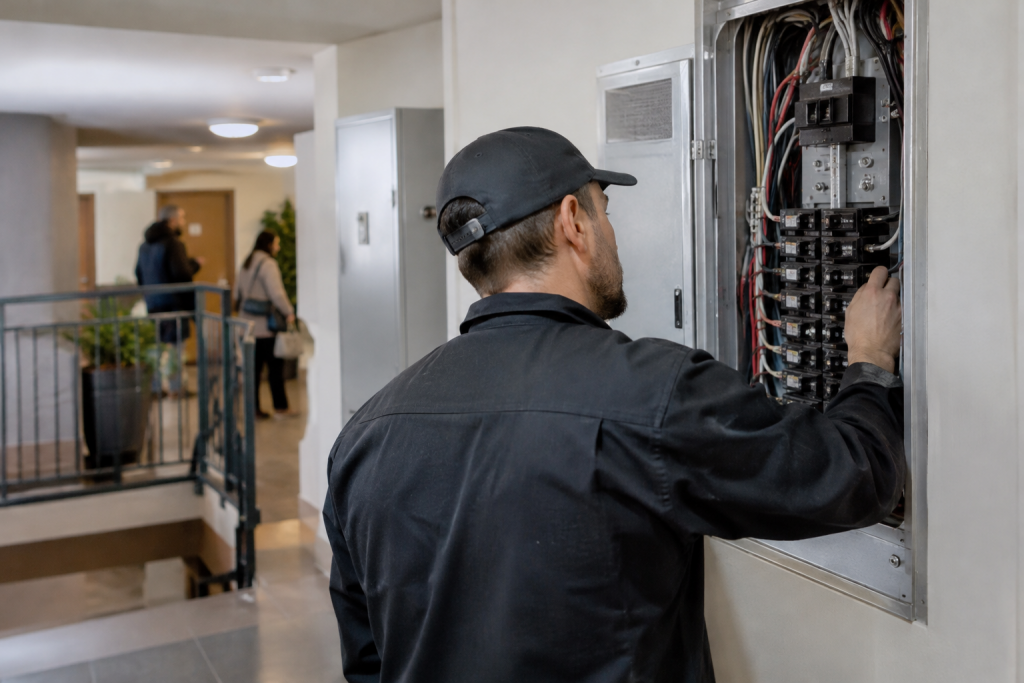
4. Allowing Unapproved Electrical Modifications or Quick Fixes
Strata buildings change over time.
Residents renovate apartments, businesses modify leased spaces and owners corporations upgrade common-area technology. These changes can affect the building’s electrical infrastructure, particularly where new equipment draws additional power or existing services are altered.
The risk arises when work is undertaken without proper assessment, approval or coordination.
Why Uncoordinated Work Creates Problems
Imagine a building adding EV charging facilities without first assessing the available electrical capacity.
Alternatively, electrical cabling might be modified during a renovation without suitable consideration of existing services, access or documentation.
Even when an upgrade appears to work initially, it may introduce problems that are not immediately apparent.
Unapproved or poorly coordinated work can create uncertainty about the condition of the installation, responsibility for maintenance and whether additional corrective work is necessary.
DIY electrical wiring work is particularly concerning because electrical wiring work in NSW must be undertaken by appropriately licensed people.
Put Proper Approval Processes in Place
Before approving major electrical changes, strata committees should establish the scope of work, confirm who is responsible for the affected infrastructure and engage qualified professionals.
Where necessary, the work should be coordinated with the building manager, strata manager, electricity distributor or other relevant specialists.
Changes should be documented, and required testing and certification should be completed.
This helps preserve a clear record of the building’s electrical infrastructure and reduces the risk of future disputes.
5. Neglecting Electrical Records and Leaving Responsibilities Unclear
Electrical compliance involves more than completing the physical work.
Owners corporations also need a practical way to track defects, maintenance, inspections and the documentation associated with completed electrical work.
When records are scattered across emails, old invoices and different contractors, it becomes harder to establish what has been inspected, what remains outstanding and who is responsible for the next step.
Why Missing Documentation Increases Risk
Poor record-keeping can lead to:
- Missed maintenance tasks
- Repeated inspections without resolving existing defects
- Difficulty confirming completed work
- Delays when responding to faults
- Disputes about responsibility for repairs
- Problems demonstrating that obligations have been addressed
For relevant electrical work, NSW requires a Certificate of Compliance for Electrical Work (CCEW). Current requirements and submission procedures are outlined in the NSW Government’s electrical compliance guidance.
Create a Central Maintenance Record
Strata managers and committees should maintain an organised record of electrical reports, compliance certificates, outstanding defects and scheduled maintenance.
It is also important to clarify who is responsible for following up recommendations and approving necessary repairs.
Common property responsibilities can differ from obligations relating to individual lots, so the building’s strata arrangements should be reviewed when determining responsibility.
A central record makes it easier to track problems from identification through to completion.
How Strata Committees Can Reduce Electrical Liability Risks
Reducing electrical risk does not mean replacing every ageing component or approving every proposed upgrade immediately.
The better approach is to make informed decisions based on the condition of the property, the seriousness of identified defects and the requirements that apply to the building.
Prioritise Safety-Critical Issues
Address immediate hazards promptly and ensure other defects are assessed and tracked.
Budget for Preventative Maintenance
Planned maintenance can help committees anticipate expenditure instead of relying entirely on emergency repairs.
Choose the Right Contractors
Confirm licences, relevant accreditations, experience and the scope of work before appointing a contractor.
Maintain Clear Records
Keep inspection reports, certificates, repair records and outstanding recommendations organised.
Review Future Electrical Demand
Consider how EV chargers, security systems, lighting upgrades and other new technology may affect the property’s electrical infrastructure.
Taking these steps can help strata committees make better maintenance decisions and reduce avoidable exposure to safety, financial and legal risks.
Speak to Spectra Electrical About Strata Electrical Maintenance
Spectra Electrical can assist strata committees, owners corporations and building managers with electrical maintenance, switchboard upgrades, common-area lighting and broader electrical infrastructure improvements.
If your building has recurring electrical faults, ageing switchboards, outstanding defects or infrastructure that hasn’t been reviewed recently, a professional assessment can help identify where attention is needed.
Spectra Electrical can help you understand the condition of your electrical infrastructure and plan practical improvements around the property’s requirements.
Contact Spectra Electrical to discuss your strata building’s electrical maintenance needs and take a proactive approach to addressing defects before they become more costly or disruptive.
Conclusion
Electrical shortcuts can appear to save money in the short term, but they may leave strata buildings exposed to greater safety risks, expensive repairs and potential liability.
Delaying known defects, hiring contractors without the appropriate credentials, skipping maintenance, allowing uncoordinated electrical modifications and neglecting records can all undermine effective property management.
The solution is to establish clear responsibilities, engage suitably qualified professionals, maintain accurate documentation and address electrical issues according to their urgency.
For strata committees, proactive electrical maintenance isn’t simply another expense. It’s an important part of managing common property responsibly, protecting residents and reducing avoidable risks over the long term.
