
8 Frustrating Electrical Faults That Thermal Scans Catch Early
Electrical faults can be frustrating, expensive and potentially dangerous, particularly when they develop without obvious warning signs. A switchboard might look perfectly normal, a business might be operating without interruptions, and electrical equipment might appear to be working correctly, even while certain components are generating abnormal heat.
By the time a fault becomes noticeable, the problem may have progressed to equipment failure, unexpected downtime or a costly emergency repair.
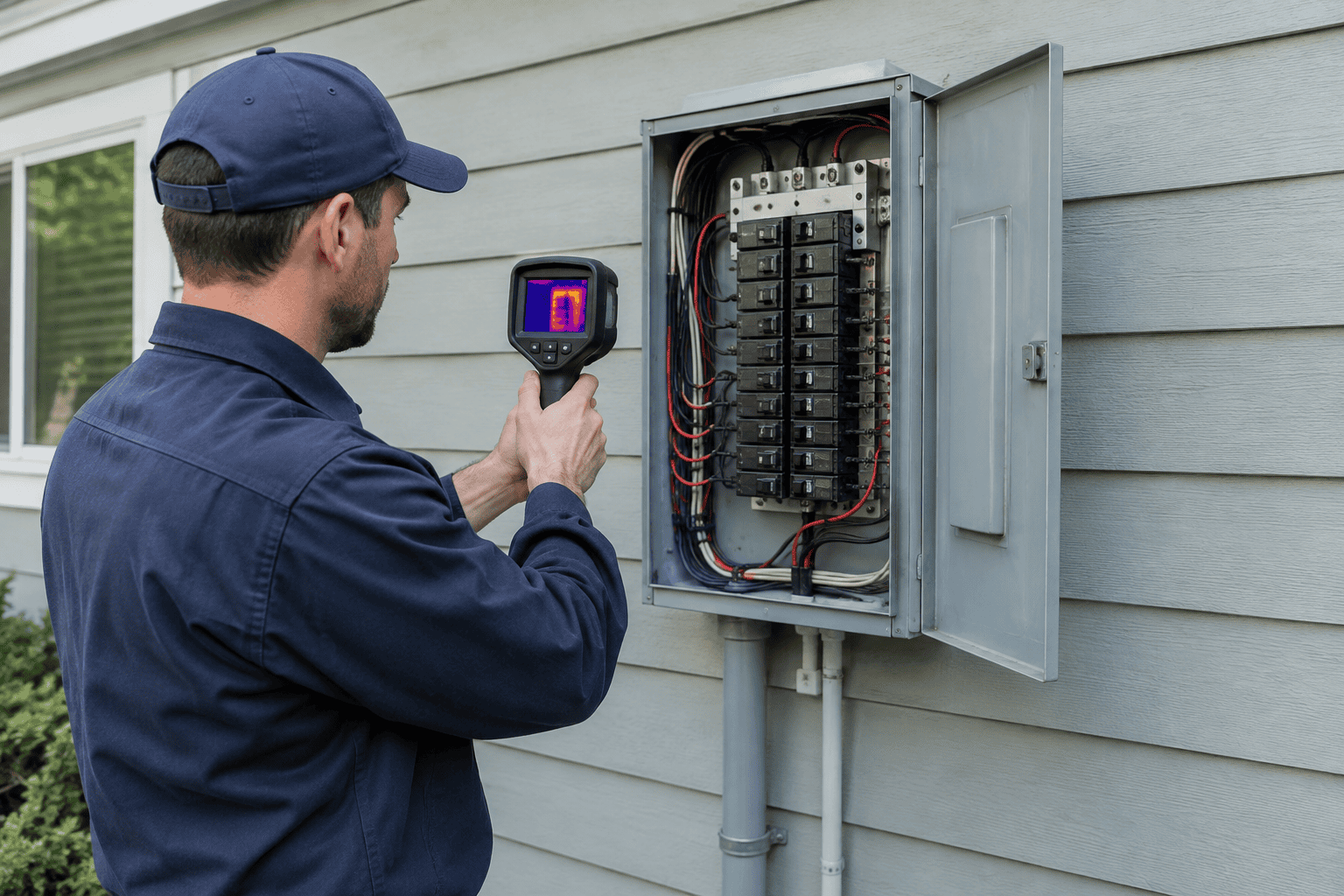
This is where thermal imaging for electrical fault detection can make a difference. Using an infrared camera, qualified professionals can identify unusual temperature patterns across electrical equipment without physically touching the components being inspected. These patterns can reveal potential problems that deserve further investigation before they develop into more serious failures.
For businesses, strata buildings, commercial properties and homeowners, thermal scanning can provide valuable insight into the condition of electrical infrastructure.
Here are 8 frustrating electrical faults that thermal scans catch early, and why recognising these problems matters.
1. Loose Electrical Connections
Loose electrical connections are a common concern in electrical installations, particularly where equipment has experienced years of use, vibration, thermal cycling or deterioration.
When an electrical connection becomes loose or develops poor contact, electrical resistance can increase. Under load, this resistance may generate excessive heat around the affected connection.
Why Loose Connections Are a Problem
A deteriorating connection can continue operating for some time without causing an obvious interruption. However, ongoing heating may damage terminals, insulation and surrounding components.
In more serious cases, excessive heat can contribute to electrical arcing, equipment failure or fire.
How Thermal Imaging Helps
A thermal scan can highlight a connection that is noticeably warmer than comparable connections operating under similar conditions.
This gives an electrician a reason to investigate the connection and determine whether corrective work is necessary.
Identifying abnormal heating early can help avoid a situation where a relatively straightforward repair develops into a much more expensive switchboard problem.
2. Overloaded Electrical Circuits
Electrical circuits are designed to operate within specific limits. When demand exceeds what a circuit and its components can safely accommodate, excessive current can produce additional heat.
This can become particularly relevant in modern homes and commercial buildings where electrical demand has increased over time.
Air conditioning, EV chargers, industrial equipment, computers, refrigeration and other high-demand appliances can all contribute to the overall electrical load.
Warning Signs of Excessive Electrical Demand
A circuit may experience repeated protective-device operation, unusual heating or other performance problems when its load or configuration requires attention.
Thermal imaging can help identify components or conductors exhibiting abnormal temperatures while operating under load.
However, the camera alone cannot determine whether the cause is excessive demand, a poor connection, unsuitable equipment or another issue.
A qualified electrician can interpret the findings and assess whether the circuit, its protective devices and the overall installation are suitable.
3. Unbalanced Electrical Loads
Many commercial and industrial electrical installations use three-phase power.
In these systems, electrical loads should be distributed appropriately across the available phases. When the loads become significantly unbalanced, individual components may operate at different temperatures.
Why Phase Imbalance Matters
An imbalance may develop as equipment is added, removed or modified over time.
For example, a building may have several high-demand appliances connected in a way that places disproportionate demand on one phase.
Depending on the installation, this can contribute to increased heating, reduced efficiency or additional stress on electrical equipment.
What a Thermal Scan Can Reveal
A thermal inspection can help identify temperature differences between comparable components or phases.
If one connection or component is noticeably hotter than the others, further investigation may be warranted.
Electrical measurements and load assessments can then help establish whether phase imbalance is contributing to the problem.
For commercial properties with substantial electrical demand, identifying these issues can help improve maintenance planning and equipment reliability.
4. Deteriorating Circuit Breakers and Fuse Connections
Circuit breakers and fuses are important components of electrical protection.
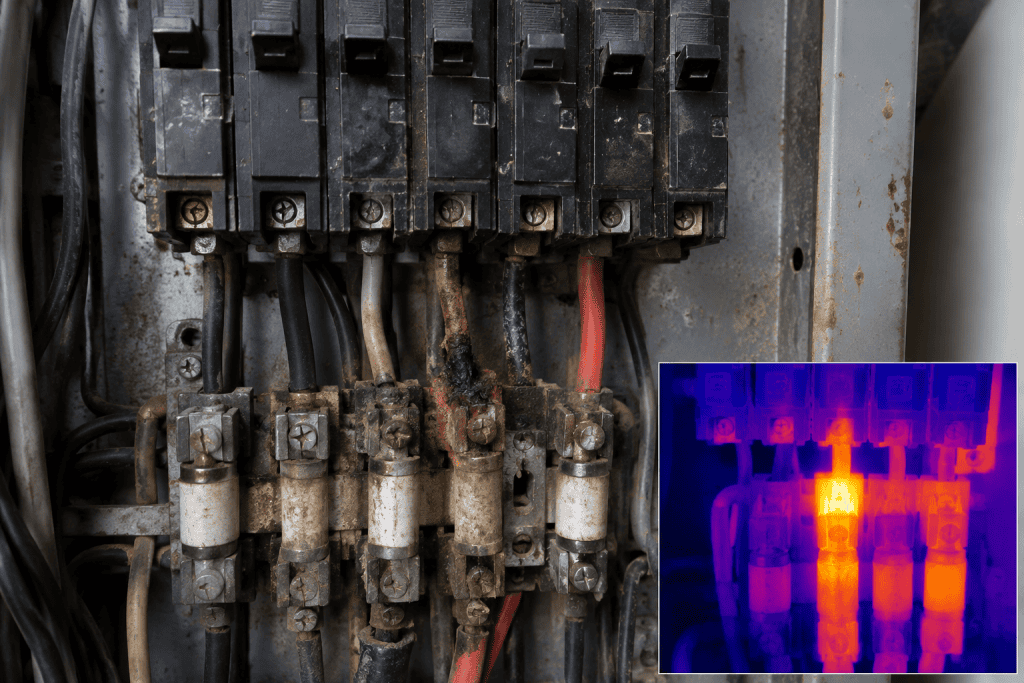
However, protective devices and their associated connections can deteriorate over time. Internal wear, poor contact, corrosion or damage may contribute to abnormal heating.
Why Older Switchboards Deserve Attention
Older switchboards may have components that have experienced years of operation or may no longer be suitable for the property’s current electrical requirements.
Warning signs can include recurring circuit faults, visible deterioration, burning smells or protective devices that repeatedly operate.
These symptoms should not be ignored, even when the switchboard appears to be functioning normally most of the time.
How Thermal Scanning Supports Inspection
A thermal camera can identify unusual temperature patterns around breakers, fuse holders and associated connections while the equipment is operating under suitable conditions.
This may help an electrician identify a component requiring closer inspection.
Thermal imaging does not confirm that a breaker has failed or determine whether it will operate correctly during a fault. Additional assessment and testing may be necessary.
5. Damaged or Poorly Installed Cable Terminations
Cable terminations connect electrical conductors to equipment, terminals and other components.
When these connections are poorly installed, damaged or deteriorating, they may develop increased resistance and generate excess heat.
This can occur in distribution equipment, industrial machinery and other electrical installations.
Why Cable Terminations Matter
A termination may look relatively normal from the outside while developing an electrical problem under load.
If the issue remains undetected, continued heating may damage the conductor, insulation or surrounding equipment.
Identifying Abnormal Temperature Patterns
Thermal imaging can reveal localised heating around cable lugs, terminals and connection points.
An electrician can compare these readings with similar components and consider factors such as current, ambient temperature and equipment specifications.
Where abnormal heating is identified, further investigation can establish whether the termination requires repair, replacement or another corrective action.
6. Corroded Electrical Connections
Corrosion can affect electrical connections exposed to moisture, environmental contaminants or unsuitable operating conditions.
As corrosion develops, the quality of electrical contact may deteriorate, potentially increasing resistance and creating abnormal heat under load.
This can be particularly relevant to external electrical equipment, older installations and infrastructure exposed to harsh environments.
Why Corrosion Can Go Unnoticed
Some connections are located inside enclosures or equipment that cannot be fully assessed through a visual inspection alone.
Even when corrosion isn’t immediately visible, a deteriorating connection may exhibit unusual thermal behaviour while electricity is flowing.
The Benefit of Early Investigation
A thermal scan can help identify a connection that deserves closer examination.
However, not every corroded connection will produce a detectable hot spot. A scan also cannot establish the full extent of corrosion inside a component.
If an abnormal temperature pattern is identified, a qualified electrician can determine the appropriate next steps and establish whether repairs or component replacement are required.
7. Overheating Motors, Transformers and Other Electrical Equipment
Electrical motors, transformers and other equipment can generate heat during normal operation.
The concern arises when temperatures become abnormal in relation to the equipment’s design, operating conditions and expected performance.
Possible contributors include excessive loading, poor connections, inadequate cooling, mechanical problems or deteriorating components.
Why Equipment Overheating Matters
In commercial and industrial environments, electrical equipment often supports essential operations.
A problem affecting a motor, transformer or associated electrical connection can potentially interrupt production, refrigeration, ventilation or other important services.
Unexpected failure may also require emergency repairs and replacement equipment.
How Thermal Imaging Helps
Thermal scans can highlight unusually hot areas on accessible equipment surfaces.
Comparing temperature patterns across similar components or against previous inspection results can help maintenance teams identify changes that warrant investigation.
Because motors and transformers can have several possible causes of overheating, thermal findings should be considered alongside other appropriate diagnostic tests.
8. Overheating in Busbars and Distribution Connections
Busbars distribute electrical power within switchboards and other electrical equipment.
Their connections are particularly important because they can carry substantial current, depending on the design and application.
Poor contact, loose joints, corrosion or excessive electrical loading may contribute to abnormal temperatures around busbars and associated connection points.
Why These Faults Can Be Serious
An overheating distribution connection can affect more than a single appliance.
If the issue develops within equipment supplying multiple circuits, it may eventually contribute to a wider electrical interruption or equipment damage.
In commercial buildings and industrial facilities, this can create significant operational disruption.
Detecting Problems Before Failure
Thermal imaging can reveal temperature differences across accessible busbar joints and distribution connections while the equipment is operating under appropriate conditions.
The findings help direct further investigation and maintenance.
Because this equipment may contain exposed or potentially hazardous live parts, thermal inspections must be performed by appropriately qualified professionals using suitable safety procedures.
Why Thermal Imaging Is Valuable for Preventative Electrical Maintenance
Thermal scanning is most useful when it forms part of a broader electrical maintenance strategy rather than being treated as a one-off solution.
By identifying unusual temperature patterns, an inspection can help maintenance teams prioritise further investigation before a developing issue causes unexpected equipment failure.
For properties that rely on continuous electrical operation, this can support better maintenance planning.
Reduce Unexpected Downtime
Electrical faults can interrupt business operations, disable equipment and create urgent repair requirements.
Identifying developing problems may allow corrective work to be planned around operational schedules rather than carried out during an emergency.
Improve Maintenance Decisions
Thermal images provide visual information that can help electricians determine which components warrant additional testing.
This allows maintenance decisions to be based on observed conditions rather than relying exclusively on age or appearance.
Build Better Maintenance Records
Retaining thermal images and inspection findings can also help property owners track equipment condition over time.
Comparing inspections conducted under similar operating conditions may reveal changes that deserve further investigation.
What Thermal Imaging Cannot Tell You
Although thermal imaging is a valuable diagnostic tool, it has important limitations.
A thermal camera measures surface temperature patterns. It does not automatically identify the exact cause of an abnormal reading or detect every possible electrical fault.
Some problems may not generate enough heat to be identified during a scan. Equipment operating under very light loads may also conceal developing faults.
For that reason, electrical thermography should be performed under suitable operating conditions and interpreted by someone with the appropriate technical knowledge.
Where an abnormal pattern is found, additional electrical testing or inspection may be necessary to confirm the cause.
Thermal imaging complements professional electrical inspection; it does not replace it.
When Should You Consider an Electrical Thermal Scan?
Thermal imaging may be worth considering if your property has ageing switchboards, significant electrical loads, critical equipment or a history of recurring electrical faults.
It can also form part of a scheduled preventative maintenance program for commercial buildings, strata properties, industrial facilities and larger residential installations.
If your electrical equipment has displayed warning signs such as repeated circuit trips, unexplained interruptions or visible heat damage, arrange professional assessment rather than relying on a thermal scan alone.
Speak to Spectra Electrical About Thermal Imaging
Spectra Electrical can assist businesses, strata properties, facility managers and homeowners with electrical inspections, preventative maintenance and fault detection.
If you’re concerned about ageing switchboards, recurring electrical faults or the reliability of critical equipment, a professional assessment can help determine whether thermal imaging is appropriate for your property.
Contact Spectra Electrical to discuss your electrical maintenance requirements and identify potential issues before they develop into more disruptive and expensive problems.
Conclusion
Electrical faults can develop gradually and remain hidden until they cause equipment failure, unexpected downtime or a serious safety concern.
From loose connections and overloaded circuits to deteriorating protective devices, damaged cable terminations and overheating distribution equipment, thermal imaging can help identify temperature patterns that warrant further investigation.
Its real value lies in providing additional information about electrical equipment while it operates under suitable conditions.
When combined with professional assessment, appropriate testing and a planned maintenance program, thermal scanning can help property owners make more informed decisions about repairs and equipment reliability.
Identifying an abnormal heat pattern early can provide an opportunity to investigate the cause before a manageable maintenance issue becomes an unexpected electrical failure.
