
5 Risky Electrical Habits That Cause Blackouts During Storms
Storms can put enormous pressure on electrical infrastructure. Heavy rain, lightning, strong winds, power fluctuations and damaged external infrastructure can all contribute to outages and electrical problems.
But while some storm-related blackouts are completely outside a homeowner’s control, certain everyday electrical habits can make a home’s system more vulnerable when severe weather arrives.
The problem is that these habits often seem harmless.
Using too many appliances at once, relying heavily on extension leads, ignoring a circuit breaker that keeps tripping or continuing to use damaged electrical equipment may not cause an immediate issue on a normal day. During a storm, however, an already stressed electrical system can become much harder to manage.
Understanding these risks can help homeowners take a more proactive approach before storm season arrives.
Here are 5 risky electrical habits that cause blackouts during storms.
1. Overloading Circuits With Too Many Appliances
One of the most common electrical habits is running too many high-demand appliances on the same circuit.
Modern homes can have a long list of electrical equipment operating simultaneously, including:
- Air conditioners
- Refrigerators
- Freezers
- Pool pumps
- Computers
- Televisions
- Heating and cooling equipment
- Kitchen appliances
- EV chargers
During severe weather, some of these appliances may operate more frequently than usual.
For example, a heatwave may mean an air conditioner runs for extended periods while refrigerators and freezers are also working harder to maintain temperature.
Why Overloading Can Become a Problem
Electrical circuits are designed to operate within particular limits.
If too much demand is placed on a circuit, a circuit breaker may operate and disconnect the circuit. A circuit breaker is primarily designed to protect electrical wiring and equipment from excessive current caused by conditions such as overloads and short circuits.
This can result in a sudden loss of power to part of the property.
In some circumstances, repeated or excessive loading can also contribute to overheating and place additional stress on electrical components.
The answer isn’t to simply keep resetting the breaker.
If a circuit regularly trips during normal household use, the cause should be investigated by a licensed electrician.
A Better Approach
Take note of which appliances are operating when a circuit trips.
If you regularly need to run multiple high-powered appliances from the same area of the home, an electrician may be able to determine whether the existing circuit arrangement is appropriate or whether additional electrical infrastructure should be considered.
2. Relying on Power Boards and Extension Leads as Permanent Solutions
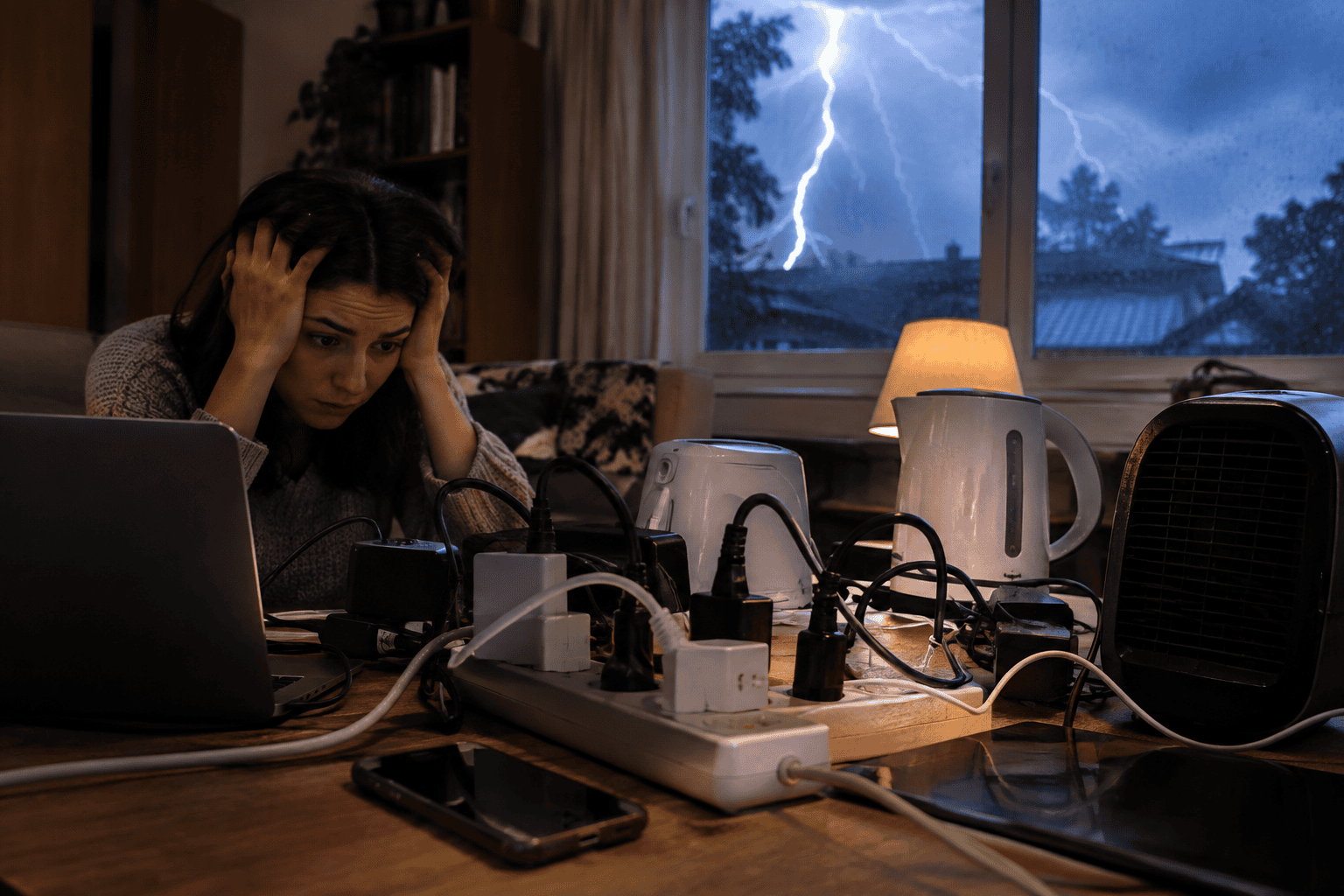
Power boards and extension leads are useful for temporary situations, but problems can arise when they become a permanent solution to inadequate electrical outlets.
During storms, homeowners may rely on additional appliances such as fans, portable cooling equipment, battery chargers and other devices.
This can lead to several appliances being connected through the same power board or extension lead.
Why This Habit Can Create Problems
A power board doesn’t increase the electrical capacity of the circuit it’s connected to.
It simply gives you more places to connect equipment.
If multiple high-demand appliances are connected through one power board, the circuit can still become overloaded.
Extension leads can also be vulnerable to physical damage, particularly when they are run across floors, doorways or outdoor areas.
Consider Permanent Electrical Solutions
If you frequently need extension leads because there aren’t enough power points in your home, consider having additional fixed outlets installed by a licensed electrician.
This can provide a safer and more practical long-term solution than continually adding another power board.
A pre-storm electrical inspection can also help identify whether your home’s current circuit arrangement is keeping up with modern electrical demand.
3. Ignoring Circuit Breakers and Safety Switches That Keep Operating
Circuit breakers and safety switches both disconnect electricity when they detect certain types of problems, but they are not the same device and they protect against different risks.
A circuit breaker is primarily intended to protect wiring and electrical equipment from excessive current, including overloads and short circuits.
A safety switch is primarily designed to help protect people from electric shock by detecting an imbalance in current, such as current leaking to earth, and disconnecting the circuit quickly.
Why Repeated Operation Matters
If a circuit breaker repeatedly trips, the cause could include an overloaded circuit, faulty appliance, short circuit, damaged wiring or another electrical fault.
If a safety switch repeatedly operates, it can indicate leakage current or another fault that needs investigation.
Neither device should simply be treated as an inconvenience.
Repeatedly resetting either device without understanding why it is operating can leave the underlying problem unresolved.
What Homeowners Should Do
If the same circuit breaker or safety switch continues to operate, stop treating it as a reset-and-forget issue.
A licensed electrician can investigate the circuit and determine the cause.
This is particularly important before storm season, when electrical conditions can become more challenging and faults involving outdoor equipment or moisture may become more apparent.
4. Continuing to Use Damaged Outdoor Electrical Equipment
Outdoor electrical equipment is particularly exposed during storm season.
Power points, extension leads, pool equipment, lighting, pumps and other electrical installations can be affected by water, dirt, corrosion, physical impact and general weather exposure.
One risky habit is continuing to use equipment that is already visibly damaged.
Warning Signs to Take Seriously
Watch for:
- Cracked power points
- Damaged covers
- Frayed cables
- Exposed wiring
- Corrosion
- Water damage
- Melted plastic
- Unusual heat
- Intermittent operation
A piece of equipment doesn’t have to stop working completely to be unsafe.
If electrical equipment is visibly damaged, don’t attempt a DIY repair or continue using it simply because it still operates.
Storms Make Outdoor Risks More Important
Heavy rain can introduce moisture into damaged equipment, while strong winds can move or damage outdoor infrastructure.
Water and electricity create particularly serious hazards.
If electrical equipment has been exposed to flooding or significant water ingress, don’t assume it is safe to use once the area appears dry.
Have it assessed by an appropriately qualified professional.
5. Ignoring Warning Signs Before the Storm Arrives
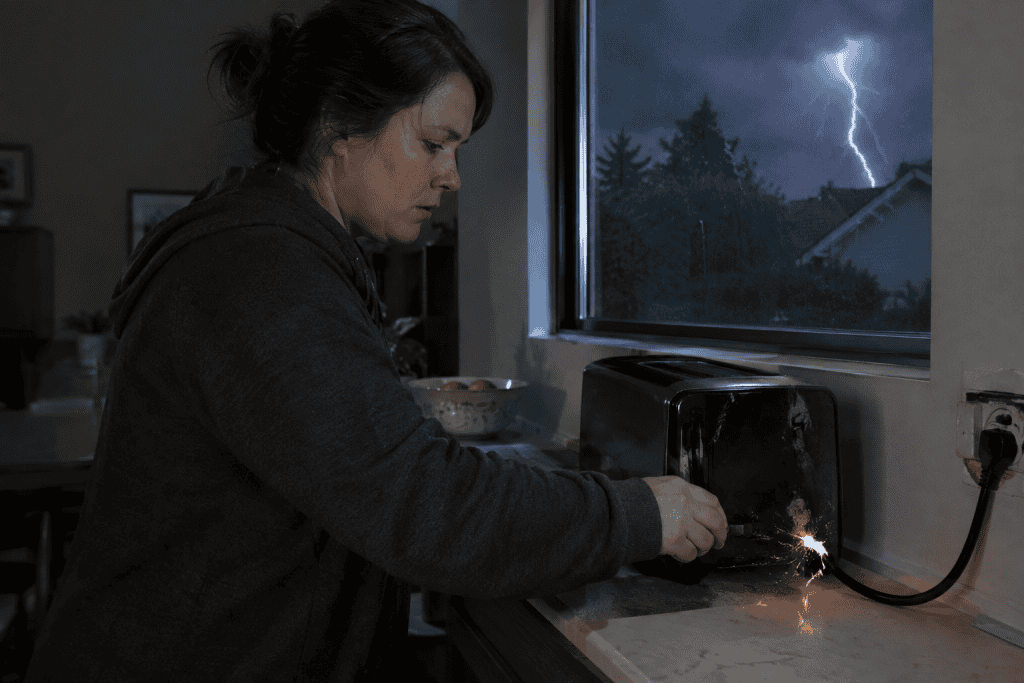
Perhaps the riskiest electrical habit is simply ignoring problems that have already appeared.
A storm doesn’t necessarily create every electrical issue from scratch.
Sometimes it exposes weaknesses that were already present.
You may have noticed:
- Flickering lights
- Unexplained power interruptions
- Buzzing sounds
- Burning smells
- Warm power points
- Frequent circuit trips
- Repeated safety-switch operation
- Unusual appliance behaviour
- An ageing switchboard
These warning signs deserve attention before severe weather arrives.
Small Problems Can Become Bigger Disruptions
Consider a property where a circuit breaker has occasionally tripped for several weeks.
If the issue is ignored, the homeowner may eventually experience a more serious outage when the electrical system is under additional pressure.
Likewise, an ageing switchboard may continue operating for years but still benefit from professional assessment before the property faces severe weather conditions.
The goal of preventative maintenance is not to predict exactly what will happen during a storm.
It is to avoid leaving known electrical problems unresolved.
Why Storms Can Expose Existing Electrical Problems
Storms can create a combination of challenging conditions.
Lightning and electrical disturbances can affect power supplies. Heavy rain can expose damaged outdoor equipment. Strong winds can damage overhead infrastructure and vegetation. Power interruptions can also cause appliances and electrical systems to switch off unexpectedly.
A well-maintained electrical installation can’t prevent every storm-related outage.
However, addressing existing electrical problems can reduce the number of avoidable issues within the property itself.
This is why storm preparation should begin before the weather turns severe.
How to Reduce the Risk of Storm-Related Electrical Problems
Homeowners can take several practical steps before storm season.
Have the Switchboard Inspected
An electrician can assess the condition of the switchboard and its protective devices, particularly if the installation is older or has not been reviewed recently.
Address Repeated Electrical Faults
Don’t ignore circuit breakers or safety switches that operate repeatedly.
Remember that a circuit breaker and safety switch perform different protective functions, so repeated operation of either device should be investigated rather than treated as a routine reset.
Check Outdoor Equipment
Look for obvious signs of damage, corrosion or deterioration around outdoor electrical installations.
Reduce Unnecessary Loads
Avoid connecting multiple high-demand appliances to the same circuit or power board.
Plan Major Electrical Upgrades
If you’re adding an EV charger, air conditioning, pool equipment or other high-demand technology, have the electrical system assessed beforehand.
Don’t Attempt Electrical Repairs During a Storm
Severe weather is the worst time to experiment with electrical repairs.
If you experience an electrical fault during a storm, avoid touching damaged electrical equipment or attempting to repair exposed wiring yourself.
Stay away from fallen power lines and damaged electrical infrastructure.
If water has entered an area containing electrical equipment, don’t enter the area until it has been made safe.
Some electrical hazards aren’t visible, particularly after flooding or significant storm damage.
Professional assistance should be sought when electrical equipment or infrastructure has been damaged.
Speak to Spectra Electrical Before Storm Season
Don’t wait until a storm leaves you without power to discover that your home’s electrical system needs attention.
Spectra Electrical can assist homeowners with electrical inspections, switchboard assessments, preventative maintenance and electrical upgrades to help prepare properties for increased seasonal demand and severe weather.
If you’re experiencing repeated circuit breaker trips, safety-switch operation, flickering lights, an ageing switchboard or problems with outdoor electrical equipment, a professional inspection can help identify potential issues before they become a bigger disruption.
Whether you need a pre-storm electrical safety check, advice about your home’s electrical capacity or assistance with upgrading ageing infrastructure, Spectra Electrical can help you take a proactive approach to electrical safety.
Contact Spectra Electrical today to arrange a professional electrical assessment and identify potential problems before the next major storm puts your home’s electrical system to the test.
Conclusion
Storm-related blackouts aren’t always preventable. Severe weather can damage electricity infrastructure and cause outages that are completely outside a homeowner’s control.
However, certain electrical habits can create unnecessary risks and make an already challenging situation worse.
Overloading circuits, relying on power boards, repeatedly resetting circuit breakers or safety switches, using damaged outdoor equipment and ignoring existing warning signs can all contribute to electrical problems that are better addressed before storm season.
The smartest approach is to deal with electrical warning signs while the weather is calm, rather than waiting for a storm to reveal them.
A professional electrical inspection can help identify issues, improve your understanding of the property’s electrical infrastructure and give you greater confidence that your home is prepared for the challenges of storm season.
