
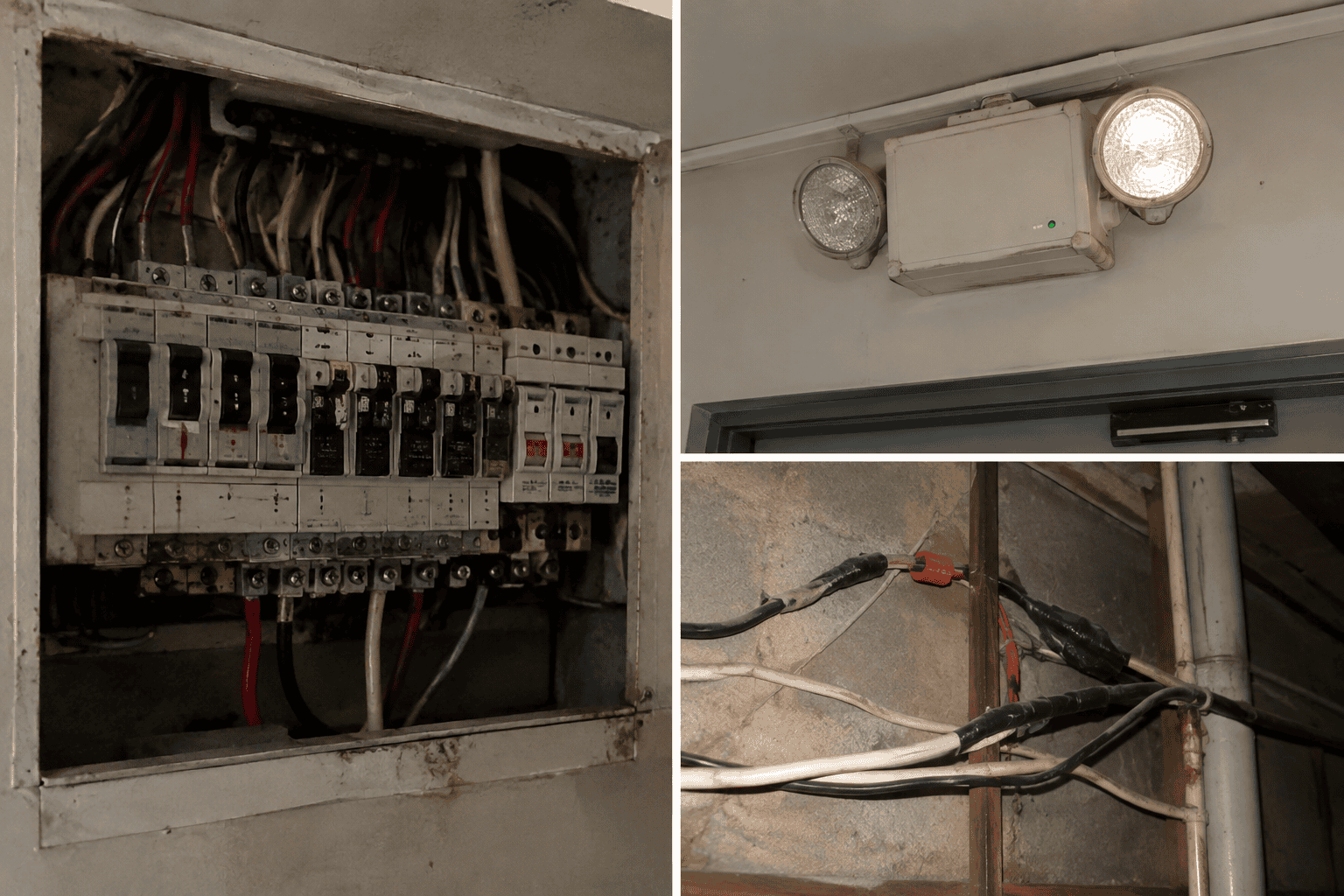
6 Dangerous Compliance Gaps Common in Older Strata Buildings
Older strata buildings have plenty of character, but their electrical and safety infrastructure can present challenges that newer developments are designed to avoid.
As buildings age, electrical systems are modified, common areas are renovated, technology is added and different contractors may work on the property over many years. Without a coordinated maintenance strategy, important compliance requirements can gradually fall behind.
For owners corporations and strata committees, this can create more than an administrative headache. Electrical defects, inadequate safety protection, outdated equipment and poorly maintained essential services can affect residents, visitors and contractors while potentially creating significant repair costs.
In NSW, the importance of proactive building safety has also increased with recent regulatory changes. From 13 February 2026, NSW requirements introduced mandatory routine servicing arrangements under AS 1851-2012 for essential fire safety measures in relevant buildings, including Class 2 buildings such as apartment buildings.
That makes it increasingly important for older strata buildings to understand where potential compliance gaps may exist.
Here are 6 dangerous compliance gaps common in older strata buildings and what owners corporations should consider.
1. Outdated or Inadequate Electrical Safety Switch Protection
Safety switches, also known as residual current devices or RCDs, are an important part of electrical protection.
Older strata buildings may have electrical installations that pre-date modern protection requirements or have been modified over the years without a comprehensive review of the existing system.
NSW Government guidance confirms that electrical safety requirements have changed over time, including changes to permitted RCD types under AS/NZS 3000. Type AC RCDs can no longer be installed in Australia, following changes that took effect from 1 May 2023.
Why Older Buildings Need Attention
The presence of an older device doesn’t automatically mean an entire strata building is non-compliant. However, aging equipment should be assessed in context.
Problems can arise when:
- RCD protection is incomplete
- Protective devices are outdated
- Circuits have been altered over time
- Equipment has been added without reviewing protection
- Safety switches are not properly tested
- Records don’t clearly show what protection exists
The practical issue for an owners corporation is that assumptions are not enough.
A professional electrical inspection can establish what protection is actually installed and whether upgrades or further investigation are appropriate.
2. Emergency Lighting and Exit Signage Are Not Properly Maintained
Emergency lighting and illuminated exit signs are critical components of building safety.
If normal power is lost during an emergency, occupants need suitable illumination to navigate exit paths safely. NSW guidance describes emergency lights as battery-backed systems designed to provide lighting during a power outage, while exit signs help occupants identify evacuation routes.
For older strata buildings, the problem may not be that emergency lighting was never installed. It may be that systems have become unreliable through age, failed batteries, damaged fittings or inconsistent maintenance.
Common Warning Signs
Owners corporations should pay attention to:
- Emergency lights that fail during testing
- Faded or damaged exit signs
- Failed batteries
- Missing fittings
- Unclear testing records
- Lights that have been altered during renovations
- Damaged wiring or fittings
Emergency and exit lighting can form part of a building’s essential fire safety measures, meaning maintenance needs to align with the building’s specific requirements and documentation.
Because fire safety requirements depend on the individual building, its classification and its Fire Safety Schedule, an appropriate qualified professional should be engaged to determine what applies.
3. Fire Safety Maintenance Records Are Incomplete or Outdated
A building can have equipment installed and still have a compliance problem if the maintenance process and records aren’t being properly managed.
This is particularly important for older strata buildings where documentation may have become fragmented over decades.
NSW requirements now place greater emphasis on routine inspection and servicing of essential fire safety measures. From 13 February 2026, relevant building owners must ensure essential fire safety measures are maintained in accordance with AS 1851-2012 where the standard applies, or according to an applicable performance solution.
Why Records Matter
Good documentation can help a strata committee understand:
- What safety systems exist
- When equipment was last serviced
- Which contractor performed the work
- What defects were identified
- What repairs remain outstanding
- When the next inspection is due
For an owners corporation, this information is valuable when preparing maintenance budgets and planning capital works.
Without reliable records, committees can end up repeatedly investigating the same equipment or discovering important defects only when an inspection identifies them.
4. Unverified Electrical Work Has Been Added Over the Years
Older strata buildings often evolve gradually.
A unit may be renovated. Common lighting may be upgraded. Additional air conditioning may be installed. EV charging, communications equipment, security systems or other electrical infrastructure may be added.
The issue is not that upgrades are inherently problematic. The risk comes when electrical work is completed without appropriate documentation, certification or consideration of the wider installation.
In NSW, electrical wiring work must be performed by, or under the supervision of, a licensed electrician. Electricians must also provide a Certificate of Compliance for Electrical Work (CCEW) for completed electrical work, demonstrating that it has been tested and complies with the relevant requirements.
Why Unrecorded Work Creates Problems
Unverified modifications can make it difficult to establish:
- What work was completed
- Who performed it
- Whether it was tested
- Which circuits were modified
- Whether additional electrical capacity was required
- What documentation should be retained
For older strata properties, a review of available electrical records can therefore be just as valuable as inspecting the physical equipment.
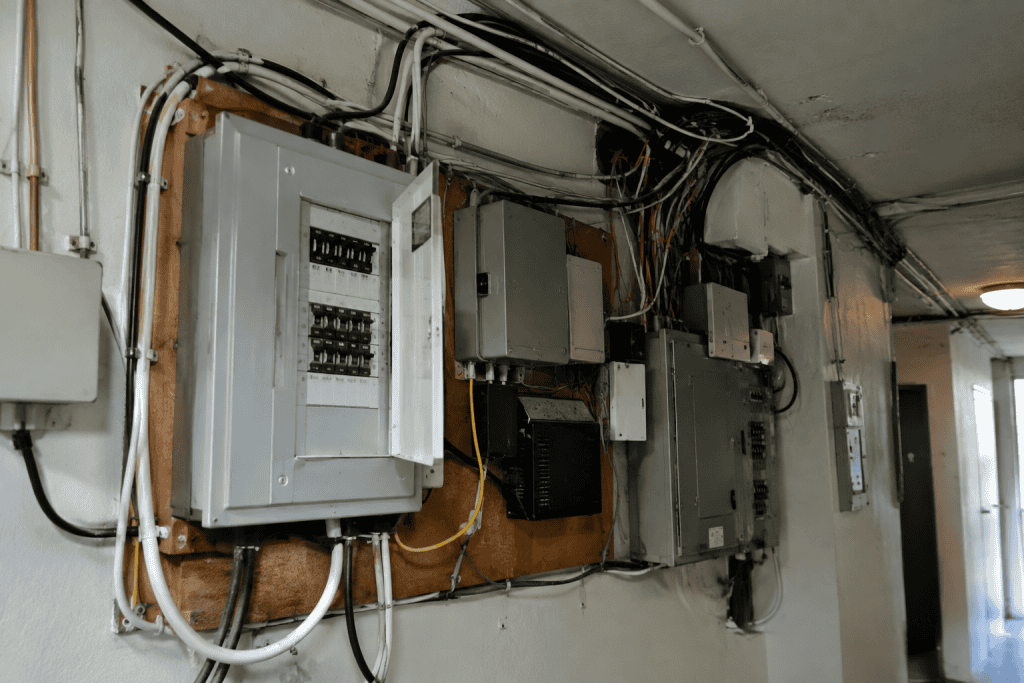
5. Ageing Switchboards Are Being Asked to Handle Modern Demand
An older strata building may have electrical infrastructure that was designed for a very different era.
Today’s buildings can have substantially greater electrical demand from air conditioning, data equipment, security systems, EV chargers, upgraded appliances and other technology.
The issue isn’t simply whether the switchboard still works.
An older switchboard may have limited capacity, ageing protective equipment, outdated components or a configuration that makes future upgrades more difficult.
Modern Loads Can Expose Old Weaknesses
Consider a building where residents are increasingly installing EV chargers while common property is also adding new lighting, CCTV and other systems.
Each addition may be reasonable individually, but collectively they can change the electrical demand placed on the building.
Before significant upgrades are approved, the owners corporation should understand whether the existing electrical infrastructure is suitable.
A professional assessment can help identify whether switchboard upgrades, additional capacity or other electrical works should be considered.
6. Electrical Maintenance Responsibilities Are Not Clearly Defined
One of the more frustrating issues in strata buildings is uncertainty about who is responsible for maintaining particular electrical infrastructure.
Older buildings can have complicated boundaries between individual lots and common property, particularly where electrical equipment, lighting, communications infrastructure or other services have been modified over time.
This can result in situations where a problem is noticed but responsibility for investigating or repairing it is unclear.
Why Responsibility Should Be Clarified
The owners corporation has responsibility for maintaining common property and ensuring common areas are kept safe and working. NSW Government guidance specifically states that owners corporations must maintain common property and follow applicable state and local safety rules.
That makes a clear understanding of the building’s electrical assets important.
Maintaining an up-to-date record of common electrical infrastructure can make it easier for strata committees and managers to determine where maintenance is required and organise the appropriate contractor.
Why Older Strata Buildings Need Proactive Electrical Inspections
Older buildings shouldn’t automatically be considered unsafe or non-compliant simply because of their age.
The bigger issue is whether the electrical and essential safety systems have been appropriately maintained, inspected and upgraded as the building has changed.
A property that has received regular professional maintenance can be in excellent condition.
Conversely, a building that has undergone decades of modifications without consistent documentation may have hidden problems that are difficult to identify from a quick visual inspection.
A Professional Inspection Can Identify Gaps
Depending on the property’s requirements, an electrical inspection may help identify:
- Ageing switchboards
- Faulty protective devices
- Electrical defects
- Deteriorated wiring
- Inadequate circuit protection
- Common-area lighting issues
- Emergency lighting concerns
- Infrastructure affected by previous modifications
Where fire safety measures are involved, the appropriate fire safety practitioner or specialist contractor should also be consulted to ensure the building’s specific obligations are addressed.
Don’t Wait Until a Defect Becomes an Emergency
One of the biggest mistakes a strata committee can make is relying entirely on reactive maintenance.
Waiting until an emergency lighting system fails, a switchboard develops a fault or an electrical defect is identified during another inspection can leave the building dealing with an urgent and potentially expensive problem.
A planned maintenance approach allows the owners corporation to identify issues earlier and budget for necessary works.
This is particularly important for older strata buildings where multiple systems may be approaching the end of their service life at the same time.
How Strata Committees Can Improve Compliance Management
The first step is understanding the building’s current condition.
Strata committees and building managers can work with appropriately qualified professionals to review electrical infrastructure, maintenance records and existing safety systems.
It can also be useful to maintain a central record of completed electrical works, certificates, inspection reports and outstanding defects.
A Better Maintenance Strategy
Rather than waiting for equipment to fail, consider a planned approach that covers:
- Regular electrical inspections
- Switchboard condition assessments
- Emergency lighting maintenance
- Safety switch testing
- Defect tracking
- Electrical documentation
- Planned upgrades
- Future electrical demand
This doesn’t mean every older building needs to replace everything immediately.
It means making decisions based on the actual condition and requirements of the property.
Speak to Spectra Electrical About Older Strata Buildings
Spectra Electrical can help strata committees, owners corporations and building managers get a clearer picture of their building’s electrical condition before small issues become major problems.
If your strata property has an ageing switchboard, recurring electrical faults, outdated common-area lighting, incomplete electrical records or infrastructure that hasn’t been reviewed recently, a professional electrical assessment can help identify what needs attention and what can be planned for later.
For strata committees, that information can be valuable when preparing maintenance plans, prioritising defects, forecasting capital expenditure and presenting clear options to owners.
From switchboard inspections and upgrades to common-area electrical maintenance, lighting and broader electrical infrastructure, Spectra Electrical can help your owners corporation take a more organised and proactive approach to maintaining the property.
Don’t wait for a failed safety system, electrical fault or urgent defect to force the committee into a rushed decision. Contact Spectra Electrical to arrange a strata electrical assessment, identify potential compliance and maintenance gaps, and develop a practical plan for addressing the building’s priorities.
Give your strata committee the information it needs to make informed maintenance decisions, budget with greater confidence and protect the long-term performance of the building’s electrical infrastructure.
Why Addressing Compliance Gaps Early Makes Sense
Compliance shouldn’t be viewed purely as paperwork.
Behind every inspection, test or maintenance requirement is a practical reason: protecting residents, visitors, contractors and the building itself.
An outdated switchboard, unreliable emergency lighting system, unverified electrical modification or missing maintenance record may seem like a small issue in isolation.
However, several unresolved gaps can create a much larger problem.
Addressing them progressively allows strata committees to make informed decisions, plan expenditure and maintain the building more effectively.
Conclusion
Older strata buildings can develop compliance gaps over time as electrical infrastructure ages, building technology changes and maintenance responsibilities become more complicated.
From outdated RCD protection and poorly maintained emergency lighting to incomplete records, unverified electrical work and ageing switchboards, these issues deserve attention before they become urgent.
For NSW strata schemes, recent changes to fire safety maintenance requirements make proactive management even more important.
The answer isn’t necessarily to replace every ageing component.
Instead, owners corporations should understand the condition of their building, keep accurate records, use appropriately licensed and qualified contractors, and develop a planned maintenance strategy based on the property’s actual requirements.
A safer and better-managed strata building starts with knowing where the gaps are. Identifying those gaps early gives your owners corporation more time to plan, budget and address problems before they become expensive or disruptive.
