
14 Smart Electrical Investments That Strengthen Local Infrastructure
Strong local infrastructure is essential for communities to function safely, efficiently and reliably. From street lighting and community facilities to commercial buildings, transport networks and communications systems, electrical infrastructure supports many of the services people depend on every day.
However, ageing electrical assets, increasing energy demand and rapidly changing technology are creating new challenges for councils, developers, businesses and property managers. Infrastructure that once met a community’s needs may now struggle to accommodate electric vehicle charging, modern security systems, advanced communications and growing electricity consumption.
Strategic electrical investment can help address these challenges while improving reliability, supporting future development and reducing avoidable maintenance costs.
Whether you’re responsible for public assets, commercial properties, community facilities or new developments, understanding where electrical improvements can deliver the greatest value is an important first step.
Here are 14 smart electrical investments that strengthen local infrastructure and support more resilient, connected and sustainable communities.
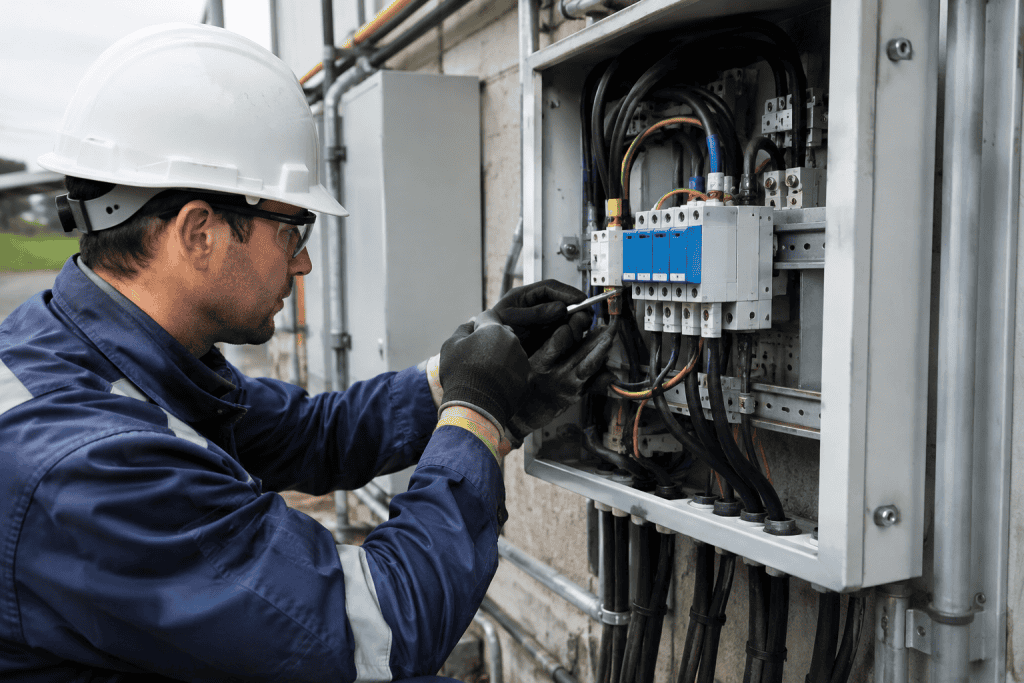
1. Upgrade Ageing Switchboards and Electrical Distribution Systems
Switchboards are central to the safe and reliable distribution of electricity throughout buildings and other infrastructure.
Older switchboards may contain ageing components, outdated protective equipment or limited capacity for additional electrical loads. As properties introduce new technology, these limitations can become increasingly important.
Why Switchboard Upgrades Matter
Modern switchboard upgrades can provide an opportunity to review circuit protection, electrical capacity, equipment condition and the organisation of electrical distribution.
For councils, commercial property owners and facility managers, this can help establish a more reliable foundation for future upgrades.
The appropriate solution depends on the existing installation and its requirements. A professional electrical assessment can determine whether maintenance, targeted improvements or complete replacement is necessary.
2. Invest in Energy-Efficient LED Public Lighting
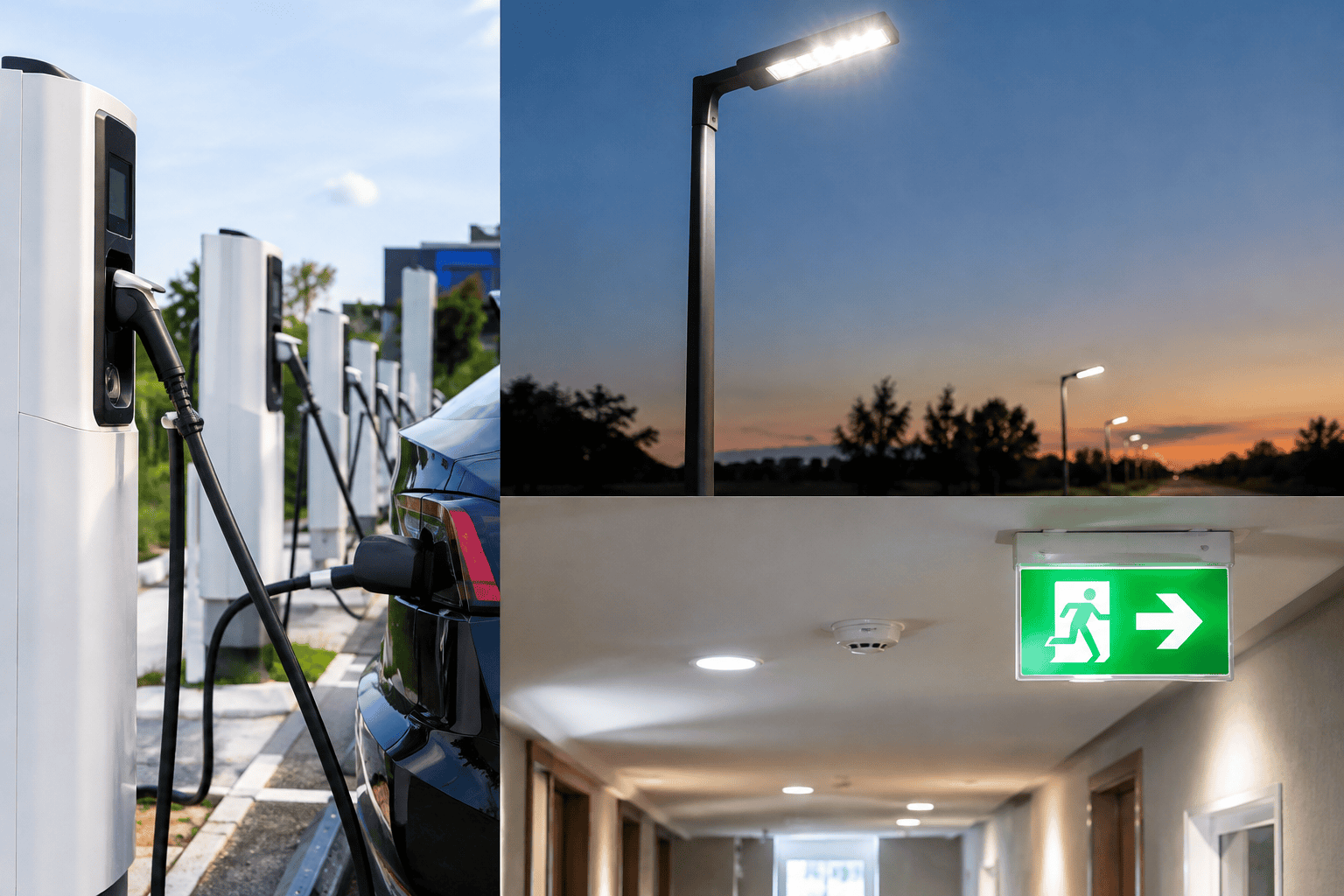
Public lighting is an important part of local infrastructure, helping people navigate streets, pathways, car parks, parks and shared facilities after dark.
However, outdated lighting systems can consume unnecessary electricity and require frequent maintenance.
Improve Efficiency Across Public Spaces
LED lighting can offer improved energy efficiency, long service life and more consistent illumination when appropriately designed and installed.
For councils, strata communities and commercial property managers, upgrading large numbers of fittings can potentially reduce electricity consumption and maintenance requirements.
Lighting projects should consider the location, required illumination, environmental conditions and operating hours.
The goal is not simply to install brighter lights. It is to deliver suitable visibility while managing energy use and ongoing operating costs.
3. Expand Electric Vehicle Charging Infrastructure
Electric vehicles are becoming an increasingly important consideration for residential developments, workplaces, commercial properties and public parking facilities.
Without suitable charging infrastructure, businesses and communities may struggle to accommodate growing EV adoption.
Plan for Current and Future Charging Demand
Installing EV chargers can support residents, employees, fleet vehicles and visitors.
However, successful projects require more than selecting charging units. Electrical capacity, distribution infrastructure, charger locations, cable routes and future expansion all need to be considered.
For apartment buildings and larger commercial sites, load management may help coordinate charging demand across multiple vehicles.
Planning these requirements early can reduce the risk of expensive retrofits and make future expansion more straightforward.
4. Integrate Solar Power and Battery Storage
Renewable energy systems can help buildings reduce reliance on grid electricity, depending on their energy consumption, system design and operating conditions.
Solar panels generate electricity during daylight hours, while battery storage can allow some energy to be used later.
Support Smarter Energy Use
Solar and battery systems may be suitable for community centres, commercial buildings, depots and other facilities with appropriate roof space and electricity demand.
When integrated effectively, they can support energy management and potentially reduce electricity costs.
However, every site has different requirements. Investment decisions should consider installation costs, expected energy use, available space, maintenance and the property’s electrical infrastructure.
Professional design and installation are essential to ensure the system is appropriate for the intended application.
5. Modernise Data and Communications Cabling
Reliable communications infrastructure has become essential for modern communities.
Businesses depend on data networks for daily operations, while public facilities increasingly rely on connected devices, digital services, security systems and wireless access points.
Build a More Connected Environment
Upgrading structured data cabling can improve network organisation, support modern connectivity requirements and make future technology additions easier.
For commercial developments, community facilities and public buildings, a properly planned cabling system can provide a foundation for Wi-Fi, CCTV, access control and other connected services.
Cable pathways, labelling, testing and documentation are important parts of the investment.
An organised installation is generally easier to maintain and expand as technology requirements change.
6. Improve CCTV and Access Control Infrastructure
Security systems play an important role in many commercial properties, community facilities, car parks and shared residential developments.
Older systems may have limited coverage, outdated equipment or insufficient infrastructure to support modern monitoring requirements.
Strengthen Property Security
Investments in CCTV, access control and associated electrical infrastructure can help organisations manage access and improve visibility across their sites.
A well-planned installation may involve upgraded cabling, suitable power supplies, communications equipment and strategically positioned cameras.
These systems should be designed around the property’s actual security needs, with appropriate attention to privacy, data management and ongoing maintenance.
Reliable infrastructure helps ensure that security technology remains practical to operate as a property evolves.
7. Upgrade Emergency Lighting and Exit Signage
Emergency lighting and illuminated exit signage support safe movement through buildings when normal lighting fails or evacuation becomes necessary.
These systems are particularly important in commercial buildings, apartment complexes, community centres and other occupied facilities.
Keep Essential Lighting Reliable
Investments may include replacing ageing emergency fittings, repairing defective equipment, improving coverage or reviewing maintenance arrangements.
The appropriate work depends on the building’s design, applicable requirements and the condition of existing systems.
Emergency lighting should not be treated as ordinary decorative lighting. It forms part of a broader building safety strategy and requires suitable inspection, testing and maintenance.
For organisations responsible for occupied premises, maintaining reliable emergency lighting is an important investment in building safety.
8. Install Appropriate Surge Protection
Electrical surges can affect sensitive equipment and may occur due to switching events, supply disturbances and lightning-related activity.
Modern infrastructure often contains networking hardware, security systems, computers, control equipment and other electronics that can be expensive to repair or replace.
Protect Important Electrical Assets
Appropriate surge protection may help reduce the risk of damage from certain transient voltage events.
Depending on the installation, protection may be considered at switchboards or for particular sensitive systems.
However, surge protection does not guarantee immunity from every electrical disturbance.
A qualified electrician can assess the equipment, installation and relevant risks before recommending an appropriate solution.
For organisations managing valuable electrical assets, this can form part of a broader strategy for protecting equipment and maintaining continuity.
9. Introduce Smart Energy Monitoring
Energy monitoring systems provide visibility into how and when a building consumes electricity.
Without this information, property managers may find it difficult to identify inefficient operating patterns or understand which equipment contributes most to energy demand.
Make Better-Informed Energy Decisions
Smart energy monitoring can help facilities track consumption, identify unusual patterns and assess the impact of energy-saving measures.
For larger sites, monitoring may also support demand management and help determine where additional efficiency investments are worth considering.
Data needs to be interpreted correctly, and monitoring does not automatically reduce energy consumption on its own.
The value comes from using the information to make informed decisions about operating schedules, equipment upgrades and energy management.
10. Strengthen Electrical Infrastructure for Community Facilities
Community centres, sporting facilities, libraries and public buildings provide services that people rely on throughout the year.
Their electrical requirements may include lighting, heating and cooling, kitchen equipment, communications, security and specialised operational equipment.
Support More Reliable Community Services
Electrical improvements can include switchboard upgrades, additional power distribution, energy-efficient lighting, data cabling and electrical maintenance.
For sporting facilities, this might involve reviewing lighting and power arrangements. For a community centre, it could mean preparing the building for new equipment or updated accessibility and security systems.
The most effective investment begins with understanding how the facility is used and what its occupants require.
Well-planned electrical infrastructure helps community assets remain functional and adaptable.
11. Invest in Backup Power for Critical Facilities
Some facilities need to maintain essential functions during a power interruption.
Depending on the organisation, critical equipment might include communications systems, security equipment, refrigeration, essential lighting or selected operational systems.
Plan for Power Interruptions
Backup power options can include generators, battery systems or other appropriately designed solutions.
The right option depends on the required operating time, equipment demand, site conditions and the consequences of losing power.
Backup systems need appropriate installation, protection and maintenance. Portable generators must never be connected to building wiring through improvised arrangements.
For facilities where interruptions would create significant risks or disruption, backup power planning can be a valuable infrastructure investment.
12. Adopt Preventative Electrical Maintenance and Thermal Imaging
Electrical infrastructure can deteriorate gradually, and some faults may remain hidden until equipment stops working.
A preventative maintenance program helps organisations identify problems, track defects and plan repairs before issues become major disruptions.
Identify Potential Problems Earlier
Depending on the installation, maintenance can include inspections, appropriate electrical testing, switchboard assessments and thermal imaging.
Thermal imaging uses infrared technology to identify unusual temperature patterns that may indicate a component requires further investigation.
It does not automatically diagnose every fault or replace other forms of testing, but it can provide useful additional information.
For organisations responsible for multiple buildings or important electrical assets, structured maintenance can support better planning and reduce reliance on emergency repairs.
13. Prepare Infrastructure for Future Electrification
Infrastructure investments need to account for how electricity use is likely to change.
EV charging, battery storage, electric heating, new commercial equipment and other technologies can substantially increase electrical demand.
Design for Adaptability
Future-ready infrastructure may involve additional cable pathways, appropriate switchboard capacity, suitable distribution arrangements and careful planning for new equipment.
This does not mean installing every possible upgrade immediately.
Instead, projects should identify likely future requirements and determine which provisions are practical to include now.
Planning for future electrification during a new development, refurbishment or major upgrade can reduce the disruption and expense of retrofitting essential infrastructure later.
14. Upgrade Electrical Infrastructure Through Planned Renewal Programs
One-off repairs are sometimes necessary, but relying entirely on reactive maintenance can make infrastructure management unpredictable.
When several electrical assets are aging at the same time, unplanned failures can place pressure on maintenance budgets and interrupt services.
Prioritise Investment Across Multiple Sites
A planned renewal program allows organisations to assess the condition of their electrical assets and rank projects according to risk, performance and operational needs.
For example, a facility manager overseeing multiple buildings may prioritise a damaged switchboard or unreliable essential equipment before investing in lower-priority cosmetic improvements.
A staged approach can also help organisations manage budgets while progressively improving infrastructure.
Good asset records, inspection reports and maintenance history can help decision-makers identify where investment is most urgent.
How to Prioritise Electrical Infrastructure Investments
Not every property needs all 14 investments. The right priorities depend on the condition of existing infrastructure, the needs of the community and the available budget.
Start With the Highest Risks
Begin by identifying electrical defects, safety concerns and infrastructure that is critical to daily operations.
Consider Long-Term Operating Costs
Assess how energy consumption, maintenance requirements and equipment reliability affect the total cost of ownership.
Plan for Future Demand
Consider whether proposed upgrades will support changing technology and increased electricity use.
Coordinate Projects Early
Electrical planning should be integrated with building design, civil works, communications, security and other infrastructure requirements.
This helps reduce unnecessary rework and ensures the different systems can operate together effectively.
Speak to Spectra Electrical About Electrical Infrastructure Upgrades
Spectra Electrical can assist businesses, property managers, developers and organisations responsible for local facilities with electrical maintenance, infrastructure upgrades, energy-efficient lighting, switchboards and data and communications systems.
Whether you’re improving a community facility, upgrading an ageing commercial property or planning electrical infrastructure for a new development, early assessment can help identify practical priorities.
Contact Spectra Electrical to discuss your electrical infrastructure requirements and develop an upgrade approach that supports reliability, safety and future growth.
Conclusion
Strong local infrastructure depends on electrical systems that can operate reliably today while adapting to tomorrow’s demands.
From modern switchboards and energy-efficient lighting to EV charging, renewable energy, communications cabling and preventative maintenance, strategic electrical investments can improve building performance and support more connected communities.
The smartest approach isn’t necessarily to spend more or upgrade everything at once. It is to understand the condition of existing assets, identify the most pressing needs and invest in improvements that provide practical long-term value.
By planning electrical infrastructure upgrades proactively, councils, businesses, developers and property managers can strengthen reliability, support future technology and help create safer, more efficient places for people to live, work and connect.
