
10 Proven Benefits of Scheduled Electrical Maintenance for Strata
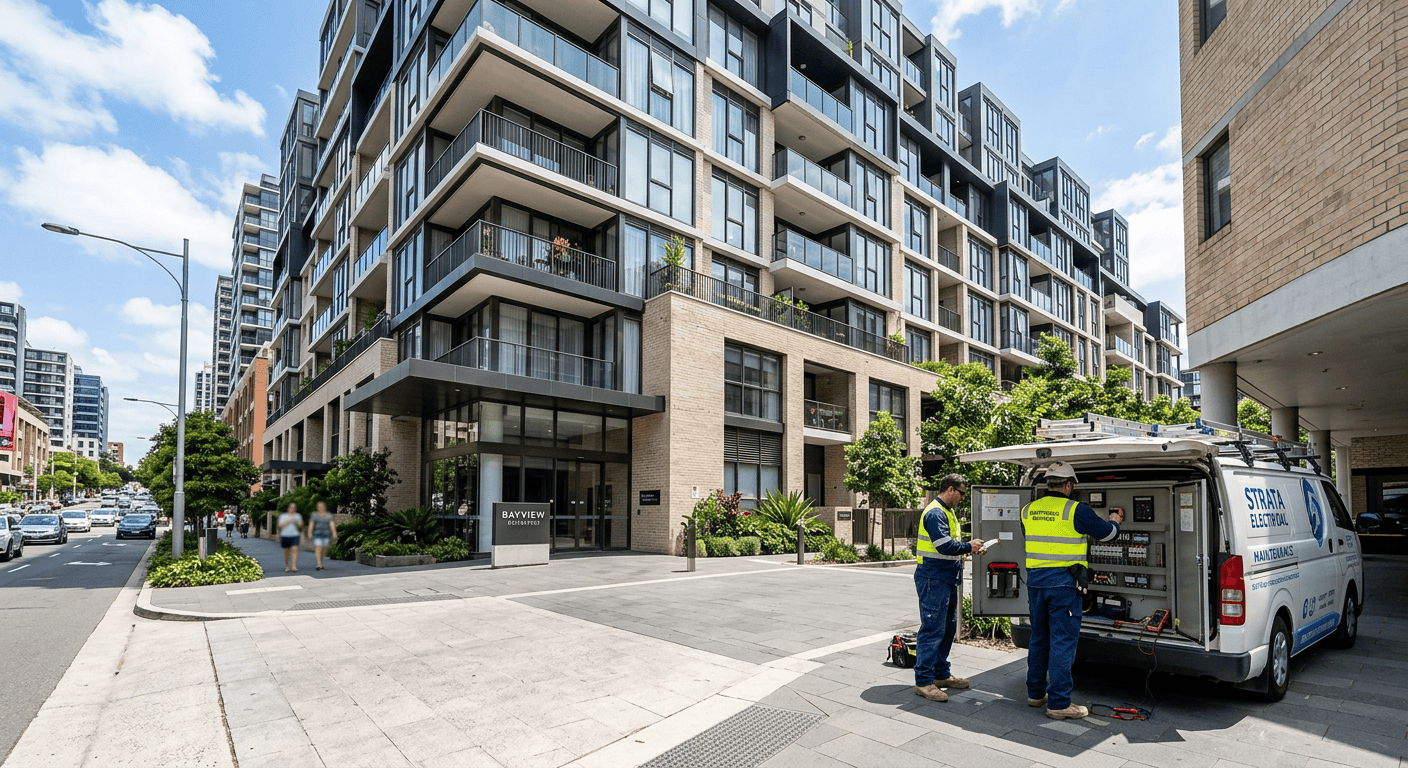
Managing electrical infrastructure in a strata building is about much more than fixing problems when they occur. From apartment buildings and shared residential complexes to mixed-use developments, strata properties rely on electrical systems every day to power lighting, lifts, security equipment, garages, common areas, ventilation, pumps and countless other essential services.
When electrical maintenance is left until something fails, strata committees and owners corporations can face unexpected costs, disruption and potentially serious safety concerns.
This is why scheduled electrical maintenance for strata properties is such an important part of responsible building management. Regular inspections and preventative maintenance allow potential issues to be identified earlier, electrical equipment to be kept in better condition and building infrastructure to remain better prepared for changing demands.
A proactive maintenance program can also provide strata committees with greater visibility over the condition of their electrical assets, making it easier to plan repairs and larger capital works before they become urgent.
Here are 10 proven benefits of scheduled electrical maintenance for strata.
1. Reduce the Risk of Unexpected Electrical Failures
One of the biggest advantages of preventative electrical maintenance is reducing the likelihood of unexpected failures.
Electrical faults can occur without warning, but many developing problems can show warning signs before they become major failures.
Ageing components, deteriorating connections, damaged equipment and excessive electrical loads can all affect the reliability of a building’s electrical infrastructure.
Identify Problems Before They Escalate
Regular electrical inspections give qualified electricians an opportunity to identify potential problems before they result in a complete failure.
This can be particularly valuable in strata buildings because one electrical fault can potentially affect multiple apartments or common areas.
A proactive approach allows repairs to be scheduled rather than leaving the building to respond to an emergency.
2. Improve Electrical Safety Across Common Areas
Strata properties have numerous shared areas where electrical safety is particularly important.
These can include:
- Basement car parks
- Hallways
- Stairwells
- Lobbies
- Swimming pool areas
- Recreational facilities
- Storage areas
- Plant rooms
- Outdoor spaces
Electrical equipment in these areas is regularly exposed to occupants, visitors, contractors and building staff.
Regular Inspections Matter
Scheduled electrical maintenance can help identify damaged fittings, deteriorated equipment, faulty connections and other issues that could affect safety.
Rather than waiting for a resident to report a problem, proactive inspections can help strata committees stay ahead of potential electrical hazards.
3. Extend the Life of Electrical Equipment
Electrical infrastructure represents a significant investment for a strata building.
Switchboards, lighting systems, distribution equipment, pumps, electrical connections and other assets can cost substantial amounts to replace.
Regular maintenance can help keep these assets operating effectively for longer.
Maintenance Is Better Than Constant Replacement
Preventative maintenance doesn’t mean electrical equipment will last forever. However, keeping equipment in good condition and identifying developing problems can potentially reduce unnecessary deterioration.
For example, identifying a deteriorating electrical connection early may allow it to be addressed before it contributes to further damage.
This can help strata committees manage their assets more effectively over the long term.
4. Improve Reliability for Residents
Residents expect the essential electrical services within their building to work.
Common-area lighting, garage lighting, security systems, access control and other electrical infrastructure can have a direct impact on the day-to-day experience of living in a strata property.
Reliability Influences Resident Satisfaction
Repeated electrical problems can quickly become frustrating.
Residents may have concerns when:
- Car park lights repeatedly fail
- Common areas become poorly illuminated
- Security systems experience problems
- Electrical equipment frequently trips
- Building services are unexpectedly interrupted
Scheduled electrical maintenance can help reduce avoidable failures and improve the reliability of important building systems.
For strata committees, this can contribute to a better overall experience for residents.
5. Identify Switchboard Problems Earlier
The switchboard is one of the most important parts of a strata building’s electrical infrastructure.
It distributes electricity throughout the property and houses important electrical protection equipment.
Because switchboards can contain numerous circuits and components, problems can sometimes develop without being immediately obvious to residents.
Look Beyond the Surface
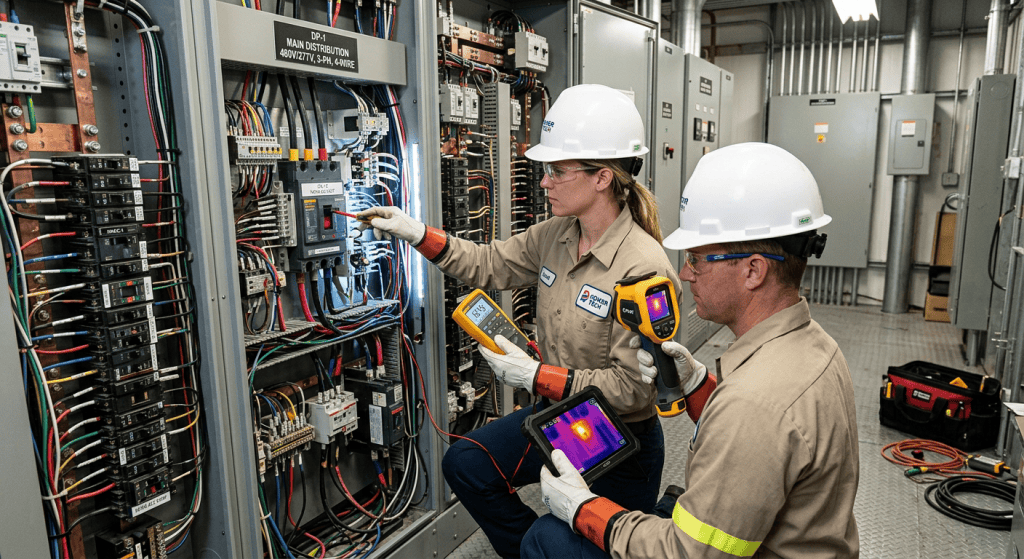
During scheduled maintenance, electricians can inspect switchboards for potential issues such as:
- Signs of overheating
- Deteriorated components
- Poor connections
- Circuit issues
- Physical damage
- Excessive electrical demand
- Ageing infrastructure
Where appropriate, thermal imaging can also be used as part of an electrical inspection program to identify unusual heat patterns that may warrant further investigation.
Early identification can give strata committees more time to plan repairs or switchboard upgrades.
6. Improve Energy Efficiency
Scheduled electrical maintenance isn’t only about safety.
It can also provide opportunities to identify areas where the building may be using more electricity than necessary.
Lighting is one of the most obvious examples.
Consider Common-Area Lighting
Older lighting systems can consume significantly more energy than modern LED alternatives.
During routine maintenance, strata committees can consider whether lighting upgrades could provide better efficiency and reliability.
Potential improvements can include:
- LED lighting
- Occupancy sensors
- Motion controls
- Timers
- Smart lighting systems
Reducing unnecessary energy consumption can help improve the efficiency of common areas while potentially lowering ongoing operating costs.
7. Make Future Electrical Upgrades Easier to Plan
Strata buildings are increasingly adopting new electrical technologies.
Electric vehicle charging, solar systems, battery storage, smart building technology and improved communications infrastructure are all becoming more relevant to modern properties.
However, installing new technology can place additional demands on existing infrastructure.
Understand Your Building’s Capacity
Scheduled electrical maintenance provides an opportunity to maintain a clearer understanding of the building’s existing electrical infrastructure.
This can help when planning future projects.
For example, if a strata committee is considering installing EV chargers in a basement car park, understanding the condition and capacity of the existing electrical system can help inform the planning process.
The same principle applies to other major upgrades.
8. Improve Budgeting and Long-Term Strata Planning
Unexpected electrical failures can place pressure on a strata budget.
Emergency repairs are often difficult to predict and can require immediate expenditure.
Scheduled maintenance provides an opportunity to identify assets that may require attention in the future.
Plan Instead of React
An electrician may identify equipment that is ageing but still operational.
Rather than waiting until it fails, the strata committee may be able to plan the eventual replacement as part of a broader capital works strategy.
This can provide greater control over expenditure.
Instead of facing an unexpected repair bill, the committee has more time to consider:
- The urgency of the work
- Available funds
- Contractor availability
- Potential upgrade options
- Future building requirements
Long-term electrical planning can therefore support better financial management.
9. Support Electrical Compliance and Documentation
Strata buildings have responsibilities for maintaining shared property and infrastructure.
Electrical systems should be appropriately maintained, inspected and serviced according to the requirements applicable to the property and its equipment.
Keep Better Records
A scheduled maintenance program can also help create a clearer record of inspections, repairs and identified issues.
Good documentation can help strata committees and property managers understand:
- What equipment has been inspected
- When maintenance was completed
- What issues were identified
- Which repairs were carried out
- What future work may be required
Maintaining accurate records can make it easier to manage the property’s electrical assets and demonstrate that maintenance has been approached proactively.
Specific compliance and testing requirements vary depending on the building, equipment and applicable standards, so professional advice should be obtained where required.
10. Improve the Long-Term Value of the Property
Well-maintained infrastructure contributes to the overall condition and functionality of a strata building.
Electrical systems are fundamental to how residents experience a property, even though much of the infrastructure remains hidden from view.
Maintenance Supports Property Performance
A building with reliable lighting, functioning security systems, well-maintained electrical infrastructure and modern common areas can provide a better experience for residents and visitors.
Preventative electrical maintenance can also help identify opportunities to modernise the property.
This could include:
- LED lighting upgrades
- Switchboard improvements
- EV charging infrastructure
- Surge protection
- Data and communications upgrades
- Smart building systems
These improvements can help a property remain suitable for changing resident expectations and technological requirements.
What Should a Strata Electrical Maintenance Program Include?
Every building is different, so a maintenance program should be developed around the property’s infrastructure, age, usage and specific requirements.
Depending on the property, scheduled electrical maintenance may include inspections of:
- Main switchboards
- Distribution boards
- Common-area lighting
- Emergency lighting
- Car park electrical infrastructure
- Security systems
- Access control equipment
- Pumps and other electrical plant
- Electrical connections
- Power outlets
- External electrical equipment
Thermal imaging may also be appropriate for identifying unusual heat patterns in electrical equipment.
The frequency and scope of maintenance should be determined based on the property and the equipment involved, rather than applying exactly the same schedule to every strata building.
Why Waiting for Electrical Problems Can Be Costly
Reactive maintenance means dealing with electrical problems after they occur.
While emergencies will sometimes happen regardless of how well a building is maintained, relying entirely on reactive maintenance can create unnecessary difficulties.
A single failed component can potentially result in:
- Building disruption
- Resident complaints
- Emergency call-out costs
- Equipment damage
- Loss of essential services
- Unplanned expenditure
Preventative maintenance changes the approach.
Instead of asking, “What has failed?”, strata committees can ask, “What could fail, and what can we do about it now?”
That shift can make electrical management more predictable.
How Strata Committees Can Get Started
If your strata building doesn’t currently have a structured electrical maintenance program, the first step is understanding the current condition of the infrastructure.
A qualified electrician can assess the building’s electrical systems and identify areas that may require attention.
From there, the strata committee can establish priorities based on:
Safety
Address issues that could create immediate safety concerns.
Reliability
Prioritise equipment that is essential to building operations.
Age
Identify ageing infrastructure that may require replacement or upgrading.
Future Demand
Consider how technologies such as EV charging, solar and smart systems could affect electrical requirements.
Budget
Develop a realistic plan for immediate repairs and longer-term upgrades.
This approach can turn electrical maintenance from an emergency response into a structured property management strategy.
How Spectra Electrical Can Help Strata Properties
At Spectra Electrical, we understand the unique electrical requirements of strata buildings across Sydney.
With more than 20 years of experience, our team provides electrical maintenance and infrastructure solutions designed to support residential developments, apartment buildings, commercial properties and shared facilities.
Our services include:
- Strata electrical maintenance
- Switchboard inspections and upgrades
- Thermal imaging
- Emergency lighting
- LED lighting upgrades
- Fault finding
- Preventative electrical maintenance
- EV charger installations
- Data and communications cabling
- Surge protection
- Level 2 electrical services
- Common-area electrical works
For strata committees and property managers, our focus is on helping identify potential electrical issues early and developing practical solutions that support the property’s ongoing needs.
Whether the priority is improving reliability, maintaining existing infrastructure or preparing for future upgrades, scheduled electrical maintenance can provide a stronger foundation for long-term property management.
Final Thoughts
Electrical maintenance shouldn’t begin when something breaks.
For strata buildings, a proactive maintenance strategy can help protect residents, improve reliability, support better budgeting and identify potential electrical problems before they become major disruptions.
From switchboards and common-area lighting to security systems, car parks and future EV charging infrastructure, electrical systems play a significant role in how a strata property operates every day.
The 10 benefits of scheduled electrical maintenance for strata go beyond simply preventing faults. Regular maintenance can help extend equipment life, improve safety, support energy efficiency, strengthen long-term planning and give strata committees greater visibility over the condition of their electrical infrastructure.
Most importantly, preventative maintenance provides an opportunity to address issues before they become urgent.
As strata buildings become increasingly reliant on technology and electrical infrastructure, proactive maintenance will become even more important. Properties are now supporting EV chargers, smart systems, advanced security, communications networks and significantly greater electrical demand than many buildings were originally designed for.
For strata committees and property managers across Sydney, working with an experienced electrical contractor such as Spectra Electrical can help establish a practical maintenance strategy that keeps electrical infrastructure safer, more reliable and better prepared for the future.