
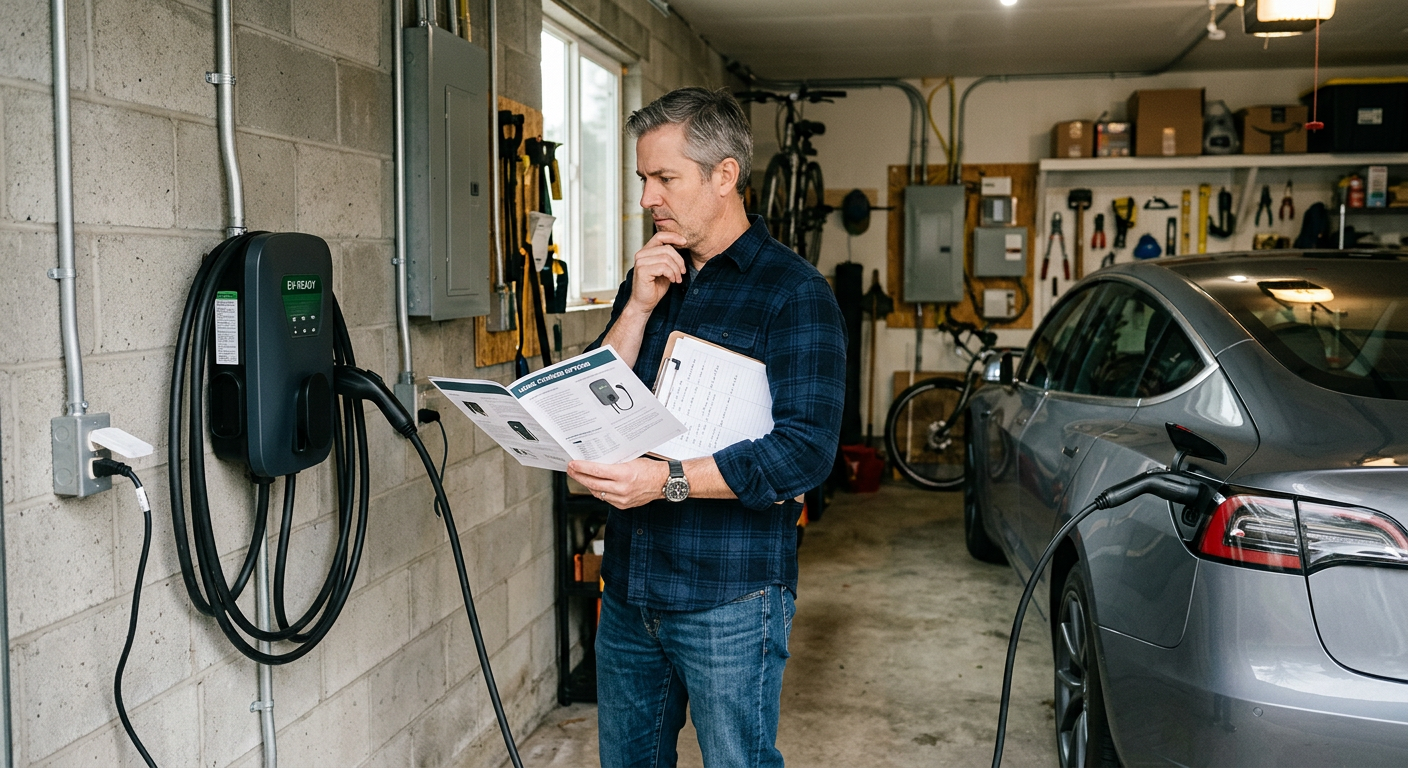
7 Critical Questions to Ask Before Installing a Home EV Charger
Electric vehicles are becoming increasingly popular across Australia, and for many homeowners, installing a home EV charger is one of the most convenient upgrades they can make.
While plugging an EV into a standard household outlet may be possible in some circumstances, a dedicated home EV charger can provide faster, more convenient and more consistent charging. However, installing an EV charger isn’t simply a matter of choosing a unit and attaching it to the garage wall.
Your property’s electrical capacity, switchboard, parking arrangement, charging requirements and future energy needs all need to be considered before installation.
As EV ownership continues to grow, planning your charging infrastructure properly can help ensure your home is ready to support your vehicle safely and efficiently.
Before installing a home EV charger, here are 7 critical questions to ask before installing a home EV charger.
1. Can My Home’s Electrical System Handle an EV Charger?
The first and most important question is whether your existing electrical infrastructure can support the additional electrical demand.
An EV charger can place a significant load on a home’s electrical system, particularly when charging occurs alongside other high-powered appliances.
Your home may already be using electricity for:
- Air conditioning
- Electric hot water
- Ovens and cooktops
- Pool pumps
- Clothes dryers
- Heating
- Home offices
- Other household appliances
Adding an EV charger increases the overall demand on the property.
Why an Electrical Assessment Matters
Before installation, a qualified electrician can assess the existing electrical infrastructure and determine whether the property is suitable for the proposed charger.
This can involve looking at the:
- Main electrical supply
- Switchboard
- Existing circuits
- Circuit protection
- Consumer mains
- Available capacity
- Location of the charger
The goal is to ensure the charger is installed as part of an electrical system capable of supporting it.
Don’t Assume Your Existing System Is Ready
Two houses that look identical from the outside can have very different electrical infrastructure.
A newer property may have been designed with greater electrical capacity, while an older home may have infrastructure that needs upgrading.
An assessment provides a clearer picture before you purchase equipment.
2. What Type and Power Level of EV Charger Do I Actually Need?
Not every homeowner needs the highest-powered charger available.
The right charger depends on your vehicle, driving habits, available electrical capacity and how quickly you need to recharge.
Understand Charging Speeds
Home EV chargers are available at different power levels, and the charging speed you achieve can depend on both the charger and the vehicle.
A higher-powered charger isn’t automatically the best choice.
For example, someone who drives relatively short distances each day and has their vehicle parked at home overnight may not need the same charging setup as someone who drives long distances every day.
Consider Your Routine
Ask yourself:
- How many kilometres do I drive each day?
- How long is the vehicle usually parked at home?
- Do I need a full charge every morning?
- Will another EV be added to the household?
- Do I have solar?
- Could my driving habits change?
Understanding your routine can help determine an appropriate charging solution.
A professional installer can also help match the charger to your property’s electrical capacity.
3. Where Should the EV Charger Be Installed?
The location of your EV charger can make a major difference to convenience and installation requirements.
Many homeowners automatically assume the charger should go on the garage wall closest to the car.
However, the best location should consider the vehicle’s regular parking position, cable reach, electrical infrastructure and the practical layout of the property.
Think About How You Use Your Garage
A charger might be installed:
- Inside a garage
- On an external wall
- Beside a driveway
- Near a dedicated parking space
The installation location needs to be suitable for the charger and its intended environment.
Cable Management Matters
You should also consider how the charging cable will reach your vehicle.
A poorly positioned charger can result in cables stretching across walkways or creating unnecessary trip hazards.
A professional installation can take the layout of the property into account and help position the charger where it is convenient and practical.
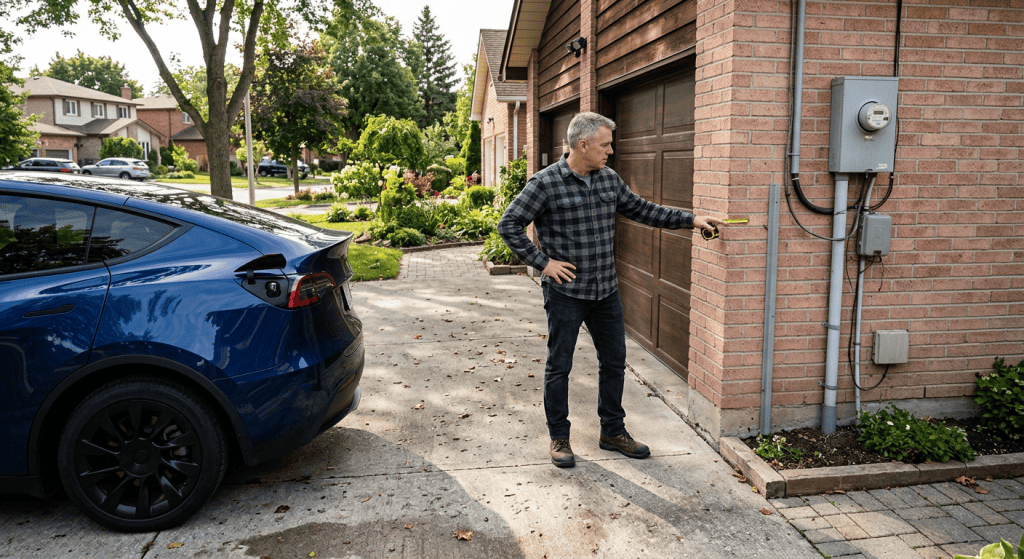
4. Does My Switchboard Need an Upgrade?
Your switchboard is one of the most important components to consider before installing an EV charger.
It distributes electricity throughout your home and contains the equipment responsible for protecting electrical circuits.
Older Switchboards May Need Attention
Some older homes have switchboards that weren’t designed around today’s electrical demands.
Modern households can use significantly more electricity due to:
- EV charging
- Air conditioning
- Solar systems
- Battery storage
- Induction cooking
- Large appliances
- Home automation
If your switchboard is ageing, overcrowded or lacks suitable capacity, an EV charger installation may highlight the need for an upgrade.
An EV Charger Can Be an Opportunity
If a switchboard upgrade is already required, it can be worthwhile considering your future electrical requirements at the same time.
For example, you may eventually want:
- Solar
- Battery storage
- A second EV charger
- Additional air conditioning
- A home office
- Other high-powered equipment
Planning ahead can help avoid repeatedly modifying your electrical infrastructure.
5. Can I Integrate My EV Charger With Solar?
For homeowners with solar panels, one of the most appealing aspects of EV charging is the opportunity to use renewable energy generated at home.
Instead of relying entirely on electricity from the grid, suitable charging systems can potentially make better use of available solar generation.
Solar and EV Charging Can Work Together
Your EV is essentially another significant electrical load.
If your solar system is generating electricity during the day, some of that energy may be available for vehicle charging depending on your household consumption, solar system and charging equipment.
Think About When You Charge
If you’re away from home during most daylight hours, you may need to consider how your charging schedule aligns with solar generation.
Smart charging technology may provide additional flexibility depending on the system selected.
This is why it’s worth discussing solar integration before choosing an EV charger.
A charger should be selected based on the complete energy requirements of your home rather than as a standalone piece of equipment.
6. Should I Plan for Future EVs and Electrical Demand?
Your current EV may not be the only electric vehicle your household ever owns.
Perhaps you’re installing a charger for your first EV today, but your partner may eventually switch to an EV as well.
That means future demand should be considered during the initial installation.
Plan for Expansion
A future-ready EV charging installation may consider:
- Spare switchboard capacity
- Additional circuits
- Cable pathways
- Charger locations
- Load management
- Future solar integration
- A second EV
You don’t necessarily need to install multiple chargers immediately.
Instead, the electrical infrastructure can potentially be planned so that future expansion is easier.
Avoid Installing Everything Twice
If additional cabling or infrastructure can be reasonably planned during the original installation, it may reduce the disruption associated with future upgrades.
This is particularly useful for homes undergoing renovations or other electrical works at the same time.
7. Is the Installation Being Completed by the Right Electrical Professional?
Choosing the right installer is just as important as choosing the charger itself.
An EV charger is connected directly to your home’s electrical infrastructure, so the installation should be completed by an appropriately licensed electrician who understands the requirements associated with EV charging.
Don’t Choose Based on Price Alone
The cheapest installation isn’t necessarily the best value.
A professional installer should consider the entire electrical system rather than simply connecting the charger to the nearest available circuit.
This can include assessing:
- Electrical capacity
- Switchboard condition
- Circuit protection
- Cable requirements
- Charger location
- Future demand
- Existing solar systems
- Overall installation requirements
Ask Questions Before Installation
Before choosing an installer, ask:
Will you assess my home’s electrical capacity?
Is my switchboard suitable for the charger?
Will the charger require a dedicated circuit?
Can the system work with my solar installation?
What happens if I install a second EV in the future?
What maintenance or support is available after installation?
A reputable electrical contractor should be able to explain the proposed installation clearly.
What Happens During a Professional EV Charger Installation?
While every property is different, a typical installation begins with an assessment of the existing electrical infrastructure.
The electrician can determine the most appropriate charger location and identify what electrical work is required.
Depending on the property, installation may involve:
- Installing a dedicated circuit
- Upgrading circuit protection
- Running new cabling
- Modifying or upgrading the switchboard
- Installing the EV charger
- Connecting communications equipment where applicable
- Testing the installation
The exact work will depend on the charger, vehicle, property and existing electrical infrastructure.
Testing Is an Important Final Step
Once the installation is complete, the electrical system should be appropriately tested to ensure it is operating correctly.
A professional installation isn’t simply about physically mounting a charger. The entire electrical connection needs to be appropriately installed and tested.
Common Home EV Charger Mistakes to Avoid
There are several mistakes homeowners should try to avoid when planning EV charging infrastructure.
Choosing a Charger Before Assessing the Property
It’s better to understand your home’s electrical capacity before purchasing a charger.
Automatically Choosing the Most Powerful Charger
More power isn’t always necessary or suitable for your home’s electrical infrastructure.
Ignoring the Switchboard
An ageing switchboard may require attention before a new high-demand circuit is added.
Forgetting About Solar
If you have solar, consider whether your charging system can work effectively with your home’s energy setup.
Not Planning for Future EVs
If another EV could eventually be added, consider future expansion during the initial design.
Focusing Only on the Installation Price
The cheapest quote may not provide the most suitable long-term solution.
The Long-Term Benefits of a Properly Planned EV Charger
Installing an EV charger isn’t only about charging your vehicle faster.
A properly planned system can provide greater convenience while helping integrate your vehicle into your home’s broader electrical infrastructure.
Benefits can include:
- Convenient overnight charging
- Reduced reliance on public charging stations
- Better charging flexibility
- Potential integration with solar
- Improved energy management
- A more future-ready electrical system
- Easier expansion for additional EVs
For many homeowners, being able to return home and plug the vehicle in overnight is one of the biggest advantages of EV ownership.
How Spectra Electrical Can Help
At Spectra Electrical, we understand that installing an EV charger requires more than simply mounting a charging unit to a wall.
Our team provides professional EV charger installation and electrical services across Sydney, helping homeowners assess their existing electrical infrastructure and determine an appropriate charging solution.
We can assist with:
- Home EV charger installations
- Electrical capacity assessments
- Switchboard upgrades
- Dedicated EV charging circuits
- Solar and EV charging considerations
- Future electrical planning
- Preventative electrical maintenance
- Surge protection
- Level 2 electrical services
Whether you’re purchasing your first EV or planning for multiple electric vehicles in the future, early electrical planning can help ensure your home is ready for the change.
Our approach is focused on the complete electrical system rather than treating the EV charger as an isolated installation.
Final Thoughts
Installing a home EV charger can be one of the most practical upgrades for an electric vehicle owner, but the best results come from planning the installation properly.
Before choosing a charger, homeowners should understand their property’s electrical capacity, determine the appropriate charging speed, choose a practical installation location and assess whether the existing switchboard can support the additional demand.
Solar integration and future EV ownership should also be considered, particularly if you’re investing in electrical infrastructure that you expect to use for many years.
Most importantly, the installation should be completed by an appropriately licensed electrical professional who can assess the property and ensure the charging system is properly integrated into the home’s electrical infrastructure.
The right EV charger isn’t necessarily the biggest or most expensive option. It’s the one that suits your vehicle, driving habits, electrical system and future requirements.
For homeowners across Sydney, Spectra Electrical can help make the transition to home EV charging simpler by providing professional electrical assessments, EV charger installations, switchboard upgrades and future-ready electrical solutions.