
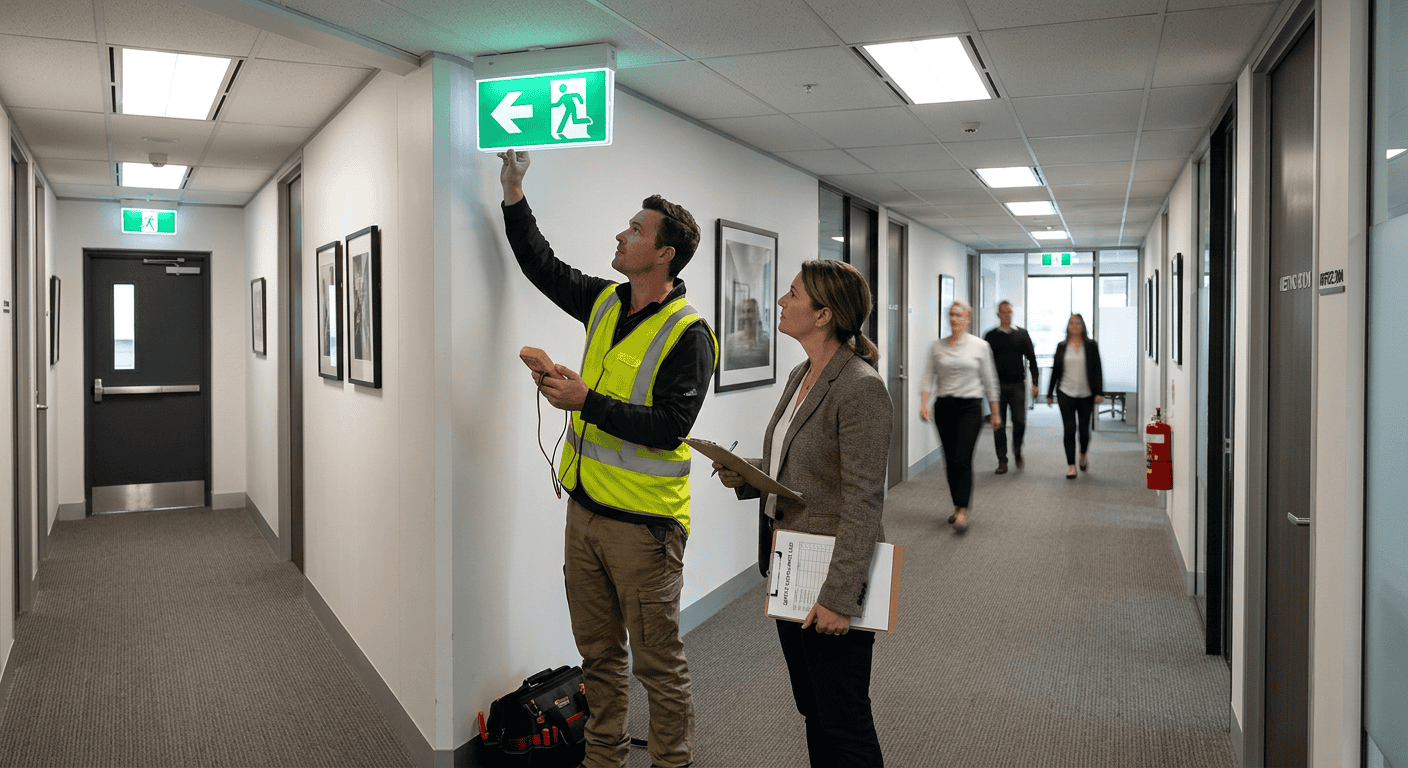
9 Proven Benefits of Regular Emergency System Testing
Emergency systems are designed for the moments when a building’s normal electrical and safety systems aren’t available. When a power failure, fire or other emergency occurs, occupants may rely on emergency lighting, exit signs and other critical systems to provide visibility, direction and support during an evacuation.
The problem is that emergency equipment can sit unused for long periods. Because it isn’t constantly operating under emergency conditions, faults may go unnoticed until the exact moment the system is needed.
This is why regular emergency system testing is such an important part of responsible building maintenance.
For commercial properties, strata buildings, community facilities, workplaces, aged care environments and other public buildings, routine testing can help identify faults, support ongoing compliance and provide greater confidence that emergency systems will perform when required.
Emergency lighting and exit signs aren’t simply another part of a building’s electrical infrastructure. They form an important part of the overall safety strategy.
Here are 9 proven benefits of regular emergency system testing and why property owners and facility managers shouldn’t wait for an emergency to discover that their equipment isn’t working properly.
1. Confirm Emergency Lighting Works When It’s Needed
The most obvious benefit of regular testing is confirming that emergency lighting is capable of operating when normal power is interrupted.
During an electrical outage, corridors, stairwells, car parks and other areas can quickly become difficult to navigate.
Visibility Can Change Quickly
A building that appears perfectly safe during normal operation can become significantly more challenging to navigate in darkness.
Emergency lighting is designed to provide illumination when the normal lighting supply fails, helping occupants identify their surroundings and evacuation pathways.
Regular testing can help identify issues such as:
- Failed lamps or LED fittings
- Battery problems
- Faulty charging systems
- Damaged equipment
- Electrical faults
Identifying these issues before an emergency provides an opportunity to arrange repairs rather than discovering a failure when the building is already in darkness.
2. Help Occupants Identify Emergency Exits
Emergency exit signs provide an important visual indication of where occupants should go during an evacuation.
In a familiar building, people may know where the exits are under normal circumstances. However, an emergency can create confusion, particularly when visibility is reduced or occupants are unfamiliar with the property.
Exit Signs Need to Be Visible
A damaged, failed or poorly maintained exit sign can make evacuation more difficult.
Regular emergency lighting and exit sign testing can help confirm that these systems are operating as intended.
This is particularly important in larger buildings containing:
- Multiple floors
- Long corridors
- Basement areas
- Car parks
- Multiple stairwells
- Public gathering spaces
Clear and functioning exit signage can contribute to a more organised evacuation.
3. Identify Battery Failures Before an Emergency
Many emergency lighting systems rely on batteries to provide power when normal electricity is unavailable.
Like other electrical components, batteries have a finite operating life.
Batteries Can Deteriorate Over Time
A fitting may appear perfectly normal during everyday operation while its backup battery is no longer capable of providing the required performance during a power failure.
Regular testing can help identify batteries that are no longer functioning correctly.
This gives property managers an opportunity to replace failed or deteriorating components before they become a serious issue.
Don’t Assume a Working Light Means a Working Emergency System
One of the most important distinctions is that normal operation doesn’t necessarily prove that the emergency function is working correctly.
Emergency equipment needs to be assessed under the appropriate testing conditions to confirm its backup capability.
4. Support Building Safety and Compliance
Emergency lighting and exit signage are subject to relevant Australian requirements and standards.
For applicable buildings and installations, regular inspection and testing forms an important part of maintaining emergency systems.
Compliance Shouldn’t Be an Afterthought
Building owners and facility managers have responsibilities relating to the safety and maintenance of their properties.
Regular testing provides documented evidence that emergency systems are being inspected and maintained as part of an ongoing program.
Testing requirements can vary depending on the type of building, system and applicable standards, so property owners should obtain professional advice to determine the appropriate inspection and testing regime.
Maintain Accurate Records
Keeping clear records of testing, faults, repairs and maintenance can also make ongoing building management easier.
Good documentation can help identify recurring issues and demonstrate that maintenance has been approached systematically.
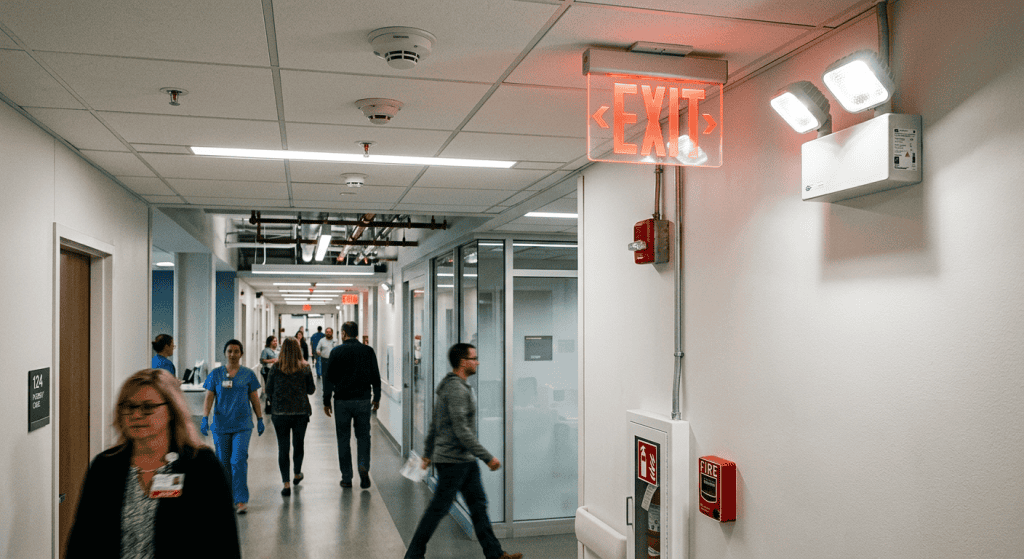
5. Reduce the Risk of Discovering Problems During an Emergency
An emergency is the worst possible time to discover that an emergency system has failed.
Yet without regular testing, faults can remain hidden.
Preventative Maintenance Changes the Equation
Consider a building where emergency lighting has not been tested for an extended period.
A battery may have failed months earlier. An electrical connection may have deteriorated. An exit sign may have stopped operating.
None of these problems may be obvious during normal building operation.
Regular testing creates opportunities to find these issues before an emergency occurs.
It doesn’t eliminate every possible failure, but it significantly improves the ability to identify and address known problems.
6. Improve Safety in Common and High-Traffic Areas
Some parts of a building require particular attention because large numbers of people may use them.
This can include:
- Shopping centres
- Offices
- Apartment buildings
- Community facilities
- Schools
- Aged care facilities
- Warehouses
- Retail properties
- Entertainment venues
Different Areas Present Different Challenges
Basement car parks, for example, can become particularly dark during a power outage.
Stairwells may present trip hazards if visibility is reduced.
Large public spaces may contain significant numbers of occupants who need clear evacuation routes.
Regular emergency system testing helps property managers maintain greater confidence in the safety infrastructure across these areas.
7. Reduce Unplanned Maintenance and Repair Costs
Preventative maintenance can also provide financial benefits.
A small electrical or emergency lighting issue identified during a scheduled inspection may be easier and less expensive to address than a major failure discovered later.
Plan Repairs Instead of Reacting to Them
Regular testing allows property managers to identify faults and prioritise repairs.
For example, a maintenance inspection might identify several emergency lighting batteries approaching the end of their service life.
Instead of dealing with individual failures as they occur, the property manager may be able to plan appropriate replacements.
This can make maintenance more predictable.
Protect the Bigger Investment
Emergency lighting represents only one part of a property’s overall safety infrastructure.
Keeping these systems maintained can help protect the broader investment made in the building.
8. Improve Confidence for Building Owners, Managers and Occupants
There is also an important benefit that can’t always be measured in dollars: confidence.
Property managers need to know that critical building systems are being maintained.
Building owners want their assets properly managed.
Occupants expect the property to provide a safe environment.
Confidence Comes From Regular Maintenance
A documented emergency system testing program provides greater confidence than simply assuming everything is working.
Regular testing can provide information about:
- System condition
- Battery performance
- Fitting operation
- Exit sign condition
- Fault history
- Repairs completed
- Future maintenance requirements
For strata committees and facility managers, this information can make it easier to communicate with owners and demonstrate that electrical safety is being actively managed.
9. Create a More Proactive Electrical Maintenance Strategy
Emergency lighting testing shouldn’t necessarily operate in isolation.
It can form part of a broader preventative electrical maintenance program designed to keep the property’s infrastructure operating reliably.
Look at the Entire Electrical System
Depending on the property, a broader maintenance strategy may include:
- Switchboard inspections
- Thermal imaging
- Emergency lighting testing
- Electrical equipment inspections
- Common-area lighting maintenance
- Fault finding
- Surge protection
- Data and communications infrastructure
- General electrical inspections
This approach allows property managers to think beyond individual failures and consider the overall condition of the building’s electrical infrastructure.
Prevention Is Better Than Emergency Repairs
The objective of preventative maintenance isn’t to guarantee that an electrical fault will never occur.
Instead, it’s about identifying potential problems earlier and creating a structured approach to maintaining important systems.
What Does Emergency System Testing Involve?
The exact testing process and frequency depends on the system, building and applicable requirements.
Emergency lighting systems can require specific inspections and testing to verify that fittings operate appropriately when normal power is unavailable.
A qualified electrical contractor can assess the property’s emergency lighting and exit signage and determine the appropriate maintenance requirements.
What Should Property Managers Look For?
Property managers should pay attention to:
- Fittings that don’t illuminate
- Exit signs that aren’t operating
- Damaged fixtures
- Flickering equipment
- Battery warning indicators
- Physical damage
- Areas with insufficient emergency lighting
Any faults identified should be investigated and rectified appropriately.
Common Emergency Lighting Mistakes
Even buildings that have emergency lighting installed can experience maintenance issues.
Installing It and Forgetting About It
Emergency equipment requires ongoing maintenance. Installation alone doesn’t guarantee long-term reliability.
Ignoring Failed Fittings
A single failed fitting shouldn’t automatically be dismissed as insignificant. It may indicate a maintenance issue that needs attention.
Failing to Keep Records
Without maintenance records, it can be difficult to determine when systems were last tested or whether recurring faults exist.
Treating Testing as a One-Off Exercise
Emergency systems should form part of an ongoing maintenance program rather than being tested only when a problem is suspected.
Waiting Until an Inspection Is Due
A proactive approach is preferable to scrambling to address multiple faults at the last minute.
Why Emergency System Testing Is Particularly Important for Strata Buildings
Strata properties can contain numerous shared areas used by residents, visitors and contractors.
Basements, corridors, stairwells, lobbies and other common areas all need appropriate safety infrastructure.
For strata committees and owners corporations, regular emergency system testing can help provide greater visibility over the condition of shared electrical safety systems.
It can also make it easier to identify maintenance requirements and plan expenditure.
Rather than waiting for residents to report failed lights or exit signs, scheduled testing creates a more proactive approach.
How Spectra Electrical Can Help
At Spectra Electrical, we understand the importance of reliable emergency electrical infrastructure across commercial, strata, industrial and community properties throughout Sydney.
With more than 20 years of experience, our team provides electrical maintenance and infrastructure services designed to help property owners and managers maintain safe, reliable buildings.
Our services include:
- Emergency lighting testing
- Emergency lighting maintenance
- LED lighting upgrades
- Switchboard inspections and upgrades
- Preventative electrical maintenance
- Thermal imaging
- Fault finding
- Strata electrical services
- Commercial electrical services
- Data and communications cabling
- EV charger installations
- Surge protection
- Level 2 electrical services
Whether you’re responsible for a strata building, commercial property, community facility or workplace, regular emergency system testing can help identify faults before they become a bigger problem.
Spectra Electrical can help assess your existing electrical infrastructure and provide practical maintenance and upgrade solutions based on your property’s requirements.
Final Thoughts
Emergency lighting and exit signs are easy to overlook because they may spend most of their lives sitting quietly in the background.
But when normal power fails or an emergency requires an evacuation, these systems can become critically important.
Regular emergency system testing provides an opportunity to confirm that equipment is operating correctly, identify battery and fitting failures, maintain appropriate records and address problems before they become urgent.
For property owners and facility managers, the benefits extend beyond compliance. Regular testing can improve safety, support preventative maintenance, reduce unexpected repair issues and provide greater confidence that essential emergency infrastructure is being properly managed.
The key is to avoid treating emergency systems as something that only matters when there is an emergency.
A proactive approach ensures that emergency lighting, exit signs and associated electrical infrastructure receive the attention they need throughout the life of the building.
Whether you’re managing a commercial property, strata building, community facility, workplace or other public-facing environment, establishing a structured emergency system testing and maintenance program is an important part of responsible property management.
For properties across Sydney, Spectra Electrical can assist with emergency lighting, preventative electrical maintenance, switchboard services and broader electrical infrastructure, helping property owners maintain safer, more reliable and better-prepared buildings.